Peter Capaldi Says Doctor Who Has Become a Victim of Its Own Success

It’s not exactly a secret that Doctor Who isn’t doing so hot right now. On the plus side, the show will officially return for a Christmas special later this year. But the franchise’s much-vaunted production deal with Disney has collapsed, the show doesn’t actually have a current Doctor at the moment, and pretty much everyone hated the season 15 finale that saw Billie Piper return to the TARDIS in an undisclosed role that no one understands. It’s hard out here for a Whovian, and it’s unclear what the best path forward is for the show as it heads into its next era. But a former Doctor has some suggestions. 

Peter Capaldi starred as the franchise’s Twelfth Doctor from 2013 to 2017 and is no stranger to the endless debate surrounding the show’s quality. (Just compare the reviews of his first season in the TARDIS to his final one.) But he’s also a lifelong Who fan, and seems convinced that the series’ current woes are related to the fact that the show’s international success has changed both its scope and the expectations surrounding its performance. 

“The show became very, very big. And it was never like that when I loved it. So it became a different thing,” Capaldi said during an appearance on the Half the Picture podcast. “I think the responsibilities of playing the part became more. There were more of them.” 

The actor pointed out that in the modern reboot era, the show has transitioned from a more niche U.K. sci-fi property into a global brand, which has shifted expectations for everyone involved with the show. 

“There were more things that you had to do rather than just, I mean, I think in the old days, if you were John Pertwee or Tom Baker or something like that, you probably, you know, you spend most of your year making it and then a bit of your year promoting it,” he said. “But it wasn’t this in-your-face kind of thing that suddenly was really important to the BBC, or suddenly really important to a brand that had to be maintained.”

Before Capaldi’s first season as the Doctor, the show embarked on a global world tour that spanned seven cities across five continents and featured exclusive previews and fan meet-and-greets. He’s not wrong that it’s hard to imagine anything of that scope or scale occurring during the show’s classic era. 

The actor also rightly points out that Doctor Who used to be more overtly targeted towards a children’s audience than the adults of today, who are increasingly likely to buy merchandise, but also much more prone to writing long screeds complaining about some aspect of the show online.

“It was just a show that some kids really loved, and other kids didn’t care about, but wanted to watch football, or you grew out of, you know,” Capaldi said. “It became this sort of very important thing. I think less in a cultural way and more in an economic way.”

While the former Doctor doesn’t specifically reference any storylines from recent seasons or the behind-the-scenes woes the show is currently facing, he certainly seems to feel that the show’s global success has perhaps become more of a hindrance than a help.

“I think the show is a little bit of a victim of its success. You know, the show that I loved was a tiny thing, a little small thing that survived. It just survived, but nobody knew that it was warming its way into the culture in such a deep way. And I think that’s what I have an affinity with.”

Tom Cruise Shot a Lightsaber Scene for Star Wars: Starfighter

Let’s be honest, Star Wars could use a break right now. The franchise has struggled since 2019’s The Rise of Skywalker, and the involvement of a big name star could only help restore some prestige to the brand. Sure, the upcoming film Star Wars: Starfighter does have a marquee name in star Ryan Gosling, and director Shawn Levy has credits on hits like Stranger Things and Deadpool & Wolverine, but even they pale in comparison to Tom Cruise. So it’s a good thing that Tom Cruise decided to get involved in the shooting of Starfighter… it’s too bad he’s just behind the camera.

In a profile for the New York Times, Levy revealed that Cruise came to visit the Starfighter set and, in typical Tom Cruise fashion, decided to shoot a scene. “Last week Steven Spielberg was here. And now Tom Cruise is wielding a camera, ruining his very nice shoes,” Levy said of the many visitors who came to his production. The profile then goes on to describe Cruise wanting to watch Levy shoot a scene involving a lightsaber fight in a small body of water. Levy “suggested the star jump on one of the cameras. He’d meant it as a joke,” the profile explains; “But there was Cruise, wading into the muddy pond, holding the camera like a pro.”

So while Tom Cruise won’t actually appear in Starfighter, the buzz can only help the production. Where the next Star Wars movie The Mandalorian and Grogu, and many of the shows for Disney+, tend to take place around safer material such as the original trilogy and the (now-reclaimed) prequel trilogy, Starfighter will follow the events of the disastrous Rise of Skywalker. Set five years after that film’s ending, the movie follows Gosling’s pilot on a dangerous mission crucial for the rebuilding of society after the fall of the First Order. Along the way, he’ll cross paths with a new villain played by Matt Smith.

That sparse plot description gives us just enough to be hopeful but not enough to be confident. One of the major problems with The Rise of Skywalker was its refusal to let the franchise grow past the Skywalker family, explicitly reversing The Last Jedi‘s attempts to make Rey a normal person. Starfighter sounded like it might harken back to the World War II fighter pilot movies that were such a huge inspiration for George Lucas when making the first Star Wars in 1977. Further, it would focus on a normal guy on a mission, not a Skywalker scion or a member of the Jedi Order.

With rumors that Daisy Ridley would reprise her role as Rey, we already figured that Starfighter wasn’t going to stray too far from the Skywalkers. And the news that there’s going to be a lightsaber battle only solidifies the fact that Starfighter won’t go entirely into new territory with dog fights and skyjinks.

Will that be enough to get people excited about Star Wars again? It’s too soon to tell, but Tom Cruise lending some of his star power—even if just to shoot a scene—can only help.

Star Wars: Starfighter arrives in theaters on May 28, 2027.

Before The Batman: Part II, Sebastian Stan Almost Played a DC Hero

Even though he does incredible work in indie films such as A Different Man and I, Tonya, Sebastian Stan is most associated with superhero movies. Stan has been playing Bucky Barnes a.k.a. the Winter Soldier since 2011’s Captain America: The First Avenger, and will continue to reprise the role in this year’s Avengers: Doomsday. And now there are rumors that Stan will join the cast of The Batman: Part II, making the jump from Marvel to DC.

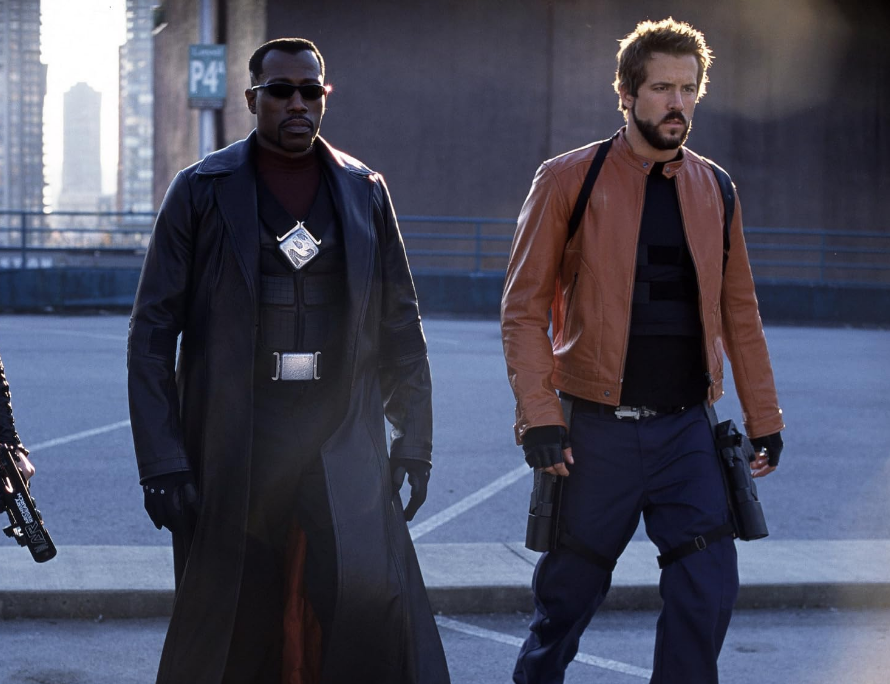
However, Stan tried to join the Distinguished Competition the same year that he became James Buchanan Barnes. Stan told the Happy, Sad, Confused podcast in 2024 that he had auditioned to play Hal Jordan in the infamous 2011 flop Green Lantern. “I remember getting there, and it was like, me, Justin Timberlake, Jared Leto, Ryan Reynolds, and maybe one other person,” Stan recalled. “And I’m looking at these guys, going, ‘I’m fucked. There’s no way this is happening for me.'”

Obviously, it didn’t happen for Stan, as Reynolds got to play Jordan, a reckless test pilot who gets picked to join the intergalactic police force known as the Green Lantern Corps. Directed by Martin Campbell and co-written by Arrow-verse architects Greg Berlanti and Marc Guggenheim, Green Lantern brought to the screen one of DC’s most popular superheroes and boasted a cast that included Blake Lively, Tim Robbins, and Mark Strong. Yet, the film bombed, barely making back its budget and getting roundly mocked by critics.

There’s no one thing to blame for Green Lantern‘s failure. The concept, and especially the name “Green Lantern,” is a hard sell to general audiences, and no one involved in the project was doing their best work. Moreover, Hal Jordan can be a tricky character to pull off, even in the comics (the hero’s shortcomings range from dating a 13-year-old to going nuts and killing all of his friends to being a cop in general).

But Reynolds’s glib, self-satisfied take certainly didn’t help things. We first meet the character dashing out on a one night stand and joking about how he forgot her name. At work, Jordan participates in a flight exercise against a drone that his employer hopes to use to secure a much-needed government contract. Instead, Jordan chooses to show off his pilot skills, making the drone look bad, destroying his jet, and losing the company the contract. When Jordan gets the power ring that gives him his Green Lantern abilities, he first uses it against a couple of guys who are mad at him… because he got them all laid off when he decided to show off against the drone.

Again, all of these story problems come from the writers and the director. But Reynolds delivers all of his lines with maximum snark, because that’s the tone he does best. Stan, however, can certainly play a stoic hero. But as his indie work shows, he’s great at playing weird losers and frustrated sad boys. In other words, he could have taken that same material, scenes that ask us to cheer when Hal Jordan is a selfish jerk, and made them interesting.
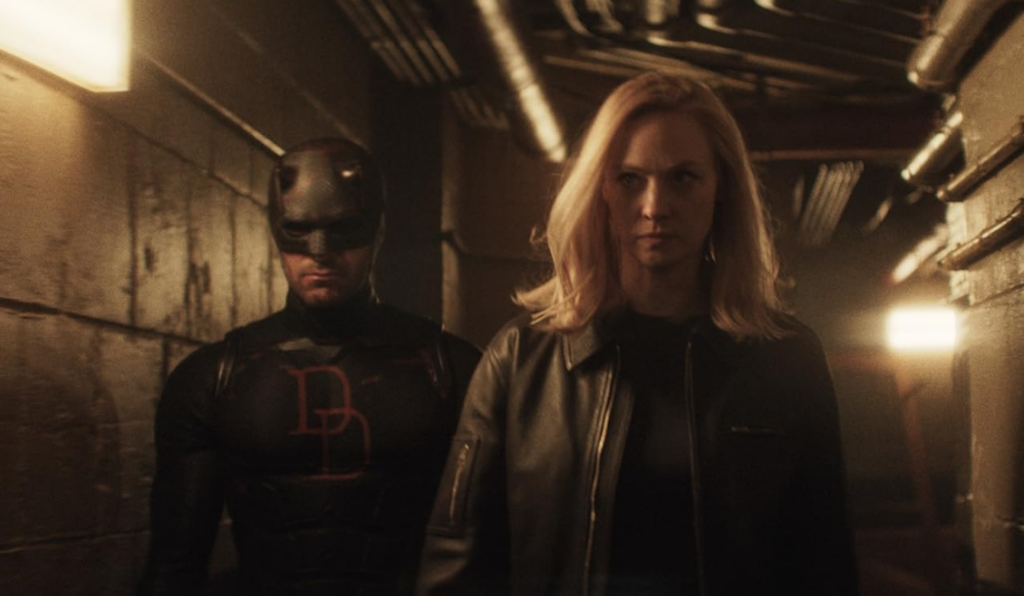
Alas, it didn’t happen, so Green Lantern flopped and the concept disappeared from live action until Nathan Fillion popped up as Guy Gardner, a different Green Lantern jerk, in last year’s Superman. Later this year, Kyle Chandler will try his hand playing an older and hopefully wiser Hal Jordan alongside Aaron Pierre as John Stewart in the HBO series Lanterns.

As for Stan, things worked out pretty well, by his own admission. “Looking back, I’m almost glad it didn’t [work], because I don’t know if I could have handled that level of attention like some of those guys,” he conceded. Clearly, he can handle it now, whether in indies, the MCU, or the DC Universe.

Stranger Things: A Cut Line Would Have Added Needed Depth to the Finale

This post contains spoilers for the finale to Stranger Things.

Over the course of five seasons of Stranger Things, we saw how Vecna destroyed the lives of the people of Hawkins, Indiana. With his spindly, vine-covered body and his skull-like face, Vecna was the embodiment of evil, willing to use children as tools to bring the hellish Abyss to Earth. But those who saw the play Stranger Things: The First Shadow know that before Vecna was Vecna, he was Henry Creel, a little boy who was in the wrong place at the wrong time.

If Vecna actor Jamie Campbell Bower had his way, Henry’s humanity would have shown through in the character’s final moments. Appearing on The Tonight Show Starring Jimmy Fallon, Bower revealed that he had wanted to add an extra line to Vecna’s final scene, right before Joyce Byers hacks him apart with an axe. “I wanted to try and convey the words ‘please don’t’,” said Bower of shooting the scene. “I’m like gurgling, and I’m like I remember all I wanted to say was ‘please don’t’, and we try it, and it just didn’t work.”

Vecna’s last scene has been a bit controversial, as reflected by our dueling takes here at Den of Geek. Yet, there’s no question that letting Creel beg for his life would have added some complexity to the character, making him more than an ultimate evil that needed to die.

And as Bower pointed out, the line would have called back to The First Shadow by acknowledging the connection between Creel and Joyce. Although the stage play focuses on the life of young Henry Creel, it also lets us spend time with several Hawkins adults back when they were teens, including Hopper, Bob Newby, and, of course, the future Joyce Byers. Joyce was among the teens who showed kindness to the troubled Henry, at least before he was corrupted by exposure to the Mind Flayer and endless tests at the hands of government scientists, led by Dr. Martin Brenner.

To its credit, season five of the Netflix hit did include several glimpses into the life of young Henry. Max and Holly see his high school life while going through his memories and when Will calls up the fateful moment when the boy Henry met a government scientist. However, by the time of the finale, the show had no interest in humanizing Vecna. Vecna rejects Will’s attempts to blame the Mind Flayer by insisting that he did everything willingly. The series wanted Vecna to be a monster, nothing more.

And that might be why the addition of “please don’t,” in Bower’s words, “didn’t work.” Bower reminded The Tonight Show audience of Creel and Joyce’s connection in The First Shadow, and said that, “when she kind of walks up to him, I felt like in that moment, that the humanity could come through a little bit more, and that we could just reintroduce that level of sort of potential maybe he could be saved at that point.”

While that would have made the character’s final scene more complex, that’s not what Stranger Things creators the Duffer Brothers had in mind. For better or worse, Vecna was a monster who needed to die.

All of Stranger Things is now streaming on Netflix.

SAG Nominee Snubs Reveal Continued Bias Against Non-English Movies in Oscar Race

The Screen Actors Guild nominations for the best of 2025 are in. And for awards prognosticators speculating on what the Oscars will do next, this is a big one. After all, the acting branch remains the largest bloc of the Academy of Motion Picture Arts and Sciences, and there is plenty of crossover between Oscar voters and SAG membership. So while the two bodies aren’t identical, when it comes to selecting what are deemed the most worthy performances of the year, SAG is a crucial bellwether.

… And according to that bellwether, none of the best performances of the year occurred in a foreign language.

The eyebrow-raising omission comes with plenty of splashy news about who made the cut. The most-anticipated frontrunners are all accounted for in the lead categories: Timothée Chalamet, Leonardo DiCaprio, Michael B. Jordan, and Ethan Hawke will all be vying for Best Actor; and Jessie Buckley, Rose Byrne, Chase Infiniti, and Emma Stone for Best Actress. Meanwhile most of whatwe predicted last week to be the Best Picture frontrunners accounted for SAG’s short-list of five nominees in the Outstanding Performance By a Cast in a Motion Picture (the guild’s version of Best Picture): One Battle After Another, Hamnet, Sinners, and Marty Supreme.

In fact, the only film we considered a likely frontrunner to not round out SAG’s top five is also the one entirely shut out of SAG nominations altogether, Joachim Trier’s exquisitely beautiful Sentimental Value. While the Norwegian film has recently earned Best Picture nods from the Critics Choice Awards and Golden Globes, as have all four of its core performances—Renate Reinsve, Stellan Skarsgård, Inga Ibsdotter Lilleaas, and Elle Fanning—none of the above were nominated by the Screen Actors Guild. Similarly, Wagner Moura, who also earned CCA and Golden Globe nominations for his work in the Brazilian film, The Secret Agent, plus a win for Best Actor at the prestigious New York Film Critics Circle, was likewise snubbed by SAG.

In their absence, a few surprises slipped through the cracks, including Kate Hudson being nominated for Best Actress for her musical turn in Song Sung Blue, Jesse Plemons getting a nod for his unnerving lead work in Bugonia, and fan favorite turns by Odessa A’zion in Marty Supreme and Wunmi Mosaku in Sinners earning surprise nominations in Best Supporting Actress. Additionally Guillermo del Toro’s Frankenstein slipped into the Best Cast (picture) race for the fifth slot.

The complete shutout of foreign-language films is somewhat surprising, particularly in the case of Sentimental Value which features a respected American performer in Fanning, who has received two Best Actress nominations from SAG for her work on the TV series The Great. Furthermore, Skarsgård is no anomaly to the guild either and his film sees large portions of its story shot in English (hence Fanning’s participation). The movie has in fact been a perceived awards frontrunner ever since Trier picked up the Grand Prix prize earlier this year at the Cannes Film Festival.

But here’s the thing: while the Academy’s tastes have increasingly broadened over the last decade to include international cinema, particularly if it becomes the toast of Cannes, SAG remains noticeably insular with its focus on American film production.

The most striking example of the Academy broadening its voting pool in this decade is Bong Joon-ho’s Parasite winning Best Picture in early 2020, yet the shift has been going strong for almost 10 years now. Since the beginning of this decade alone, we’ve seen four of the previous five Palme d’Or winners out of Cannes wind up nominated for Best Picture (Parasite, Triangle of Sadness, Anatomy of a Fall, and Anora, the last of which was admittedly the rare American film to win Cannes’ top prize). Moreover, Sandra Hüller was nominated for Best Actress for searing work in Anatomy of a Fall, as was Penelope Cruz for the Spanish Parallel Mothers. Best Director has also long proven a fruitful category for international perspective, with the likes of Alfonso Cuarón’s work in Roma and Paweł Pawlikowski’s in Cold War being nominated in the same year.

In a nutshell, the Academy’s tastes are broadening by virtue of having a larger share of members from outside the U.S. be invited into the fold. But SAG has remained slower to adapt. Consider, for instance, Anatomy of a Fall being snubbed by the guild for Best Cast and Best Actress in 2024 (in their place was likely the cast of The Color Purple and, perhaps more happily for pop culture enthusiasts, Margot Robbie via Barbie). Similarly, Cruz was snubbed for Parallel Mothers in the year that Lady Gaga and Jennifer Hudson were nominated for House of Gucci and Respect, respectively, while films like Drive My Car, Triangle of Sadness, and Roma were completely ignored. We will point out that SAG did, however, select Parasite for Outstanding Cast in 2020.

All of which might be to say that while SAG snubbed Moura and the actors of Sentimental Value, their chances for Oscar nominations did not end today. Viewing any of them as a potential dark horse candidate capable of winning their category just became a lot harder though.

Full film nominees below.

Cast Ensemble in a Motion Picture

  • Frankenstein (Netflix)
  • Hamnet (Focus Features)
  • Marty Supreme (A24)
  • One Battle After Another (Warner Bros.)
  • Sinners (Warner Bros.)

Male Actor in a Leading Role

  • Timothée Chalamet, Marty Supreme (A24)
  • Leonardo DiCaprio, One Battle After Another (Warner Bros.)
  • Ethan Hawke, Blue Moon (Sony Pictures Classics)
  • Michael B. Jordan, Sinners (Warner Bros.)
  • Jesse Plemons, Bugonia (Focus Features)

Female Actor in a Leading Role

  • Jessie Buckley, Hamnet (Focus Features)
  • Rose Byrne, If I Had Legs I’d Kick You (A24)
  • Kate Hudson, Song Sung Blue (Focus Features)
  • Chase Infiniti, One Battle After Another (Warner Bros.)
  • Emma Stone, Bugonia (Focus Features)

Male Actor in a Supporting Role

  • Miles Caton, Sinners (Warner Bros.)
  • Benicio Del Toro, One Battle After Another (Warner Bros.)
  • Jacob Elordi, Frankenstein (Netflix)
  • Paul Mescal, Hamnet (Focus Features)
  • Sean Penn, One Battle After Another (Warner Bros.)

Female Actor in a Supporting Role

  • Odessa A’zion, Marty Supreme (A24)
  • Ariana Grande, Wicked: For Good (Universal Pictures)
  • Amy Madigan, Weapons (Warner Bros.)
  • Wunmi Mosaku, Sinners (Warner Bros.)
  • Teyana Taylor, One Battle After Another (Warner Bros.)

Stunt Ensemble in a Motion Picture

  • F1 (Apple Original Films/Warner Bros.)
  • Frankenstein (Netflix)
  • Mission: Impossible — The Final Reckoning (Paramount Pictures)
  • One Battle After Another (Warner Bros.)
  • Sinners (Warner Bros.)

The 32nd SAG Awards are on March 1 while the 98th Academy will air on March 15.

MrBeast Reveals Biggest Changes to BEAST GAMES [video]

The massive reality competition series BEAST GAMES is back on Prime Video! Setting records at every turn, the series continues to be quite the undertaking, in line with the  @MrBeast  brand. MrBeast himself, Jimmy Donaldson, spoke with Matthew Shuchman of Den of Geek about what it took to pull it off, and what to look forward to in this season of Strong v Smart.

Upcoming British TV Series for 2026: BBC, Netflix, ITV, Channel 4, Prime Video, Sky

With second seasons of The Night Manager and Red Eye already heating up U.K. telly, there’s still so much more to come in 2026. Russell T Davies, Steven Moffat, and Chris Chibnall all have new shows lined up this year. There are some big adaptations on the way, too, including a Kit Harington-led version of A Tale of Two Cities.

Meanwhile, Richard Gadd will follow up his smash hit awards-grabber Baby Reindeer with a new show that is bound to be absolutely devastating, and Lisa McGee will follow up Derry Girls with her new Netflix series, How to Get to Heaven From Belfast.

The year also has some big returning shows in store! Line of Duty and Unforgotten are both coming back to the small screen with their seventh series.

Let’s take a look at some of the big shows heading our way in 2026…

Agatha Christie’s Seven Dials

January 15 on Netflix

We love a new Agatha Christie adaptation, and this one has a stacked cast (Mia McKenna-Bruce, Helena Bonham Carter, Martin Freeman, and more!) and a classic 1929 mystery to unravel, courtesy of Broadchurch creator Chris Chibnall. This story follows a group of young, well-off Londoners who stumble into a strange puzzle involving time, coded messages, and a shadowy organization known as “Seven Dials,” after a seemingly harmless prank goes wrong.

How To Get To Heaven From Belfast Season 1.  Roisin Gallagher as Saoirse Shaw, Caoilfhionn Dunne as Dara Friel & Sinead Keenan as Robyn Winters. Cr. Netflix 2025

How to Get to Heaven From Belfast

February on Netflix

Originally envisioned as a Channel 4 series, How to Get to Heaven From Belfast has now moved to Netflix due to rising costs. It’s the new show from Derry Girls creator Lisa McGee, and it follows three childhood friends from Belfast – Saoirse, Robyn and Dara – who are now in their late thirties and living very different lives when they receive word that a fourth member of their school-friend group has died. Roísín Gallagher, Sinéad Keenan and Caoilfhionn Dunne lead the cast.

Young Sherlock

March 4 on Prime Video

Guy Ritchie’s Sherlock Holmes is back, but he is definitely looking a bit younger than Robert Downey Jr. here as the director plans to explore the famous detective’s early years in Oxford for this Prime Video series, which adapts Andrew Lane’s Young Sherlock Holmes books. Hero Fiennes Tiffin (nephew of Ralph and young Voldemort in Harry Potter and the Half Blood Prince) stars as the titular deerstalker-botherer.

Betrayal

TBD on ITV

From the mind of playwright David Eldridge, slick new spy show Betrayal will take us into the complex new reality of MI5, as veteran agent John Hughes (Endeavour’s Shaun Evans) navigates an evolving security landscape and a progressive workplace. When an assassination links him to a conspiracy, Hughes will have to figure out how to protect not only his marriage and career, but also Britain itself.

Lord of the Flies

TBD on BBC

The Beeb has never attempted a TV adaptation of William Golding’s famous novel… until now! With Adolescence writer Jack Thorne behind the upcoming series, we could be in for a very special version of the classic book this year. If you’re not familiar with the story Golding wrote in 1954, it focuses on a group of schoolboys who are stranded on a tropical island. With no adults to tell them what to do, the boys soon try to organize. But hope is a fragile thing…

The Lady

TBD on ITV

The gang behind The Crown have a new royal drama series for you in 2026! This one comes with its own true-life crime twist, as The Lady follows Sarah Ferguson’s royal dresser Jane Andrews (Mia McKenna-Bruce), who falls from grace after being convicted of murdering her stockbroker boyfriend Thomas Cressman. Natalie Dormer (Game of Thrones) and Ed Speelers (Star Trek: Picard) co-star.

Maya

TBD on Channel 4

In the midst of filming HBO’s hit series The Last of Us, Bella Ramsey has also hopped onto Channel 4’s Maya, a psychological thriller about a mum (Breeders star Daisy Haggard, also on co-writing duties) and daughter who get put in a witness protection program in a remote Scottish village. So, are they then safe from the danger that pursues them and left to their own devices? Are they heck! Not with Tobias “Black Jack Randall” Menzies after them.

Secret Service

TBD on ITVX

This 5-episode ITVX series stars Gemma Arterton as an MI6 officer who seems to have an ordinary but happy life. Still, she’s got a rather important job as the head of the Russia Desk of the Secret Intelligence Service to deal with behind the scenes, which is very much not ordinary. After she learns that a senior British politician could be a potential Russian asset, she finds herself in a political game of cat and mouse.

Out of the Dust

TBD on Netflix

From the director of Oranges and Sunshine and the writer of Cuffs comes a new Netflix streaming series that follows a woman named Rosie, who ends up on a dangerous path after she starts questioning her conservative Christian sect. Asa Butterfield, Molly Windsor, Fra Fee, Siobhan Finneran and Christopher Eccleston make up the cast of this one.

The Blame

TBD on ITV

Michelle Keegan and Douglas Booth play Emma Crane and Tom Radley in this ITV adaptation of Charlotte Langley’s debut novel. The pair are two detectives who have to investigate the murder of a teenage figure skater in a small town, while also falling in love. But when one of them becomes a suspect, things get a bit more complicated.

Line of Duty Series 7

TBD on BBC One

We knew it wouldn’t be gone forever! Martin Compston, Vicky McClure, and Adrian Dunbar are back, as is writer Jed Mercurio, for a brand-new six-episode series of the Beeb’s hit cop series. Expect a slightly different setup in series 7, as AC-12 has been disbanded and rebranded as the Inspectorate of Police Standards. The team will be taking a deeper look into a sensitive case involving a celebrated detective inspector accused of abusing his position of trust.

Legends

TBD on Netflix

Two ordinary men (Tom Burke and Steve Coogan) are sent undercover in Britain’s biggest drug networks during the early 1990s in this new show from The Gold creator Neil Forsyth. Based on a true story, the series will dramatize what happened when people who’d only gone through a basic training regime had to build new identities in the criminal underworld. These will be our titular “Legends.”

Army of Shadows

TBD on Channel 4

The 1969 war movie Army of Shadows will be reimagined this year for C4, moving the film’s (and book’s) story of a resistance cell from WWII to a near-future authoritarian Britain under American occupation. The Day of the Jackal showrunner Ronan Bennett is behind this one, and more details should arrive soon, but it already sounds very intriguing indeed.

Dear England

TBD on BBC One

This four-part BBC One and BBC iPlayer drama series is adapted from James Graham’s Olivier Award-winning stage play of the same name. It stars Joseph Fiennes, who is reprising his stage role as England football manager Gareth Southgate, and features a cast that includes Jodie Whittaker and Jason Watkins. The show will chronicle Southgate’s tenure as the team’s manager and draw on the play’s exploration of leadership, national identity, and, of course, footie.

Number 10

TBD on Channel 4

Rafe Spall, Jenna Coleman, and Katherine Kelly lead the cast of Steven Moffat’s upcoming comedy drama, which explores life at Britain’s most famous address. Spall (Trying) will play the Prime Minister, Coleman (The Serpent) will be the Deputy Chief of Staff, and Kelly (Mr Bates vs The Post Office) will be the Chief of Staff. It’s a fictional government at Number 10, but they will be dealing with some all-too-familiar problems.

Kill Jackie

TBD on Prime Video

Adapted from the Nick Harkaway novel The Price You Pay, this forthcoming series has gender-swapped its main character for the show. It will follow Jackie Price (Catherine Zeta-Jones), a wealthy art dealer who becomes the target of a hitman squad called The Seven Demons. Filming has been taking place in Bilbao, Lisbon, London and Swansea, but the show is still eyeing a 2026 release.

Unforgotten Series 7

TBD on ITVX

Details on the seventh series of Unforgotten are being kept under wraps for now, but we can expect Sanjeev Bhaskar (DI Sunny Khan) and Sinéad Keenan (DCI Jess James) to be heading into a new cold case, following the success and strong ratings of series six.

Tip Toe

TBD on Channel 4

Fellow Doctor Who showrunner vets Steven Moffat and Chris Chibnall have both got new shows for us this year, but what about Russell T Davies? Yes, indeed, Davies has a new drama called Tip Toe on the way, starring David Morrissey and Alan Cumming, where the Queer as Folk creator will revisit Manchester’s Canal Street to explore the current LGBTQ+ community and the dangers they face.

A Tale of Two Cities

TBD on BBC One

There have been a few adaptations of Charles Dickens’ classic novel, but none of them starred Kit Harington, have they? Well, that’s all set to change this year as the Beeb will be rolling out four episodes to tell the tale of Charles Darnay (Harington), a French aristocrat who is tried for treason in England but manages to get acquitted thanks to a lookalike lawyer called Sydney Carton (François Civil). When he’s arrested again in France during the Revolution and sentenced to death, Carton has to make a difficult choice because he’s now very much in love with Darnay’s beautiful wife, Lucie (Mirren Mack).

Under Salt Marsh

TBD on Sky Atlantic

As a massive storm gathers offshore, Jackie Ellis (Kelly Reilly), a teacher and former detective, discovers the body of her eight-year-old student, Cefin, who appears to have drowned. The shocking find forces the town to confront memories of a case left unresolved three years earlier, the disappearance of Jackie’s niece, Nessa, which destroyed her career. Cefin’s death also draws Jackie’s former partner, Detective Eric Bull (Rafe Spall), back to lead the investigation. Convinced the two cases are linked, Jackie and Bull work together to uncover buried secrets before the approaching storm erases key evidence.

Rivals Series 2

TBD on Disney+

Rivals will return to our screens in 2026 with an expanded twelve-episode run. It continues the story of competing TV executives and social climbers in the glamorous, high-stakes world of 1980s British telly, picking up where the first season’s dramatic cliffhanger left off. Most of the main cast, including David Tennant as Lord Tony Baddingham, Alex Hassell as Rupert Campbell-Black, and Aidan Turner as Declan O’Hara, are set to return, with new additions Hayley Atwell and Rupert Everett also joining in the fun.

Half Man

TBD on BBC One

Formerly known as Lions, Richard Gadd’s follow-up to Baby Reindeer is now called Half Man. It stars Gadd and Jamie Bell (All of Us Strangers) as estranged “brothers” Ruben and Niall, and tracks what happens when Ruben shows up at Niall’s wedding after a long absence from his life. The show will untangle 40 years of their relationship, from their teenage stretch to some violent encounters in their adult lives.

War

TBD on Sky

George Kay is on a hot streak after creating Lupin and Criminal for Netflix and Hijack for Apple TV. Is this new series for Sky and HBO also worth your attention? Probably, because they’ve ordered not one but two series of it right off the bat. The first one (it’s in an anthology format) stars Dominic West and Sienna Miller, and centers on two of London’s most prestigious rival law firms as they battle over “the divorce case of the century” between tech titan Morgan Henderson (West) and his estranged wife, international film star Carla Duval (Miller).

The Other Bennet Sister

TBD on BBC One

The Other Bennet Sister is adapted from Janice Hadlow’s novel of the same name. It reimagines Jane Austen’s Pride and Prejudice from the perspective of Mary Bennet, the often-overlooked middle sister. The 10‑episode series, written chiefly by Sarah Quintrell, follows Mary as she leaves Longbourn for London and the Lake District in Regency England. Ella Bruccoleri stars as Mary Bennett, with Richard E. Grant and Ruth Jones as Mr and Mrs Bennett.

Walton Goggins Reveals His Hardest Fallout Acting Challenge Yet

This article contains spoilers for Fallout season 2 episode 4.

Playing the wrinkled, irradiated Ghoul on Prime Video’s game adaptation Fallout is not a walk in the post-apocalyptic park for Walton Goggins. Not only does the actor have to access the emotional interiority of a centuries-old cowboy wandering the wasteland, he has to undergo a grueling physical transformation as well. Per Goggins, getting into the Ghoul’s noseless skin can take up to three hours.

Thankfully, Fallout provides a second character for Goggins to play as well: the Ghoul’s pre-apocalypse identity of soldier-turned-actor-turned-corporate-pitchman Cooper Howard. Armed with only a suit, some finger guns, and a smile; Cooper Howard is usually a cozier experience for Goggins. That wasn’t the case, however, with the opening scene of season 2 episode 4.

“It was the hardest thing I’ve done here,” Goggins tells Den of Geek. “It was the most claustrophobic experience I’ve ever hard. I thought that was The Ghoul, but it wasn’t. It was donning that suit.”

“The suit” in question is the T-45 power armor developed by defense contractor West Tek in the Fallout canon. Now the preferred kit of the Brotherhood of Steel in the Wasteland, the bulky T-45 suit previously protected America’s soldiers in the battle against communism before the nukes dropped. Or at least it was supposed to protect them. As the Ghoul revealed to Maximus (Aaron Moten) in season 1, the T-45 has some weak points and a tendency to glitch in the worst possible moments. We see that play out in the opening minutes of season 2 episode 4 as Cooper’s T-45 is rendered completely inoperable right before a critical encounter with Chinese soldiers on the Alaskan battle front.

“The way in which that particular story dovetails into the larger narrative was so exciting to me,” Goggins says. “It’s hinted at in season one that Cooper Howard was in the military. He speaks about the power armor – this piece of technology and the problems that it has. And then you get to experience that in a flashback, which is even earlier than the world before the bombs drooped. It’s the furthest we have gone back in history.”

The episode opener isn’t just the furthest that the Fallout TV series has ventured into the past, it also serves as the proper introduction to one of the games’ most popular cryptids: the hulking Deathclaw that becomes the fallen Howard’s unlikely salvation. But what exactly is a seemingly mutated giant lizard doing in distant past long before the bombs dropped and Godzilla-fied the environment? It’s a question that Goggins himself is eager to the get to the bottom to. As long as it doesn’t involve donning that armor once again.
“I’m happy that we did it. If we don’t do it again, that’ll be OK,” he says.

New episodes of Fallout season 2 premiere Wednesdays on Prime Video, culminating with the finale on February 4.

Avengers: Doomsday Trailer Raises an Important Question: What X-Men Theme Will Be Used?

The X-Men will return again in Avengers: Doomsday. To put a finer point on it, 20th Century Fox’s version of the X-Men are having what must be their umpteenth swan song in the next Avengers movie (or two). For some fans, this is mixed news since we’ve been waving goodbye to the Fox-verse since the conclusion of 2006’s X-Men: The Last Stand 20 years ago, and certainly after 2014’s X-Men: Days of Future Past, which also used timey-wimey sci-fi logic to present a story where major characters died but then got better. Come to think of it, that made it also a dry run for Avengers: Infinity War too…

All of which has left some frustrated that this version of the X-Men is central again in next December’s Doomsday. For proof, look no further than the latest teaser trailer, which is now online nearly a full year before the movie’s release. In the bit of sizzle footage, the forever-welcomed Ian McKellen and Patrick Stewart give events their familiar gravitas, and James Marsden is seen at last rocking Cyclops’ iconic costume design by Jim Lee from the early 1990s—although to most, it is synonymous with X-Men: The Animated Series from the same era and its sublime sequel series now on Disney+, X-Men ’97.

The shameless but superb fan service of seeing Marsden’s Scott Summers get promised his long overlooked due, complete with costume and pride of place in marketing, signals a few things: first there is at least one more X-Man who didn’t get his proper send off between Days of Future Past, Logan (2017), and even the Marvel Studios-produced Deadpool & Wolverine from 2023. And secondly, we deep down cannot help but enjoy saying goodbye to these prized pieces of 2000s geek culture, no matter how many encores they get.

And for that same reason, we have one tiny, infinitesimal, but (we’d argue) significant suggestion to make for this year’s Avengers movie: send them off using the John Ottman’s X-Men themes from X2 (2003) and Days of Future Past instead of The Animated Series theme song.

Obviously given Marsden’s glorious costuming, Avengers: Doomsday will be melding nostalgia for the 2000s and 2010s X-films with that of The Animated Series, and if we are speaking purely X-Men music, nothing is quite as iconic as the opening credits suite written by Ron Wasserman. To children of the ‘90s, that piece of music was more epic than all of the prose and tales of Homer put together. And Disney/Marvel Studios has been shrewd to tap into this vintage of member berries, as proven when a few bars of the theme were played during the first crossover between the Disney and Fox eras in Doctor Strange in the Multiverse of Madness (2022). There we saw Patrick Stewart briefly reprise the role of Charles Xavier for a cameo that felt more like a wink than a sign-off.

Given how Marvel Studios still taps into the even older 1960s cartoon theme song for Spider-Man after all these decades, there is no doubt that the Mouse House will be using ‘90s nostalgia when adapting X-Men for many, many years to come. But the Fox era of X-Men seems like it must be coming to an end for realsies this time. And if so, this is the perfect time to send them off with their own sound and vibe.

Plus, for whatever else you can say about the uneven and checkered history of the Fox-verse era, they had plenty of highs, including in the music department. The perennially underrated Michael Kamen provided a pounding, almost terrifying soundscape to the original X-Men movie more than a quarter century ago, and Henry Jackman’s theme for Magneto in X-Men: First Class (2011) remains sadly forgotten despite its intensity.

But the sound that defines the Fox era, warts and all, is the undeniably thrilling and lush compositions Ottman offered three X-Men pictures between 2003 and 2016. And wouldn’t you know it, two of them remain among the better superhero movies ever made. So if this must be the end of the Fox-verse—and it really should be at this point—let them take a bow to the beat of their own drum.

Avengers: Doomsday opens in theaters on Dec. 18.

The Batman 2 – Who Will Sebastian Stan Play?

Gotham City is about to get even more interesting. According to Deadline, Sebastian Stan is in talks to join the cast of The Batman: Part II. If Stan makes the leap to DC, he’ll join his fellow Avengers co-star Scarlett Johansson in exchanging the MCU for director Matt Reeves‘ grounded take on the Caped Crusader.

Like Johansson, Stan has a resume far stranger and more varied than his MCU work might suggest. Between Stan’s abilities and Reeve’s willingness to reinterpret even classic characters like the Penguin, the actor could play nearly anyone from Batman comics. Nonetheless, here are the six most likely candidates from Gotham who could next face off with Robert Pattinson‘s Batman.

Two-Face in The Long Halloween
DC Comics

Harvey Dent

Stan may be a couple years older than Pattinson, but both are high-profile leading men who can do Hollywood blockbusters and weird indie flicks, sometimes in the same year. So it would make sense for Stan to play an analogue to Bruce Wayne, and no character fits that description better than Harvey Dent. In every incarnation, Harvey is a handsome crusader who becomes Gotham City’s district attorney before a criminal attack (often by the Maroni crime family) leaves half of his face scarred. Given Stan’s ability to play intense leading men and weirdos, the switch from Harvey to Two-Face could take advantage of all of Stan’s strength’s as a performer.

Reeves has said that the villain in The Batman: Part II has “never really been done in a movie before,” which would obviously rule out Two-Face, a baddie in Batman Forever and most famously in Christopher Nolan’s The Dark Knight. But Reeves has also been drawing heavily from The Long Halloween, the classic 1996-1997 story by Jeph Loeb and Tim Sale. Two-Face does appear in that story, but most of the time he’s just Harvey Dent. Furthermore, Harvey’s wife Gilda is the major killer in The Long Halloween.

In other words, Stan could play Harvey, but not necessarily Two-Face, and the villain of The Batman II is Gilda Dent instead of Two-Face. And with Johansson certain to be a major character, it would make sense for the two Marvel stars to become Gotham’s most notorious power couple.

Thomas Elliot in Batman Hush
DC Comics

Tommy Elliot/Hush

Speaking of Jeph Loeb, the writer also created another high-profile double for Bruce Wayne when he and Jim Lee gave the world Hush. Before he became the bandaged titular baddie of the series, Tommy Elliot was Bruce Wayne’s best friend. But where Thomas and Martha Wayne loved and cared for their son, the Elliots abused Tommy. Young Tom thus sought escape by killing his parents, ending their abuse and inheriting their fortune. But after Thomas Wayne saved Mrs. Elliot, the child develops a grudge that leads him to not only become a brilliant surgeon (like Thomas Wayne) but also the villain Hush. And Elliot furthermore schemes to ruin Bruce Wayne’s life.

Look, Hush isn’t the most interesting character (outside of the excellent Paul Dini story The Heart of Hush), but he is relatively well-known and he hasn’t appeared in a live-action Batman film yet. Moreover, The Batman set up a lot of breadcrumbs about Thomas and Martha Wayne’s imperfect past, including Thomas performing surgery on Carmine Falcone. It would be relatively easy to slot Hush into that world, and maybe Stan and Reeves could find something compelling to do with the baddie. At the very least he has a cool design.

Maronis in Dark Victory
DC Comics

Umberto or Pini Maroni

As much fun as the costumed baddies are, The Batman and its sequel still draw prime inspiration from The Long Halloween, which is mostly about Batman battling the Falcone and Maroni crime families. Between The Batman and The Penguin, the Falcones are mostly wiped out. However, The Penguin did introduce Clancy Brown as Sal Maroni, the head of the rival family. In that show, Cristin Milioti played Sofia Gigante (née Falcone), who manipulated them to get back at her own family. The time is right for the Maronis to menace Gotham once more.

Twin brothers Umberto and Pini Maroni are prominent characters in Batman: Dark Victory, Loeb and Sale’s sequel to The Long Halloween. After the death of their father Sal, Umberto and Pini become the heads of the family and enter into an alliance with Sofia Gigante to kill Two-Face, who murdered her father Carmine. Obviously, Reeves would have to change the characters to make them fit in the world of The Batman, but it would be fun to see Stan play a composite of the two, or to see him pull a Michael B. Jordan in Sinners and portray both Maroni twins.

Catman in DC Comics
DC Comics

Catman or Prometheus

To those who know him from the MCU, Stan excels at playing tortured but handsome heroes. In indie films such as I, Tonya, A Different Man, and The Apprentice, however, Stan tends to play pathetic losers and sad weirdos. Fortunately, DC Comics does have several characters who work as both Batman analogues and pathetic weirdos.

Both Prometheus and Catman were conceived as anti-Batmen, people who reached the pinnacle of humanity but put those skills to use for evil. Catman was a rich, bored guy who took to committing cat-themed crimes after getting tired of going on safaris. Gail Simone‘s Secret Six reimagined him as a highly capable fighter and decent human, but never lost sight of him being a kind of pathetic guy called Catman. Created by Grant Morrison, Prometheus was the son of two Manson-style hippie murderers killed by police. He subsequently devotes himself to waging war against the law. He achieves that goal by wearing a convoluted dumb helmet and regularly getting beat up by Batman, Huntress, and Green Arrow.

In short, both Catman and Prometheus are sad losers who would make for interesting counters to Pattinson’s Batman.

Mr Freeze in Comics
DC Comics

Victor Fries/Mr. Freeze

One of the most compelling rumors around Scarlet Johansson’s casting is that she will play Andrea Beaumont, Bruce Wayne’s lost love from Batman: The Mask of the Phantasm. That movie doesn’t really have a good analogue for Stan to play, but he would do a great job portraying the best villain from Batman: The Animated Series, Mr. Freeze. Before the great two-part episode “Heart of Ice,” Mr. Freeze was a corny gimmick villain. “Heart of Ice” made him a tragic character, someone whose outrageous plans stemmed from his love for doomed wife Nora.

Still, as soulful as Mr. Freeze can be, he remains a dude in a form-fitting refrigerator. Stan could certainly hit both the dramatic beats of the character while retaining his fundamental silliness. And if Stan brings any depth to Mr. Freeze, then his take would fit Reeves’ “not really done before” rule for the Batman II villain, as even a modicum of humanity would distinguish him from the goofy character that Arnold Schwarzenegger played in Batman & Robin.

Mad Hatter in DC Comics
DC Comics

Jervis Tetch/Mad Hatter

Fundamentally most Batman villains are guys with undiagnosed mental or behavioral issues. Nowhere is that more apparent than Gotham’s ultimate creepy weirdo, Jervis Tetch, aka the Mad Hatter. An awkward scientist with a love for Lewis Carroll, Mad Hatter uses the headwear he creates to read or control the minds of his enemies. Throughout the Bronze and Modern Ages of comics, Tetch has become even more unsavory, playing up the ickier parts of Carroll’s portrayal of the young girl in Alice in Wonderland.

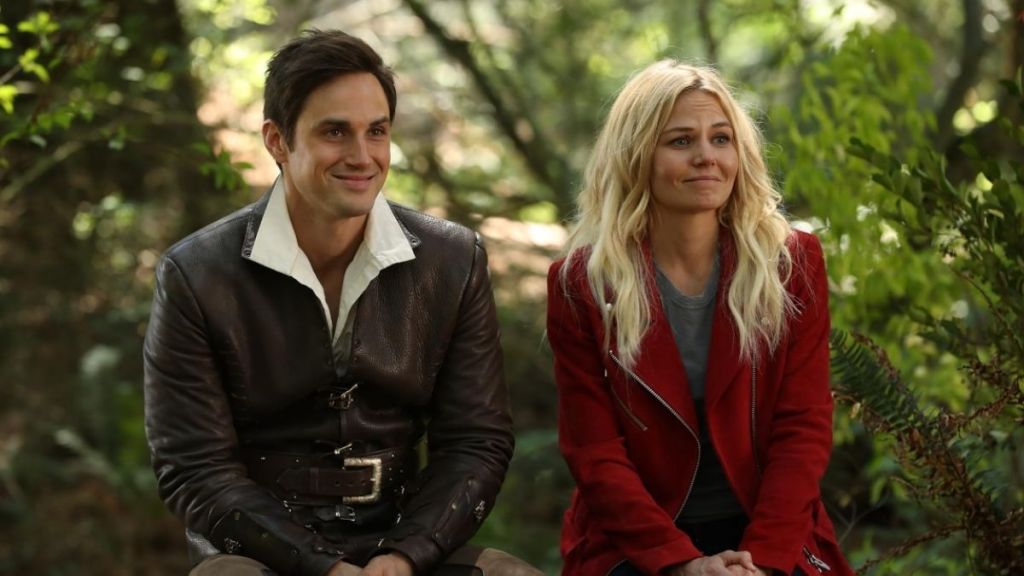
While Reeves doesn’t have to go that far, even in a presumably hard PG-13 movie like The Batman: Part II, he can key into the character’s essential ickiness. But Stan could bring a different energy to the character, often portrayed as slight and odd-looking. In fact, Stan already gave us a unique take on the Hatter for the Disney series Once Upon a Time, so he’ll be well-practiced for this weirdo.

The Batman: Part II releases on Oct. 1, 2027.

Report: Star Wars Will Make the Obvious Choice to Replace Kathleen Kennedy

The Sith’s Rule of Two states that there must always be a master and an apprentice. One embodies the power while the other craves it. Turns out studio executives operate in a manner not too different from the Sith, as the current head of Lucasfilm is about to step down and be replaced by the most obvious possible choice. An heir apparent rises to rule the galaxy’s worth of IP.

According to insider newsletter Puck News, Kathleen Kennedy will step down from her position atop Lucasfilm and will be replaced by the team of Dave Filoni and Lynwen Brennan, the latter of whom will hold the role of co-president and oversee the business side of Lucasfilm. A longtime Star Wars creative, Filoni is best known for The Clone Wars animated series that ran between 2013 and 2020, as well as his more recent work on The Mandalorian, Ahsoka, and Star Wars: The Bad Batch. Filoni is also co-writing the upcoming movie The Mandalorian and Grogu, along with the film’s director Jon Favreau.

Although the change in leadership has not yet been confirmed by Disney, replacing Kennedy with Filoni is not a surprise. Reports that Kennedy planned to retire at the end of 2025 have been circling since 2024, shortly after Filoni was promoted to chief creative officer at Lucasfilm. A successful producer who co-founded Amblin Entertainment with Steven Spielberg and Frank Marshall, Kennedy has been serving as president of Lucasfilm since Disney acquired the company from George Lucas in 2012.

Under Kennedy’s stewardship, Star Wars saw some high points, such as the financially and (initially) critically successful sequel trilogy and TV shows such as The Mandalorian and Andor. However, between a glut of mediocre streaming series, the mess that was The Rise of Skywalker, and a reevaluation of the prequel trilogy, fans have grown generally dissatisfied with Kennedy’s approach to the brand.

As the creator of a beloved show set within the prequel era, Filoni appears on paper to be the ideal choice for winning back those dissatisfied fans. Filoni has been building on his characters from The Clone Wars, not only giving Ahsoka her own live-action series on Disney+, but making Bo-Katan the lead of The Mandalorian.

In place of one person running Lucasfilm then, there will now be two people in Filoni and Brennan. So maybe that’s not like the Sith at all. But will it be good for Star Wars? We’ll have to wait and see if Filoni and Brennan can please both the hardcore fans who loved The Clone Wars and everyone else who might be interested in other stories set in a galaxy far, far away. When Kennedy came in, the apparent marching orders were about winning back fans of the original trilogy dissatisfied with the prequels. Interesting how the tables have turned…

Sophie Turner Was One of the Only Actors Happy with Her Game of Thrones Ending

It’s a truth universally acknowledged that the final season of HBO’s Game of Thrones was… let’s just call it controversial. From Daenerys Targaryen’s death and the ascension of King Bran the Broken to Jon Snow’s self-imposed exile north of the Wall, almost everyone was left in a place that felt, if not outright unhappy, at least disappointing in terms of the character arcs we’d all spent the better part of a decade watching play out. 

But with the success of House of the Dragon and the imminent launch of Dunk and Egg adventure A Knight of the Seven Kingdoms, it’s no surprise that more Westeros-based spinoffs appear to be in development. Nor that one of them may well be looking to follow up on the original story that started it all. What such a sequel series would focus on is, of course, still up in the air, but there are certainly plenty of options, from that rumored Jon Snow series to a potential adventure following everyone’s favorite assassin, Arya Stark, as she searches for what’s west of Westeros. But no matter what such a sequel might turn out to be, one former cast member isn’t so sure she’d take part. 

Speaking to The Direct, Sophie Turner, who played eldest Stark daughter Sansa, is ambivalent on the subject. “Show me the money,” she laughingly said when asked about whether she’d reprise her breakout role. “I don’t know, I think it would be hard but also amazing to come back to it.”

For Turner, part of the reason for her hesitance is that her character is one of the few who got what could reasonably be called a happy ending in the world of Westeros. Sansa, having survived abuse, assault, and emotional torture of all kinds throughout the show’s run, ultimately emerges triumphant, reclaiming the North’s independence from the rest of the Seven Kingdoms and becoming a queen in her own right. And Turner, long the captain of the Sansa Stark Defense Squad, seems pretty satisfied with where we left her, noting that none of her fellow castmates could really say the same. 

“I was very happy with the way Sansa ended her story in Game of Thrones, and no one else was really happy with their ending,” Turner said. “I feel like I got a good one, and so I don’t know if I could revisit it.”

To be fair, it does seem wildly unlikely that the folks in charge would be able to resist the prospect of torturing Sansa some more if given the opportunity, so perhaps Turner is right that we should just leave well enough alone, no matter how much some of us (re: me) would love to see the kind of leader the new Queen in the North turns out to be. Still, the actress is clear that one should never say never. 

“Maybe it would be an utter joy, or maybe it would be trying to cling on to something that was magic back in the day that can’t be recreated. I would have to see a script,” she said. 

Stranger Things Finale Remembered to Give Winona Ryder One Great Easter Egg Moment

This article contains Stranger Things spoilers. Like all of it.

Winona Ryder was not in the final season of Stranger Things nearly enough. Once the marquee name around whom the first season was built and marketed, the actor responsible for giving Joyce Byers a ferocious mama bear energy that bordered on delirium has spent the last few episode-churns largely relegated to background status; and in the case of Stranger Things 5‘s finale, an appendage to the growth of her son Will Byers (Noah Schnapp) in much the same way that old Jim Hopper (David Harbour) eventually became a vital, but supporting, facilitator for Eleven’s journey into quasi-martyrdom.

The underuse of Joyce and Hop marks one of several major issues you can pick at when it comes to discussing Stranger Things’ last dance. But the thing about showrunners Matt and Ross Duffer is that at the end of the day, they usually know how to craft an emotionally effective ending, and in the case of closing the book on their landmark Netflix series, that included having the good grace to tip the hat to a performer who first gave their show its sense of urgency. Which might be a long way to say: when you give a star enough oxygen, they will always pack a punch—or swing an ax, in Ms. Ryder’s case.

Hence one of the best and frankly subtler easter eggs of Stranger Things’ series finale, which occurred when Joyce Byers cut off the head of big bad Vecna (Jamie Campbell Bower) like he’s a goddamn 19th century vampire.

No Redemption for Vecna

While much of the final showdown between the Hawkins Scooby Gang and the combined power of the Mind Flayer and Vecna plays a bit like a superhero movie—or a Dungeons & Dragons campaign cover, complete with Jeff Easley artwork—the final, fatal moments between Vecna and Millie Bobby Brown’s Eleven, plus the rest of the heroes, amounts to a different sensibility entirely. Up until this coup de grace, the Hawkins crew have only been killing faceless monsters whose heads open up into countless rows of teeth. But even in his transmuted shape, Venca is still just a once-painfully-human soul on a power trip. He might carry himself like Freddy Krueger or a demon made flesh, but Henry Creel remains just a guy who’s willfully turned himself into a monster.

For a moment Stranger Things even uses this setup to briefly flirt with what’s become a tired cliché when it comes to villainy in modern pop culture. The show contemplates offering Henry a helping hand and endless empathy. And poor Will Buyers of all people gets to be the one to offer the fiend a now familiar fig leaf. It wasn’t your fault, he promises. You can be saved, he suggests. Wouldst thou like the taste of an unearned redemption arc? When Darth Vader received one in 1983, it was kind of novel within nerd fiction, but on the other side of Kylo Ren, Loki, Draco Malfoy, and hell even MODOK, this beat has gotten pretty staid.

Some fictional baddies are just too evil, and that definitely includes a serial killers with a god complex and penchant for kidnapping children. So fortunately, no, Vecna rejects a strained chance for forgiveness and instead reveals he is as big and bad as Count Dracula. And fortuitously, one member of the Stranger Things ensemble has experience when it comes to dealing this that sort of thing.

Joyes Goes Medieval Mina on His Neck

Thus the most satisfying and subtle easter egg in a series renowned for its deafening, neon-lit callbacks: Joyce Byers gets to cut off the vampire’s head just like she did in Bram Stoker’s Dracula more than 30 years ago in 1992.

The moment comes after the battle appears to have been won, and the other monster hunters led most spectacularly by El have managed to seemingly slay the beast. In fact, El won the fight when she impaled Vecna on what appears to be a pony-sized fang growing inside the Mind Flayer’s throat (we won’t try to determine the biomechanics of that). The moment is not unlike Jonathan Harker and Quincy P. Morris running hunting knives into the vampire in Bram Stoker’s original 1897 novel, or the climactic schadenfreude that occurs when a Bowie knife emerges in Francis Ford Coppola’s far more sympathetic requiem for a vampire in the 1992 film. That was a film, by the by, which also cast Gary Oldman as Dracula and Winona Ryder as his prized prey, Mina Harker.

On page and screen, Dracula is impaled by vampire hunters who have chased the dark prince across land and sea. But the deed is not done, at least in Coppola’s film, until the full ritual is complete; until Mina Harker chops his head off.

So it is with Vecna, who after being defeated has just enough life left in him to still scare the heroes and audiences alike by drawing one last breath. In his final moments, Venca reverts to Henry, the introverted lad who succumbed to the Mind Flayer’s offers of dark powers perhaps out of loneliness and self-loathing. If you’ve seen Stranger Things: The First Shadow on Broadway or the West End, yo even know that Joyce Byers would remember that scared boy in her high school who walked with a sense of foreboding behind his step.

But Joyce has no sympathy for the boy he once was or the creature he’s since become. She remembers only her own child; a little boy this cruelly kidnapped and tortured when he was but 12 years old, and whom Vecna and the Upside Down has targeted ever since.

“You fucked with the wrong family,” Joyce intones before dropping the blade, again. And again. And again.

There is something old-school primal about Joyce executing Vecna in this way, something of the old world; in effect it echoes the Victorian era’s self-styled learned men and women, represented by Stoker’s fellowship of heroes, reverting to medieval rites of superstitious annihilation. It is also purely satisfying in a way that even seems to outdo Coppola’s Dracula movie, which showed the vampire with a great deal of sympathy—but no real sense of redemption. When Ryder beheaded a monster in that movie, it was an act of mercy for a person she pitied but was beyond literal and (perhaps) spiritual salvation. When she does so here, it’s far more medieval.

Some might take issue with that, but we consider it just one more ode to pop culture influences of yore, not unlike when other ‘80s movie heroes like William Ragsdale and Roddy McDowall in Fright Night or Bruce Campbell in Evil Dead swung axes first and asked questions later. This fact seems to be confirmed and underscored when Mike uses D&D’s proxy of Dracula, Count Strahd von Zarovich, to stand-in for Vecna during the final fateful campaign in his childhood basement on the night high school ends.

The monsters who scare us most growing up are those that cannot be reasoned with or rationalized. But they can be quelled by a mother’s love, or in the case of Winona Ryder, her mean, lean, chopping swing. 

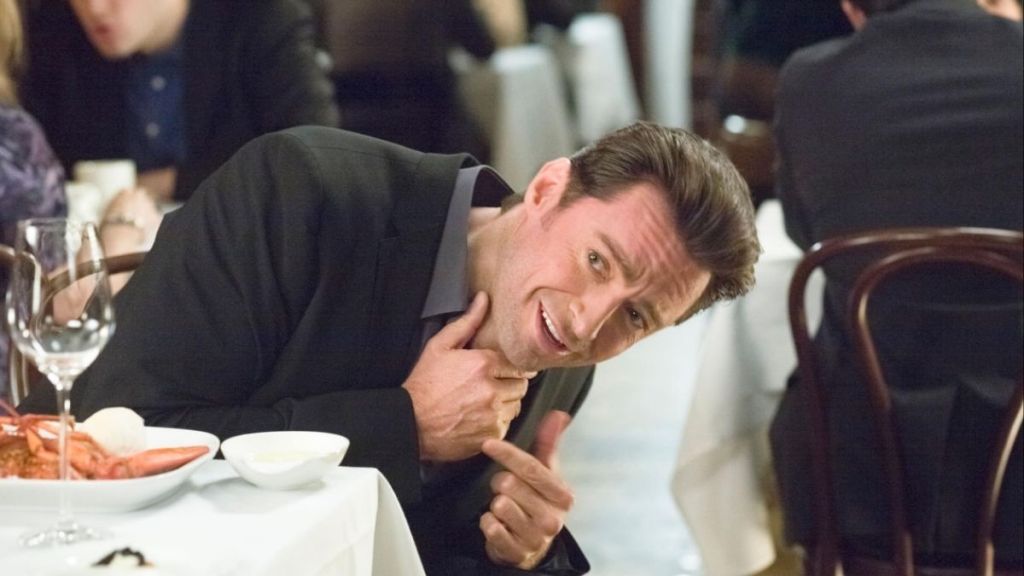
See Hugh Jackman as Old Man Robin Hood in New A24 Trailer

“Give me my bent bow in hand, and my broad arrows I’ll let flee; and where the arrow is taken up, there shall my grave digged be.” So sayeth Robin Hood with his near dying breath—or at least that is what is passed down to us by one version of his end in a folktale recorded in 1786. It appears that Hugh Jackman, and perhaps more intriguingly writer-director Michael Sarnoski and indie trendsetting studio A24, are about to give us another. And as befits those tastes, it looks like it’s going to get dark.

In our first teaser trailer, an aged and extremely bearded Jackman provides a hero even more wisened and wearied than the riff on Old Man Logan he led in what is still the finest X-Men movie ever made, Logan. And like that James Mangold picture, The Death of Robin Hood appears keen on deconstructing the mythology that goes into tales of heroes and villains, outlaws and freedom fighters. “People speak of Robin Hood, tell his stories,” Jackman forewarns at the top of the trailer. “They’re all lies.”

In some ways this is obviously familiar territory for Jackman, who has lately sought to subvert and contradict many of the heroic roles that began his Hollywood career. What once was defined by a more idolized portrait of Wolverine in movies like the original X-Men trilogy, or for that matter the sparkling theatrics of Van Helsing and Duke Leopold of Albany, has since given way to the aforementioned Logan and the tragically flawed father of Prisoners.

So this positively medieval interpretation of Robin Hood appears very much in the same vein. Here we see Jackman caked in mud and misery as he describes himself as a monstrous brigand more comfortable swinging an ax in blood-soaked battle than a bow at a frolicking tourney.

Admittedly this will be yet another Robin Hood movie that seeks to counteract the popular image of the character passed down by most early modern folktales or, for that matter, Errol Flynn and an animated fox. In fact, the last time we had a swashbuckling Robin Hood on the big screen was probably Kevin Costner more than 30 years ago. And yet, lest you think this is another sacrilegious destruction of a myth, the fact that The Death of Robin Hood also includes Jodie Comer as a kindly nun eager to nurse the old man back to health should intrigue anyone familiar with the myths.

Aye, well before Costner, or Flynn and the fox, and even before Sir Walter Scott turned Robin of the Hood into a displaced Anglo-Saxon lord hailing from Locksley in 1819, the original tales spoke of Robin as a brigand and trickster who offered a form of justice, or at least satisfaction, recognizable to medieval bards and tale-spinners. And one of the most poignantly memorable Robin Hood stories involves an old archer and a prioress he meets along the way.

Furthermore, the fact the film is the next feature from Sarnoski after he wrote and directed one of the best movies in Nicolas Cage’s career via Pig is incredibly exciting. And as still proud boosters of David Lowery’s own revisionist riff on medieval English legends in the underrated The Green Knight, seeing what Sarnoski gets up to with the same amount of creative freedom intrigues.

The Death of Robin Hood also stars Bill Skarsgård, Murray Bartlett, and Noah Jupe and releases later this year. 

The Dark Promise of Marty Supreme’s Last Scene

This article contains spoilers for Marty Supreme.

In the final moments of Marty Supreme, Marty Mauser thinks that he has it all. Not only has he defeated his nemesis Koto Endo (Koto Kawaguchi) and made his way home from Japan, despite angering benefactor Milton Rockwell (Kevin O’Leary), but Marty arrives in NYC to find that his maybe-girlfriend Rachel (Odessa A’zion) has given birth to his son.

The last shots of the film thus depict Marty at his most emotionally raw. While Marty (Timothée Chalomet) has certainly been vulnerable in earlier parts of the movie, most notably when he drops his pants to allow Rockwell to spank him in public, all of that was in pursuit of a goal: to prove he’s the greatest ping pong player the world. Here, as Marty looks at his son, he breaks down in honest tears, true vulnerability that has nothing to do with winning or proving his greatness. And that’s exactly why the scene signals Marty’s ultimate defeat.

Marty Supremacy

With its kinetic scenes of table tennis matches and huge ’80s pop soundtrack, which mixes needle drops such as “I Have the Touch” by Peter Gabriel and a synth score by Daniel Lopatin, Marty Supreme can at times play more like a Rocky movie than the standard A24 fare. Director Josh Safdie, who shares a co-writing credit with Ronald Bronstein, borrows so openly from sports movie tropes that one could be forgiven for reading Marty Supreme as a triumphant story about an incredible talent who stops at nothing to achieve his dreams.

Indeed, Marty is a world-class tennis table player. The film takes time to establish his ability to best everyone, whether its former champion Béla Kletzki (Géza Röhrig) or the yokels he and his buddy Wally (Tyler, the Creator) hustle for cash. Moreover, Chalamet imbues Marty with such charisma that we understand how he and business partner Dion (Luke Manley) could get the latter’s father to invest in an orange ping pong ball promotion. We, like Marty, have near infinite confidence in his abilities to win.

However, many viewers do not share Marty’s sense of greatness. He may be a unique ping-pong talent, but the movie never forgets that it’s just ping-pong. His achievements all come in a game that few, particularly in 1952, hold in highly prestigious esteem Furthermore, the film presents Marty as a mewling, conniving jerk, thanks in part to Chalamet’s egoless commitment to the role. Marty will deceive, cajole, and betray anyone in pursuit of his goal, whether it be friend, family, or benefactor. The film’s acknowledgment of Marty’s terrible behavior informs the entire pivot of the final scene, in which he breaks down in tears while staring at his son.

Even Babies Want to Rule the World

The last scene of Marty Supreme takes place after his victory over Endo in Japan. Having forced an exhibition showcase into a real rematch between the Japanese champion that redeems his loss at the start of the film, Marty makes his way back to the U.S. where he goes to the hospital to find that Rachel has given birth. After checking in with the dazed mother, Marty goes to see his newborn son. As the nurse holds the infant up to the glass, Marty finally loses his cool. His driven facade shatters and holds his hands to his mouth, the only gesture toward maintaining composure as he allows the tears to fall from his face.

In between Marty’s breakdown, Safdie turns the camera toward the child, who goes on the inverse of Marty’s emotional journey. Where the baby cries as the nurse picks him up, another emotion takes over upon meeting the old man. In close-up, the baby gives his father what can only be described as a look of disgust. Against Marty’s warm display, the child sneers at his dad, as if already losing respect for the weakness his father shows. The scene closes as the thundering sounds of “Everybody Wants to Rule the World” by Tears for Fears plays.

The combination of music and expressions completely undercuts whatever epiphany Marty thinks he may have achieved. It’s true that his tears reveal a type of humanity that Marty has kept closed off to himself and others throughout the film; however, its that humanity in others which allowed Marty to use them in order to achieve his own ends.

Whether it’s the loyalty that Dion, Rachel, and Wally extend, the desire to avoid further conflict with a disdaining table tennis head (Pico Iyer), or the adoration that a gangster (Abel Ferrara) has for his dog, Marty sees the slightest hint of authentic connection as just another advantage to exploit. Just look at the way he treats his mother (Fran Drescher), who he consistently treats as, at best, the provider of shelter and, most often, as an imposition. Even the one act of kindness he shows is in fact a testament to his own greatness, chipping off a piece of the pyramid at an event and giving to his mother to bond over their Jewish identities, proclaiming “we built this.”

If Marty runs over everyone, including family, in pursuit of his goals, who is to say his child won’t do the same? Certainly the movie doesn’t suggest that such a turn around will happen. As the soundtrack tells us, everybody wants to rule the world, Marty Jr. included. And if this child sees any advantage that he can get by mistreating his pops, then he absolutely will.

Like Father, Like Son

According to Variety, the original ending of Marty Supreme involved “Everybody Wants to Rule the World,” but it occurred in a very different setting. This ending found Marty at a Tears for Fears concert in the 1980s where the sight of his granddaughter singing along with the hit prompts him to recall his past.

Even without that time shift in place, the film’s ending retains the theme. Marty Supreme is a movie about people who want to rule the world, including movie stars, fountain pen moguls, and ping-pong champions. The closer these people get to power, the more craven, thoughtless, and empty they become, including our hero Marty Mauser.

The film doesn’t need to go 30 years into the future to show us that the quest for power, no matter how insignificant, will continue. The same things he did will be done unto him because everyone, father and child, wants to rule the world.

Marty Supreme is now playing in theaters.

Batman: Bruce Wayne Works Best When He’s James Bond

Who is Bruce Wayne? Obviously, he’s the Batman, the dark avenger who was born the night Thomas and Martha Wayne were gunned down by Joe Chill in Crime Ally. But who is he when he’s not sulking in Batcaves or glowering from rooftops?

One of the best answers to that question comes in Batman #5, written by Matt Fraction and illustrated by Jorge Jiménez. In the preview pages already released by DC Comics, we see Wayne picking up scientist Annika Zeller for what they insist is not a date, but what is clearly a date, if only because the issue is titled “Date Night.” The preview pages feature a few bon mots and a daring scene of evading ninjas, all of which answer the question above. Who is Bruce Wayne? Why, he’s James Bond… at least, he’s best when he’s James Bond.

Bruce Wayne is as old as Batman himself, as the Dark Knight’s secret identity also debuted in 1939’s Detective Comics #27. In that legendary story by Bill Finger and Bob Kane, Bruce Wayne acts like a bored socialite, who even Commissioner Gordon dismisses as “disinterested in everything” before the final panel reveals that he is in fact the Batman. Since that issue, most portrayals of Wayne have followed suit. To distract from his nighttime activities, Wayne pretends to be a millionaire playboy, a guy whose massive wealth leaves him shallow and reckless.

Occasionally, writers have used the millionaire playboy identity to advance a story. Batman Begins features an excellent example, when Wayne insults party guests in a drunken rant, chasing them out of his home so that Ra’s al Ghul can no longer use them as leverage. But too often, writers treat the Wayne identity as a corollary to Superman‘s mild-mannered Clark Kent persona. In the same way Clark stumbles through the Daily Planet offices and allows himself to be bullied by jerks like Steve Lombard, Bruce Wayne is a big doofus who attracts attention but achieves little. He’s a useful idiot, nothing more.

But sometimes, writers let Bruce Wayne be active, exciting, and competent, just in a manner very different from Batman. In those moments, Bruce Wayne doesn’t feel anything like the Caped Crusader or Clark Kent. He feels like James Bond.

An obvious example occurred in Justice League International #16 (1988), part of the legendary run by Keith Giffen and J.M. DeMatteis. The cover by penciler Kevin Maguire and inker Al Gordon features a tuxedoed and smirking Wayne holding a pistol in one hand and teammate Green Flame (later Fire) in the other, while the villain the Green Bee pulls a dagger from her garter. Inside the issue and the one that follows, Batman “disguises” himself as Wayne to lead the team into the hostile nation of Bialya to learn about a new secret weapon. Even though the other JLI members think Batman’s pretending to be Wayne, Giffen and DeMatteis get a lot of mileage out of contrasting the gruff Dark Knight to the sophisticated and charming Wayne, allowing each side of the personality to advance the mission.

Although the most obvious example of Bruce as Bond, the JLI issue is hardly alone. The first Ra’s al Ghul stories from the 1970s, by writer Dennis O’Neil and artist Neal Adams trade on Bond tropes, even though the bare-chested Batman who sword fights his immortal enemy in exotic locations overtakes the tuxedoed Wayne. When Grant Morrison revived those ideas for their run in the mid-2000s, they pushed Wayne as Bond to the foreground, allowing him to use his massive charm and endless arrogance to, say, battle bat-mutant ninjas who interrupt a celebrity fashion show. By giving Wayne competence, these stories not only allow Batman comics to play in different genres, but they also don’t leave the reader bored, waiting for Wayne to disappear and the Caped Crusader to return.

Batman #5 perfectly illustrates the appeal of the approach. The issue puts Batman in a terrific dilemma, forcing him to protect Dr. Zeller from the ninjas in the 000 gang and from the mystical warrior the Ōjō without revealing his superhero identity. As the preview pages show, Wayne pulls off the feat by showing off some of the skills he uses as Batman, but with an added level of wit and charm, making the character feel fresh. The rest of the issue continues that trope, leading to the best ending of an already excellent set of issues by Fraction and Jiménez.

Hopefully, other writers will take note of how Batman #5 uses Wayne, allowing Bruce Wayne to be just as exciting as his famous counterpart.

Batman #5 hits comic book stores on January 7, 2026.

James Gunn Weighs in on Pending Netflix-Warner Bros. Deal

In the midst of Warner Bros.’ looming sale to Netflix, many questions remain about how the streamer will handle theatrical releases if and when the $82.7 billion deal finally goes through. Reportedly, Netflix is keen to shorten the theatrical window to 17 days following its planned acquisition of Warner Bros., which would be less than half of its current length. This could mean that a struggling theatrical distribution industry might be squeezed even further.

For Superman director James Gunn, who is only really just getting started in his run as co-CEO of DC Studios alongside Peter Safran, a lot hangs in the balance. Though Gunn seems excited about the potential deal, he is also tentative about the future, given how much is still on the table between Warner Bros. and Netflix.

“Do I have hopes? No, I really don’t because everything’s unknown,” Gunn said on the latest episode of the Variety Awards Circuit podcast (via Dark Horizons). “I think it’s all really exciting, frankly. So I hope and pray for the best. And I’ve been through these sorts of changes so many times that I’ll always be careful what you wish for because you don’t really know until you know. And I hope it goes well, and I think it’s exciting, you know, every direction has really exciting things for DC, so I’m excited about where it’s going to go.”

Netflix has gone on the offensive in recent weeks, setting up a website to address some of the upcoming deal’s unknowns.

“Netflix and Warner Bros. have complementary businesses, which is why we plan to continue operating them independently — with the teams that currently run them,” Netflix stated. “We’ll also keep growing our long-term investment in original films and series and expanding U.S. production capacity. Over the last four years, we’ve contributed over $125 billion to the U.S. economy and hired more than 140,000 cast and crew members, filming across all 50 states. With Warner Bros., we’ll be able to do even more.”

In the meantime, Gunn and Safran will continue to work on the rollout of their new DCU, with Supergirl and Clayface both set for release this year, and a Superman sequel planned for 2027.

The Real Reason Demogorgons Didn’t Appear in the Stranger Things Finale

A lot was going on in the series finale of Stranger Things, but somewhere between the Hawkins gang’s giant CG battle against the Mind Flayer, Vecna getting his head chopped off, and the long goodbyes, you may have noticed that one iconic monster from the series was strangely (no pun intended) absent: the demogorgon.

Since the finale began streaming on New Year’s Eve, there have been various theories swirling online about why the demos didn’t show up to join the ruckus in the final skirmish, but you don’t need to look at any of those theories because, as fun as they are, the creators of the show have been on hand to shoot them down.

“Mainly it’s just that Vecna was not expecting this sneak attack on his home turf,” Matt Duffer told The Wrap. “Never in a million years could he even imagine that. [The demogorgons] are there somewhere. We obviously discussed having a demo battle on top of the Mind Flayer battle, but it felt more right to us that why does he need the demos when the Mind Flayer is this giant thing and can attack them? He doesn’t need his little ant army to attack, he’s going to take care of this himself. It’s a giant, desolate planet. If you recall, you see Henry wandering the planet back in season 4 and at some point in his journey, he does see a demo far in the distance, but it’s not like they’re hanging out in little huts. There’s not like a giant civilization of demos up there.”

Ross Duffer noted that they even considered including a scene in which the gang chanced upon “a giant field of demo eggs” as a sort of homage to James Cameron’s Aliens, but they couldn’t fit all their ideas into the final episode.

“Demo fatigue” also played a part in the decision, according to Matt Duffer, as the adorable critters had somewhat reached the peak of their threat when Will managed to wrestle control of them away from Vecna in episode four. The brothers decided to keep their focus on Vecna and the Mind Flayer instead, the latter of whom hadn’t yet appeared in season five’s battles.

So, there you have it!

Netflix’s The Rip Trailer Dares Ask…What If Ben Affleck and Matt Damon Weren’t Friends?

Matt Damon and Ben Affleck are at the stage in their careers where they appear to be doing movies together almost entirely so it can be an excuse to hang out with one another. Take the new trailer we have for Netflix’s cops-turned-robbers throwback thriller, The Rip. Directed by Joe Carnahan of Smokin’ Aces and The Grey fame, it appears to be a pretty basic action-adjacent programmer of the kind that, say, Pacino and De Niro would’ve made together 20 years ago (so not Heat).

Which is to say, it is being marketed, not un-persuasively, on the appeal of watching Affleck and Damon working together again. Hey, it worked in the winsome Nike meets MJ movie, Air, and fueled what is probably Ridley Scott’s most underrated historical epic, The Last Duel. Also like that latter movie, a lot of The Rip seems to be about these famously loving buddies playing guys who don’t like each other.

In the case of The Rip, this comes courtesy of the pair being over-seasoned and world-weary Miami detectives who discover a bag full of money stashed in a derelict house. Inevitably loyalties start to stray, and an impressive supporting cast that includes Steve Yeun, Sasha Calle, and awards season-frontrunner Teyana Taylor will most assuredly find themselves caught in the middle. Still, the heart of the marketing seems entirely based around watching Affleck and Damon onscreen together again, this time as rivals turned enemies faster than you can say The Treasure of Sierra Madre.

And we’ll be honest that sounds like a lot of fun. However, as fans of both actors and their rare Hollywood story of lasting friendship and collaboration, we cannot help but wonder if it isn’t time for the pair to do another movie where they’re buddies onscreen again? Famously, they won their Original Screenplay Oscar together for co-authoring Good Will Hunting, a movie in which they starred as hardknock Boston buds who were ride or die until Affleck’s character told Will Hunting to literally ride on without him.

Afterward the duo were seen as an inseparable pair, an image they embraced for a time, including when they played fallen angels who had been riding and seeing other folks die for millennia in Kevin Smith’s cult classic, Dogma. Afterward, however, perhaps wisely they chose to cultivate some distance in their careers so that they could stand as their own men. The fact both have survived tremendous ups and downs in the industry nearly 30 years later speaks to a level of talent and shrewdness on both filmmakers’ part, and after all these years it’s nice to see them just work together again on a film in the same way you and a college pal might play fantasy football. It’s just nice to catch up.

We’ll admit seeing Affleck play a pompous French aristocrat douchebag who lords himself over Damon in The Last Duel is a bemusing subversion on their off-screen reputation. And even in the Affleck-directed Air, the pair’s somewhat contentious relationship as a shoemaker employer (Affleck) and employee (Damon) was another nice swerve from the actual dynamic. But after all these years, maybe it’s time to see them just hanging out in a Beantown bar again, or chilling at an airport while waxing philosophical about love and God or something. Let the boys be the boys once more onscreen.

In the Stranger Things Finale, Romance Finally Grows Up

This article contains spoilers for the Stranger Things series finale.

Though it’s never gotten as much attention as its creative monsters or colorful alternate realities, romance has always been a key element of Stranger Things. After all, it’s first and foremost a coming-of-age tale, and falling in love is a big part of growing up. The show has featured everything from one-sided crushes and mutual pining to school dances, first kisses, and uncomfortable regrets. Break-ups and make-ups span seasons, as characters part, find their way back to one another, or realize their relationships weren’t what either party involved truly needed. For some, love is about duty and memory. For others, it offers validation, strength, and a jumping-off point to new adventures. 

Over the course of the series’ finale, love means both sacrifice and possibility. A love triangle concludes with everyone essentially choosing themselves. A pair of long-suffering adults embraces the hope of a fresh start. Heck, even a science teacher and a conspiracy-minded journalist might be making a go of things, if that random shot of Mr. Clarke and Murray at Hawkins High graduation is anything to go by. (Why are they sitting together, anyway??) And two teens unexpectedly prove that, sometimes, real love can be about growing together instead of growing apart. 

Max and Lucas may not have ever been the true marquee couple of Stranger Things — their relationship was frequently overshadowed by Mike and Eleven’s frequently cosmic-level drama, Will’s crush on his bestie, or the seemingly unending trauma Joyce and Hopper were asked to endure — but they are probably its most realistic. Sure, they face their share of problems, but they’re relatively human ones: Communication issues, grief, shared loss, a devastating illness (albeit supernaurally caused). Max’s socioeconomic and family background are vastly different from Lucas’. He’s hungry to fit in in a way that she’s not.

Both Max and Lucas go through some difficult experiences over the course of the show’s run. They spend swaths of the series apart or at odds, barely speaking, in different friend groups, and/or trapped in a hell-like dimension inside a psychopath’s mind. But even when things seem bleakest, the two of them never give up on one another, whether they’re technically together romantically or even sharing the same plane of existence. Sure, the show makes a big deal over Kate Bush’s “Running Up That Hill” being the key to bringing Max home — we certainly hear it enough! — but the final season makes it clear that it’s Lucas who is her true anchor, the boy who never stopped believing that she’d find her way back to him.

It makes a certain amount of sense that the Stranger Things finale not only gives these two the happy ending they earned long ago, but also uses their relationship to illustrate how they, and their compatriots, are moving into a new stage of their lives. And it’s one that’s decidedly more grown-up. Max and Lucas finally get to go on their long-promised movie date, bringing things back full circle to the path they’d started on before she was taken by Vecna. But what makes it so special is that while neither is the same person they would have been back then, it’s not an erasure of what they’ve been through, but a promise that they’re going to get past it. To make things even better, according to the Duffer Brothers, the movie they’re seeing is apparently Ghost, complete with Patrick Swayze and sexy pottery. But rather than focus on that bit of nostalgia (for once, the film isn’t revealed onscreen), Max and Lucas’s own love story supercedes the one that’s playing in theaters.

Their graduation day scene not only establishes that they are absolutely that high school couple that’s staying together and probably going to be oh so obnoxious about it, but confirms that their relationship has entered some new territory. Lucas calls Max sexy — in what I’m fairly certain is the first time anyone has ever uttered that word on this show — and pulls her into the kind of embrace that definitely implies things have gone well past PG-13 between them.

Despite the apocalypse, near-death experiences, and heartbreaking goodbyes that have taken place throughout this episode, it is this moment that somehow draws a line between the world that was and the one they’re entering now. It is romantic in every sense of the word, thoroughly grown-up in a way that the series has largely had to avoid up until this point, and so, so earned. Because if anybody deserves a chance to find genuine peace with one another, it has to be these two, who’ve been there as Stranger Things’ quiet heart all along.

All of Stranger Things is now streaming on Netflix.

Wonder Man: Can Marvel Pivot Past Superhero Fatigue?

Over the past few weeks, Marvel trailers have been impossible to avoid. Each of the teasers for Avengers: Doomsday fully embraces superhero excess, promising over-the-top adventures with familiar faces. The teasers have been about bringing back favorites from movies past, including Captain America, Thor, and the X-Men.

But before we get to Doomsday, we get to meet Simon Williams, the main characeter of the Disney+ miniseries Wonder Man. And if the show’s latest trailer is any indication, Wonder Man is trying to be everything that Doomsday is not. With font and music choices that feel less like a Marvel movie and more like a Wes Anderson film, the trailer shows how struggling actor Simon Williams (Yahya Abdul-Mateen II) and the one-time Mandarin Trevor Slattery (Ben Kingsley) prepare to star in eccentric auteur Von Kovak’s (Zlatko Burić of Triangle of Sadness and Superman) big screen version of the cult TV show Wonder Man. Along the way, the trailer raises the question of superhero fatuige, the very phenomenon that Marvel created.

For the uninitiated, superhero fatigue is the term used to describe the reason that MCU and DCEU have ceased to dominate the box office like they once did. The term suggests that fans who once happily lined up to watch even deep-cut characters like the Guardians of the Galaxy and made outright disasters like Suicide Squad into box office phenomenons won’t even check out good Marvel shows such as Loki season 2. In particular, audiences don’t come any more because superhero movies have become overblown, formulaic, and convoluted; making people feel like they’re doing homework when watching the films, not enjoying themselves.

Wonder Man seems to address the issue of superhero fatigue not just by having characters talk about the issue, but also by downplaying the superheroic elements. While there’s a brief mention to the fact that Trevor appeared in Iron Man 3 as the false Mandarin, there are no suggestions of larger connections to the MCU: no Avengers, no Doctor Doom, no Spider-Man. You don’t even need to know who the Department of Damage Control is to follow the plot. Moreover, the teaser downplays Simon’s powers so much that no one watching the trailer necessarily understands what Wonder Man can do.

But can the studio that gave everyone superhero fatigue satirize superheroes? Can it make people interested in superheroes again?

If the comics are any indication, Marvel certainly can. Although superheroes dominate Marvel Comics, the publisher has long produced stories across a number of genres, even while remaining in the mainline universe. War series The ‘Nam mostly followed Viet Nam soldiers, but also had appearances by Steve Rogers and a pre-Punisher Frank Castle. In various iterations, The Sensational She-Hulk has been a post-modern romp, a legal dramedy set in the superhero world, and, recently under author Rainbow Rowell, a romance story. In fact, the Wonder Man series that seems to inspire the show was just as much a Hollywood satire as it was a cape and cowl book, and Damage Control began life as a series about blue collar workers cleaning up after superheroes.

If Marvel can channel the energy of those comics, then Wonder Man can be something different than the same old superhero entry that everyone’s tired of. But if the series abandons the promise of the trailer to embrace the convoluted plotting and generic heroics that built the MCU, then Wonder Man will only increase superhero fatigue, even as Doomsday approaches.

Wonder Man premieres on Disney+ on January 27, 2026.

How Stranger Things Revived the Mass Weapon Trope

This post contains spoilers for the Stranger Things series finale.

Hawkins, Indiana, is a long way from the mountains of Mordor, but they share one thing in common. Throughout the Lord of the Rings trilogy, we see the great power offered by the One Ring, and its ability to corrupt. Even if someone like Boromir sees the ring’s potential to do good, the wise among the Fellowship know that something that powerful can easily corrupt. Only evil can come from such a weapon.

By the time the credits roll on the Stranger Things finale, we come to understand that Vecna is the product of a similar mindset. The boy Henry Creel was exposed to the Mind Flayer because of the U.S. government’s attempts to learn more about the alternate reality that we come to know as the Abyss. All of the experiments on Henry, Eleven, and Kali stem from the Americans hoping to harness the power of the Abyss and the Mind Flayer to win the Cold War over the Soviets.

Familiar as those tropes are, Stranger Things puts a new spin on them because of its setting. The series doesn’t take place in the high fantasy realm of Middle-earth, in deep space explored by the Weyland-Yutani Corporation of the Alien franchise, or in the MCU’s super-soldier program. It happens in Hawkins, Indiana, where the victims are average American kids.

Stranger Things began with the simplest of hooks. A little boy named Will Byers didn’t come home one night after playing games with his friends. From that premise came a vast story about everything from demogorgons to the psychic kid Eleven to all manner of military personnel, American and Russian, invading Hawkins. As high stakes as the storytelling in Stranger Things could sometimes get, it worked best when it remembered that it remained grounded in its humble Indiana setting.

The Stranger Things finale is no exception. The first half of the 128-minute episode features all of the high stakes storytelling that one would expect. Creel combines with the Mind Flayer to become a giant rocky monster, Hopper and Murray prevent the Abyss from combining with our world, and Dr. Kay and the American military essentially enact martial law in Hawkins. But after Vecna finally dies and El sacrifices herself to cut off the Upside Down, the last 45 minutes focus on Midwestern life, giving us the Hawkins High graduation ceremony, Joyce and Hopper getting engaged, and more.

More than tying up loose ends and giving our favorite characters a happy ending, the extended closing reinforces the central theme of Stranger Things. All of these strange things happen to the most normal, default kids in the United States of America. You could find a quartet like Mike, Will, Lucas, and Dustin in any American town. Everyone can relate to harried single mom Joyce, to disappointed blue collar guys like Hopper, and the middle class ennui of the Wheelers. So when Vecna and the U.S. military attack the Hawkins crew, it’s like they attack us all.

That’s a distinctive difference from most stories about superweapons. No, most of the crew people on the USS Nostromo were not intentionally looking to capture the Xenomorph for Weyland-Yutani Company, but they are truckers in deep space, inherently doing dangerous work. The Hulks and U.S. Agents and Abominations made through Marvel’s supersoldier program involve scientists and military personnel who know that they’re courting trouble. The hobbits explicitly leave the Shire to carry the One Ring away, hoping that they can keep their idyllic home safe from the forces of Sauron.

Outside of brief excursions to Chicago and Russia, the Stranger Things cast stays in Hawkins. They don’t go on quests, they don’t seek excitement. They didn’t sign up to explore deep space or take on a potentially deadly assignment. They’re simply trying to live their lives when the problems created by the power-hungry people invade their lives.

That distinction helps Stranger Things stand out among stories about the dangers of superweapons. Instead of following the Frankenstein model of punishing those who dabble in domains not made for them, Stranger Things shows how regular people suffer from the decisions made by governments and militaries—who claim to need superweapons to defend those people.

For all of the spectacular strange things that happen in the show, Stranger Things grounds warnings about the pursuit of superweapons better than sci-fi stories like Alien and fantasy stories like Lord of the Rings.

All of Stranger Things is now streaming on Netflix.

Steve Harrington Got the Best Stranger Things Ending of All

This article contains spoilers for the Stranger Things series finale.

Lots of things went down (or Upside Down) in the Stranger Things series finale, from the reappearance of the Mind Flayer and Vecna’s death to Eleven’s (apparent?) sacrifice and even the gang’s high school graduation. The final episode’s nearly hour-long epilogue takes us into the final battle’s aftermath, running down the fates and futures of pretty much every major character before passing the torch — and the Dungeons & Dragons game — to a literal new generation. It’s heartwarming, bittersweet, and hopeful by turns, and (for the most part at least, if we ignore the Eleven of it all) as satisfying as anyone could have hoped for. 

Lucas and Max finally get their movie date. Dustin resurrects Hellfire to tell the system to go [expletive] itself one last time. Joyce and Hopper get engaged. Will (presumably) moves to a city that actually has an active queer nightlife. Mike keeps telling stories, of both the fictional and the perhaps not-so-much variety. Nancy drops out of college to chase her journalism dreams, while Jonathan sets out to make what sounds like the most pretentious horror movie on Earth. Everyone appears to be relatively happy and surprisingly well-adjusted, even if most are wrestling with the same bittersweet existential questions that most young people face at such a major transition point in their lives. But only one character appears to be genuinely thriving, both confident in his own identity and secure in the choices he’s made: Steve Harrington. 

Steve’s journey over the course of Stranger Things’ five seasons is a fairly remarkable one — particularly considering that he originally wasn’t even supposed to survive its first. A literal zero-to-hero narrative on steroids, Steve’s evolution from selfish jerk to selfless leader is a deeply satisfying ode to the power and possibility of change, a reminder that we can all be something more today than we were yesterday. That he should wind up with the show’s most satisfying ending feels not just right, but earned, a payoff for the years of work he’s done to become something more than he once was — a better leader, a better friend, a better person.

Sure, on paper, it may not seem like much. Steve, after all, not only stays in Hawkins when characters like Nancy, Jonathan, Robin, and Will leave their former lives behind, but he’s literally still employed at the high school they all once attended. But arrested development this is not. In fact, Steve is the character who, by the story’s end, seems most at peace with himself, who is content in a way that it’s not entirely clear any other character on the series’ canvas has yet managed to achieve. Perhaps this is because the events of Stranger Things have already required Steve to confront the person he’s been and the one he wants to become in more direct ways than some of his friends, or maybe it’s just because he’s the kind of person who was always meant for a simpler kind of life. Either way, it works. 

Yet, while Steve’s life is perhaps smaller than he once thought it would turn out to be, it’s rich in meaning (and apparently also cash, if he’s already planning to buy real estate at the ripe old age of maybe 20 years old). He’s a teacher and a coach, helping to shape the youth of Hawkins in ways that are less directly related to the potential end of the world but that are no less impactful.

STRANGER THINGS: SEASON 5. Joe Keery as Steve Harrington in Stranger Things: Season 5. Cr. COURTESY OF NETFLIX © 2025

It’s not an accident that pretty much every kid on his baseball team is one of the 12 Vecna kidnapped, meaning that Steve is still shepherding and protecting those who need his help. (His six nuggets have essentially become a dozen at this point.) He’s going on road trips with Dustin during his summer college breaks. He’s dating, frequently and unsuccessfully it seems, but still with an eye toward settling down. (Presumably, he still wants those six nuggets of his own.) And despite everything that’s happened there, he’s still able to see the beauty in Hawkins, enough that he never seems to have even considered making his life elsewhere. 

There’s plenty of stuff to nitpick when it comes to the ways that the Duffer brothers chose to wrap up this show. (See also: Eleven’s ambitious disappearance, the inexplicable MacGuffin space rock that corrupted Henry, the over-the-top violence of Vecna’s death.) But the fact that the show does so right by one of its most beloved fan favorites goes a long way to making this finale a success, even if it might leave you wondering why everyone couldn’t be afforded this same treatment.

All of Stranger Things is now streaming on Netflix.

Stranger Things’ Climactic Battle Went Too Far

This article contains spoilers for the Stranger Things series finale.

Vecna had to die. No one disputes that. Over five seasons of Stranger Things, the creature that was once the Boy Scout Henry Creel inflicted all manner of suffering on the people of Hawkins, Indiana, from kidnapping young Will Byers and torturing Eleven to killing Bob Newby and Eddie Munson. Worse, he was completely unrepentant, refusing to the very end the goodness still in him that Will tried to find. So it’s hard to feel bad about Joyce Byers‘ decision to take an ax to the dying Vecna’s neck.

Yet, somehow, Stranger Things found a way. What should have been a moment of catharsis as the characters bring their nightmare to an end instead plays like a community indulging its lust for violence. The presentation of the scene emphasizes retribution and the destruction of an outsider, undermining the good feelings that the scene should have evoked.

The defeat of Vecna occurs halfway through Stranger Things‘ final episode “The Rightside Up,” written and directed by series creators the Duffer Brothers. It takes a team effort to bring down the beast, with Eleven and Will unleashing a psychic attack on Henry while the others chip away at the giant form he takes by melding with the Mind Flayer. At the end, the heroes all convene within the Mind Flayer’s rocky interior as one last blast impales the viney Vecna on a stalagmite.

After his latest batch of young captives are freed, Vecna begins to awaken, which compels Joyce to approach the monster, ax in hand. Joyce drives the blade into the enemy, striking until he’s finally beheaded.

By itself, there’s nothing upsetting or even unusual about a final standoff between the big bad and the heroes. Stranger Things is fundamentally a fantasy show, so even if we’re largely opposed to violence in the real world, we understand that a series like Stranger Things interprets conflicts between good and evil only through spectacular fights. The problem is the way the Duffers choose to depict Joyce killing Vecna.

Before each blow Joyce strikes, the Duffers cut to a close-up on one of the main cast members, accompanied by a flashback that shows how Vecna harmed them. So when the camera pushes in on Dustin, we see Eddie Munson getting killed. A push in on Holly is matched with a flashback to a demogorgon attacking Karen Wheeler. After each flashback, the camera cuts to a close-up of the ax landing on Vecna’s neck.

One gets the sense that the Duffers intend the moment to be cathartic, to remind us that so many people have suffered at Vecna’s hand and now that suffering can come to an end. But instead, the combination of a wrong done followed by a blow of the axe makes the scene feel like a celebration of retributive violence. Each member of the community is bound not by how they suffered, not by the way they support one another, but rather by the fact that they inflict violence on Vecna. Moreover, the editing of the scene suggests that the slow killing of Vecna achieves some sort of balance through the violent act.

That presentation undercuts the cathartic feeling that the Duffers want to achieve with the scene and the long denouement that follows. Across the last 45 minutes of the finale, we see how the main characters have found some sort of peace and even prosperity after the events of the show. No, they don’t want to forget what Vecna did to them or all that they lost—that’s the main point of Dustin’s valedictorian speech. But they do want to move on, no longer living in the fear and suffering they experienced while Vecna was free.

By building Vecna’s death scene around the rhythm of remembering grievances and Joyce’s ax strikes, the climax emphasizes retributive violence. It suggests that healing doesn’t come just from the diverse group of weirdos who make up the show’s heroes coming together, or even from overcoming Vecna and the Mind Flayer. Instead, the scene emphasizes the dismembering, suggesting that healing comes only through retribution through blood. It’s not enough to stop and defeat Vecna. He must be methodically punished, ritualistically dismembered.

The concept of a community inflicting distributive violence against a single person undermines much of the appeal of Stranger Things, which is to watch how the oddball main characters find a community among one another. Even when they make mistakes, even when they hurt one another, Mike and Eleven and Max and the others find acceptance with one another. And yet, the finale asks that ragtag community to come together and slowly cut Vecna as punishment for his wrong doings.

Vecna had to end for Stranger Things to end. The show would have felt unfinished if he was still out there to return at any time. But Stranger Things shouldn’t have ended by making our heroes just as vengeful and bloodthirsty as the monster they were fighting.

All of Stranger Things is now streaming on Netflix.