10 Best Picture Oscar Nominees from the ’90s That Should Have Won
Not every film can win an Oscar for Best Picture, but maybe some of them should have and didn't.

Whoa there, pardner! Hold yer horses. See, what you’re about to read needs to be prefaced by a very particular piece of information. It would be unwise to scroll further without this here knowledge, so rest up yer spurs and prepare to yield on any scufflin’ or tarnations.
Right, looky here. Art surely is subjective, and film award voters usually have to pick just one winner to declare as the best. Now, is that really the “best” film? Or are there other, just as worthy films that could have taken that there award? Yessir, you’re darn tootin. Sometimes, voters’ll even be choosin’ a winner that don’t even really go on to endure in our cultural lexicon, so to speak, when every man, woman, and child knows that a good fence should be pig-tight, horse-high, and bull-strong!
So, when we were out here lookin’ through some movies from the 1890s that didn’t win big, we got to thinkin’ that maybe some of them were just as worthy of winnin’, if not more, while some of the actual winners might be about as welcome as a rattlesnake at a square dance.
…oh, wait. The 1990s? That changes everything. Okay then, let’s take a look at just 10 Best Picture nominee losers from the decade that totally had the juice to snatch the statue, which you’ll be glad to know will not be written up in the parlance of an old-timey prospector.
Dead Poets Society
Driving Miss Daisy is a fine character study with truly great central performances by Jessica Tandy and Morgan Freeman, so it’s not surprising that it picked up the Oscar for Best Picture in 1990. Still, some feel its take on race relations – focusing on friendship rather than systemic injustice – has dated quite a bit, especially since Spike Lee’s Do the Right Thing failed to even pick up a nomination in the same year. Interestingly, when Oscar voters were polled by THR in 2015, they said they’d choose My Left Foot instead ofDriving Miss Daisy, but we have to give a shout-out to an entirely different loser: Dead Poets Society.
If its continued rediscovery across new generations has taught us anything, it’s that Peter Weir’s coming-of-age drama taps into something timeless. It’s about that one moment when someone finally makes you feel seen, pushing you to be brave enough to think for yourself. Its themes still resonate with young people navigating expectations from all sides, and its “carpe diem” ethos has legit become cultural shorthand. Arguably, Dead Poets Society would have endured as a Best Picture winner because finding your voice never really goes out of style.
Goodfellas
1991’s Best Picture nominees are all pretty solid. Ghost, Awakenings, The Godfather Part III …Christ, okay, not that one, but the others! All solid. The winner that year, Dances with Wolves, is also a decent flick. James Cameron must have thought so at least; he’s already remade it three times, ayooooo.
Ahem, anyway, despite the general solidness of Kevin Costner’s directorial debut, it’s still a bit surprising that Goodfellas didn’t take the statue that year, isn’t it? I mean, of course Academy voters were gonna go for the wolf guy over Joe Pesci saying “fuck” 300 times; it makes perfect sense, but Goodfellas is a stone-cold classic. Scorsese’s movie completely redefined the gangster movie, for crying out loud. The kinetic camera work, the legendary Copacabana tracking shot, the wall-to-wall needle drops – it’s all still influencing filmmakers. Do you think the solid-gold anxiety cinema of Marty Supreme would be hitting the same way today if Goodfellas hadn’t set the blueprint in its final stretch? Ehh, well, at least Scorsese won the long game here. Modern crime storytelling just wouldn’t be the same without this one.
JFK
This is tough because the 1992 winner was The Silence of the Lambs, one of the greatest horror movies of all time. It’s a good choice for Best Picture, and it’s so rare that the horror genre gets its due at the Oscars! I can’t be mad about that. But what if there could have been two Best Picture winners from that year’s lineup? Well, JFK would probably be the other one.
Admittedly, it would have endured as a controversial choice. Though bold and provocative, Oliver Stone’s political conspiracy thriller looks back at the events surrounding the assassination of John F. Kennedy with a mix of fact and fiction that has infuriated plenty of historians and critics. However, JFK remains a fascinating exploration of a pivotal moment in American history that enraptures viewers even as it plays with the idea of presenting unverified claims as the truth. In many ways, it was an ominous portent of what was to come.
A Few Good Men
The 65th Academy Awards ceremony was a good time for Al Pacino enjoyers, as he had standout performances for Scent of a Woman and Glengarry Glen Ross in the running, but voters’ hearts finally settled on Unforgiven when they were choosing Best Picture, sweeping aside Scent, The Crying Game, Howard’s End, and the absolute banger that is Rob Reiner’s legal drama A Few Good Men.
In terms of lasting (the U.S. military getting up to all sorts of shady crap at Guantanamo) and cultural relevance (Jack Nicholson’s “You can’t handle the truth!” rant is endlessly quotable) A Few Good Men has stood the test of time. Fueled by an electrifying Aaron Sorkin script and further propelled by Tom Cruise at the peak of his 1990s dominance, it’s sometimes easy to forget that it also boasts many other strong performances. Kiefer Sutherland’s sneering First Lieutenant Kendrick, the late and great J. T. Walsh’s defeated Lieutenant Colonel Markinson, Demi Moore’s ambitious yet flailing Lieutenant Commander Joanne Galloway. Even Noah Wyle, now in the middle of a renaissance on HBO Max’s The Pitt, gets a piece of the action in what could have been just a throwaway role. It all adds up to a classic courtroom showdown of a movie that is easily more rewatchable than Unforgiven. Fight me.
The Fugitive
Ok, it’s time to settle down a bit, because I’m not about to be out here claiming that Schindler’s List shouldn’t have won Best Picture in 1994. Schindler’s List is an incredibly good and genuinely significant movie that deserved to win. What I am going to ask, though, is how many times you’ve watched it. Is it one? I’m going to guess that for most of you who have watched it, it’s one. Because it’s a tough watch, isn’t it? Great movie. Important movie. But brutal subject matter based on real, horrifying events. Unlike, say, The Fugitive.
I’m not going to compare The Fugitive to Schindler’s List; that would be ridiculous, but The Fugitive is still a great flick that could just as easily have won Best Picture in any other year, simply by being a terrific, edge-of-your-seat thriller that features not only a compelling turn by Harrison Ford as Dr. Richard Kimble but also Tommy Lee Jones’ relentless energy and humor as the U.S. Marshal out to get him. Tight pacing and great chase sequences make The Fugitive a textbook example of a thriller done right.
Pulp Fiction
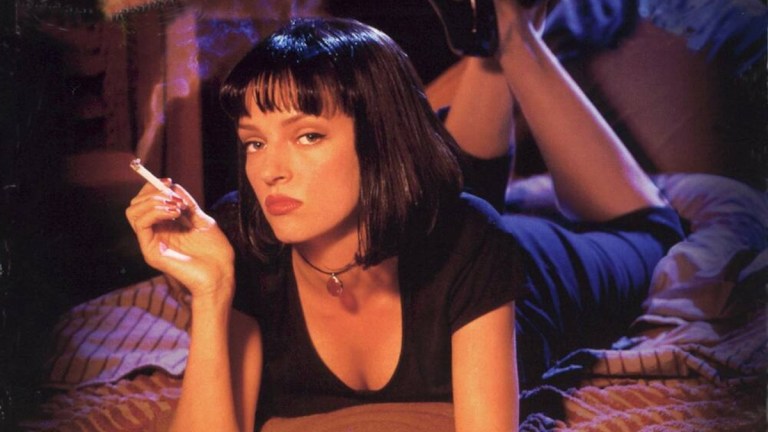
Pulp Fiction ultimately fell to Forrest Gump when it was nominated for Best Picture, but it wouldn’t be the last time Quentin Tarantino felt the Oscar slip through his fingers because Django Unchained and Once Upon a Time in Hollywood would later meet the same fate.
Tarantino might be somewhat comforted by the movie’s massive cultural impact, though, which still reverberates today. With its nonlinear storytelling and pop-culture-saturated dialogue, everyone and their mom thought they could make their own version of Pulp Fiction after its release. The results varied, to say the least. No one could quite match Tarantino’s choice needle drops and hyper-stylized violence while also managing to revitalize and launch careers (Guy Ritchie fans, your sign won’t stop me because I can’t read) but it sure says something that even the attempt to do so became a cinematic template.
The Shawshank Redemption
It’s wild to think that The Shawshank Redemption, a movie that often tops “best of” lists everywhere, didn’t win the Best Picture Oscar in 1995, but it was up against some real competition that year in Pulp Fiction, Four Weddings and a Funeral, and Quiz Show. Can we really blame Oscar voters all these years later for noping out and choosing the twee “life is like a box of chocolates” fare of Forrest Gump just to keep the peace? Yes, we absolutely can; this is the internet. People can say anything. But we’d argue that saying The Shawshank Redemption should have won Best Picture over Forrest Gump isn’t exactly ragebait these days. It’s a flawless Frank Darabont masterpiece, people!
Fargo
If there’s a definitive, cut-and-dried, “bad” Best Picture choice on this list, it’s gotta be picking The English Patient (a fine film, don’t get me wrong) over friggin’ Fargo, a movie so good it went on to spawn an also-great five-season TV show. Voters accepted that Frances McDormand should win Best Actress and that the Coen brothers should win Best Original Screenplay for this stellar black comedy crime caper, but it does feel a little bit like when it came to choosing Best Picture, their collective fingers slipped when they were trying to hit the Fargo button.
You see, there are plenty of memorable moments in Fargo. Marge’s “Oh, you betchas,” literally anything with William H. Macy trying to weasel his way out of the bind he’s in, the woodchipper scene, the local girls recalling their encounter with Steve Buscemi, but I’m gonna be real with you here: the only thing I can remember about The English Patient is Ralph Fiennes and Juliette Binoche’s pained expressions. I can’t be alone.
Good Will Hunting
Nothing was going to get in the way of James Cameron’s Titanic winning Best Picture. Nothing. But damn, there were some phenomenal contenders that really lost out in 1998, weren’t there? First up, Good Will Hunting, which famously won young BFFs Ben Affleck and Matt Damon a screenplay Oscar but couldn’t quite snatch Best Picture out from under the strains of hearts going on and such.
Though the “apples” scene has been parodied to death at this point, Good Will Hunting remains a charming crowdpleaser that builds its foundations out of Affleck and Damon’s raw talent but also gets a particularly wonderful performance out of the late Robin Williams, as his grieving psychology professor deftly breaks down the walls of a literal genius who still doesn’t quite have the confidence to leave behind the familiar and embark on his own journey of discovery.
LA Confidential
L.A. Confidential was another of 1998’s losers that didn’t stand a chance against icebergs being right ahead and whatnot. Generally, it’s now considered one of the best neo-noir crime thrillers ever made, but it wasn’t enough to stop Cameron’s heart of the ocean.
Of all the movies on this list, L.A. Confidential is probably the trickiest to discuss without acknowledging that it stars Kevin Spacey in a plum role, and remarks about his conduct on set have also recently been made. Co-star Guy Pearce calls him an “amazing” actor whom Pearce says he had “a difficult time” with, describing Spacey as “a handsy guy.” Not amazing context through today’s lens, but at the time, people definitely thought L.A. Confidential deserved to be among the Best Picture nominees, and it was even championed as a potential underdog to win the Oscar, which is no surprise given that Curtis Hanson’s attempt at adapting James Ellroy’s seedy novel is enormously successful.
Take it to the comments section, people; there’s no more to see here!