How Batwoman Takes on Policing and Social Issues
Batwoman has a unique take on matters of policing, race, crime, and other social justice issues that you won't find on other superhero TV shows.

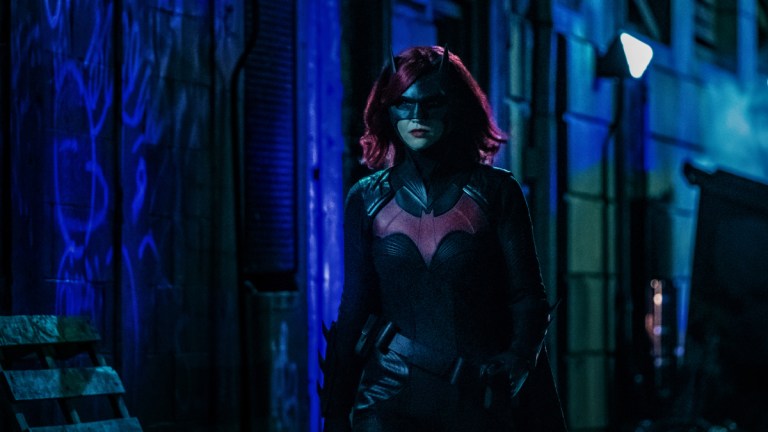
Police brutality has gone from a niche concern – one most white people considered impolite to bring up at dinner parties – to a compulsory national conversation. It’s long overdue, which has left many playing catch-up, especially white folks and popular media. As David Dennis Jr. pointed out in his excellent Twitter thread (seriously, go read it!) superhero shows have an especially tall order, given that they rely on portraying lawlessness and a fictionalized criminality that the hero can then clamp down on. But that image is out of touch with reality and can send damaging messages.
We’ve long discussed this problematic aspect of the genre in our reviews and features, whether it’s Barry Allen’s personal private prison kept in the basement of STAR Labs or Oliver Queen’s incredibly short-lived interest in reforming the prison industrial complex…before he went right back to adding more people to it. But Batwoman has taken a different tack that other comic book shows could learn from.
Batwoman has, to greater and lesser degrees, explored gentrification, corruption of police and the legal system, police brutality/the lawlessness of privatized law enforcement, and the wrongful conviction of a Black man. The show is not perfect, and it must be stated that no other show is doing quite what HBO’s Watchmen did in terms of exploring this country’s legacy of race, anti-Black violence, and policing. But Batwoman is a superhero show that spent the last year actively engaging with questions like “was that an appropriate use of force?” and “isn’t this a gross violation of the civil rights of the people of Gotham City?”
In the Gotham of Batwoman, a private security firm called The Crows operates with near-impunity within the city, keeping the incredibly well-heeled secure while everyone else hopes for the best. Gated community is an understatement, and frankly, the firm is closer to a mercenary paramilitary operation.
By the end of the season, The Crows have expanded their reach through an app that’s available to all Gothamites, even those who aren’t clients, so anyone can call in the mercenaries if they see big bad Alice and her brother Mouse, or Batwoman, whom Crows head honcho Jake Kane views as equally villainous. It’s easy to imagine the Crows’ app going the way of SketchFactor in DC and other IRL safety apps, which quickly turned into racial and socioeconomic maps, with white and upper class folks flagging anything that made them uncomfortable – namely, Black neighborhoods.
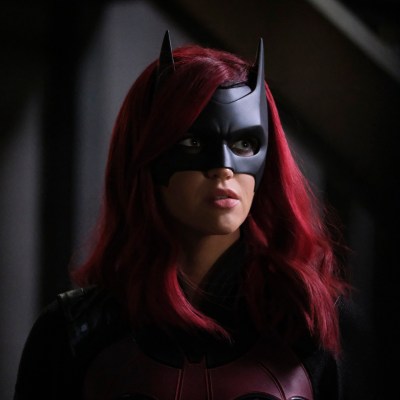
Sophie Moore, a high-ranking agent with the Crows, continually pushes back against their use of force and in several circumstances when the Crows overstep the rights of citizens, to the point where she is sidelined, suspended, and eventually kicked off the Crows. She questions her mentor Jacob Kane in his vendetta against Batwoman – for whom there is no arrest warrant, the shoot-to-kill order on Alice that comes and goes throughout the season, and the extreme blanket use of surveillance on average citizens. If you’re worried about police breaking the law or the militarization of the police, try the privatization of a police force on for size. While the writing on Batwoman clearly raises concerns throughout the season, Sophie and Kate are among the only people able to effectively check the Crows’ power, largely due to their personal and professional relationships with Jake Kane.
One of the show’s greatest assets has been the willingness of its writing and its hero to give the supposed villain of any given episode – who is often disenfranchised in some way that turns out to be connected to how they have lashed out at the system – the benefit of the doubt. It’s a benefit that our legal system is based on, but one that we know many people do not get – and one that the Crows don’t often give to suspects. Some so-called villains have turned out to be innocent people manipulated by others, or victims of systems that eroded their humanity.
For example, the season finale deconstructed the media and law enforcement trope of the giant invincible Black man, using the show’s own gossip host (voiced with juicy irony by longtime Batwoman comic fan Rachel Maddow) to introduce a suspect with barely-coded language. The show goes on to deconstruct that narrative, introducing the audience to his brother, who worries about his sibling who was nothing like the man described on TV. Gotham’s professional football league used him for entertainment and several people in positions of power abused their privilege to do serious harm, in this case irreparable CTE that turned a gentle man into someone who literally couldn’t feel pain, yet another harmful stereotype of Black folks that has caused harm from slavery to the medical field.
Gotham’s actual police force is so incompetent as to be a non-factor. They only come up in maybe a handful of episodes, but they feature prominently in one of the season’s best arcs: the wrongful conviction for Lucius Fox’s murder. His father’s murder was a defining moment in Luke Fox’s life.
Normally the calm, logical, emotionally removed man behind the comms and tech on Team Bat, we watched Luke put together the pieces and realize that a fellow Black man had been set up to take the fall for his father’s death and then pursue the real killer. This wasn’t a clunky after school special one-and-done story so the creators can check a box. The arc was allowed to breathe over many episodes, giving actor Camrus Johnson the space to show the complex and often-changing swirl of emotions his character was experiencing.
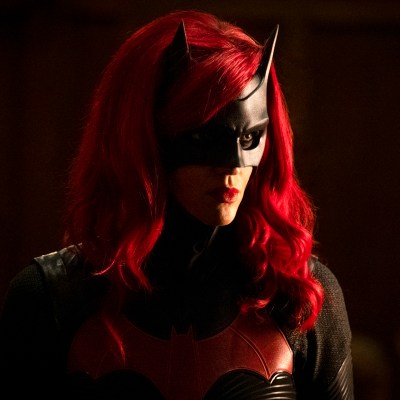
Nothing about the writing or the performance was straightforward or easy. It’s the kind of ambitious writing and gnarled injustice that real people actually face, the sort of thing that we actually need real heroes for. It was a high point of Camrus Johnson’s excellent, season-long performance.
It’s worth noting that simply having the male lead – number two on the call sheet, Batwoman’s professional other half – played by a Black man, makes a big difference. But while other Arrowverse shows have had prominent Black characters – John Diggle on Arrow and Iris and Joe West on The Flash come to mind – Batwoman is different. For one, the writing has made explicit that Luke and Kate are partners, whereas for all that he came to eventually love and respect them, Oliver fought Diggle and Felicity every step of the way, and The Flash has always felt like a lead singer with a backing band. Even then, there’s a hierarchy, and a quick spin around the internet will produce ample evidence that neither Iris West-Allen nor Candice Patton have received the kind of treatment that a show’s leading lady would normally expect.
At the root of this is the writers’ room. Batwoman is written by a diverse group of people that represents the issues discussed on the show. It includes queer folks, women, and BIPOC. Actors can do their best to convey the work with skill, sensitivity, and depth. But talent behind the scenes needs to be diverse as well, otherwise they’re still going to be talking about Grandma Esther’s noodles.
While there’s a lot we don’t know about Batwoman season 2, namely the LGBTQ actor who will play the new lead and how they will be written in to pick up the threads from last season, I hope Batwoman will continue working with “villains” who are more complicated than we’re used to seeing on shows with tights.
I also hope they’re able to portray more of the income inequality that showrunner Caroline Dries discussed in an interview with Den of Geek earlier this season. “One thing we had in Gotham City is this idea of the ‘us-versus-them’ in the districts where people are protected and then other districts where they’re left to their own devices because they can’t afford private security.”
Dries told us that, unfortunately, this wasn’t as emphasized as she would have liked, due to the limitations as production.
“In a perfect world, you’d have a bird’s eye view of the city and you would actually be able to see districts,” Dries said. There were some references to this earlier in the season with checkpoints between neighborhoods, but as the season went on, Dries said those little bridge scenes were the first to get cut due to time and money. Fortunately, it sounds like it will still be part of season 2, and likely more pronounced.
“If I had all the time in the world and all the money in the world, I would have been able to dramatize that disparity better and the segregation a little bit better, visually,” Dries said. “But we’re going to continue to keep that alive, especially now as we’ve seen the Crows sort of becoming more heightened in their power and becoming more authoritarian and scarier.”
Moreover, homelessness has been part of the show’s narrative since the very first teaser, but Batwoman has yet to engage with the issue of economic inequality or with actual people experiencing homelessness as individuals, rather than as an abstract concept. Even if it’s simply by having Mary, Luke, or the mysterious “Ryan Wilder” develop a relationship with someone who sleeps rough outside Wayne Tower or their apartment building, or if Mary’s clinic starts back up again and a character or two is differentiated that way, it would be nice to see humanity and individualism, rather than a monolith.
Finally, while it’s not an issue involving our carceral systems, it must be said that Batwoman has provided the space for Meagan Tandy’s Sophie to have a truly lovely storyline about her sexuality. While Kate Kane/Batwoman has basically always been out and accepted, that’s not everyone’s story. Not everyone has accepting parents and a family fortune to fall back on if they’re kicked out of the military. Sophie’s journey as a queer Black woman has been allowed to progress at her own pace, allowing the character to unpack what it means for her relationship (she starts the series married to a man), her identity, and her family as she explores who she is and what that means to her. Not everyone’s path is the same, nor do they have to express it the same way. While it’s great for people to see Kate Kane as a role model, I imagine there are far more people who can relate to Sophie Moore.
As television reorients itself around a long overdue reprioritization of Black lives, the landscape will shift, in some cases dramatically, as with the cancellation of long-running show Cops. But for other shows, like Batwoman, there’s an opportunity to continue pushing even further forward on the very social issues that once caused trolls to review-bomb the show with so much online hate. Heading into season 2, as the social and cultural landscape shifts, Batwoman should continue Kate Kane’s legacy of fighting injustice intersectionally, centering the marginalized while upending comic book tropes about law and order.