The Christmas Movie Classic That Marked Chevy Chase’s Biggest ‘90s Mistake
Chevy Chase starred in one of the all-time Christmas comedies in Christmas Vacation, but passing on The Santa Clause occurred during a turning point in his career.

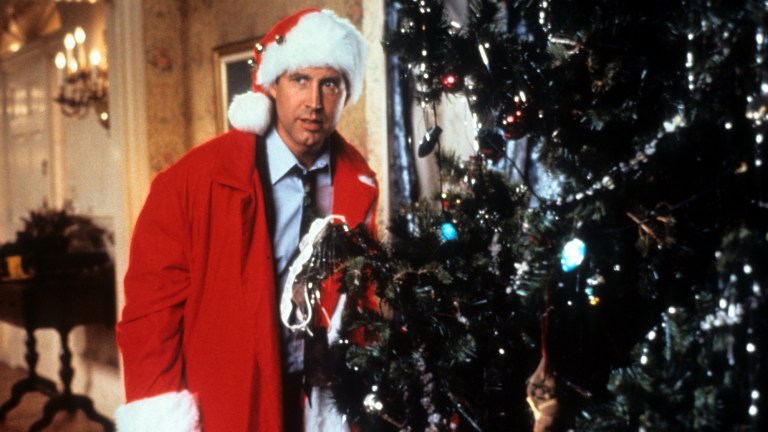
It is easy to forget just how big Chevy Chase was in the 1980s. During a boom decade for comedies and cads, Chase might have been the biggest cad to dominate the box office scene of them all. He even appeared in Caddyshack (1980)!
These days folks tend to focus on the turbulent star’s behind-the-scenes reputation and various gossips, but in the era of Reagan, his name helped get movies like Three Amigos! and Spies Like Us greenlit. Also much to Chase’s personal satisfaction, he was still considered something of a sex symbol thanks to films like Fletch (1985), a byproduct of the early aura-farming he did back in his breakout success on the first season of SNL in 1975-6.
Yet if there was one subgenre of laughers that most explained his appeal, it was the family comedy, the increasingly popular baby boomer variation on father knows best tales from their youth, which came roaring back on television in the ‘80s with allegedly wholesome entertainment like The Cosby Show and Full House, and on the big screen via efforts like Mr. Mom and Three Men and the Baby. In certain ways, Chase pioneered what would soon become a defining feature of that entertainment as more boomers aged into parenthood over the next 20 years: the family movie about an oafish and slightly naughty father.
Thus entered Clark Griswold, the snide, selfish, and lecherous head of the Griswold clan in Harold Ramis and John Hughes’ National Lampoon’s Vacation. While that R-rated 1983 hit felt like a subversion of the burgeoning ‘80s sitcom, premiering one year after Family Ties put Michael J. Fox on Steven Spielberg’s radar and one year before The Cosby Show fooled most of America, by the time of Chase’s third outing as a pitiful paterfamilias in Christmas Vacation (1989), the rough edges had been smoothed over and the rating blunted to a PG.
To be clear, Christmas Vacation is a holiday favorite nearly 40 years later for a reason. Its cynicism about the indignities of holiday gatherings is only matched by its accuracy—at least in the scenes where Clark is struggling with Christmas lights and not sexually harassing a clerk in front of his son. It was one of the 20 biggest movies of ’89 and capped a decade that saw SNL’s would-be heartthrob transform into the face of reliable family entertainments like the Griswold flicks and 1988’s Funny Farm.
All of which is to explain why Chase made one of the biggest mistakes of his career in the ‘90s when he failed to follow up on Christmas Vacation with what became another holiday staple. This is how Chevy missed out on The Santa Clause.
Admittedly, there was no obvious way of recognizing in 1992 that a screenplay by television comedy writers Leo Benvenuti and Steve Rudnick would become a VHS and cable television favorite in the years to come. Benvenuti and Rudnick had some experience writing for Carol Burnett’s briefly revived variety show in 1991, as well as for Dennis Miller’s talk show, but the pair had never written a feature when the story of Scott Calvin, a toy executive with fortuitous initials, started making the rounds at Disney.
The story obviously had its appeal, with yet another buffoonish dad finding out he’s been litigiously bamboozled into becoming the next Santa Claus after he scared the last guy off a roof—meaning this is the rare Christmas movie that incidentally begins with what might be second-degree manslaughter. No seriously, in the earliest draft(s), Scott even shot Santa, thinking he was a burglar.
In 1992, it had appeal to a revitalized Walt Disney Pictures, which under the stewardship of Michael Eisner and Jeffrey Katzenberg was all-in on movie star vehicles. This is probably why they thought they had a great one for a comedian with a proven track record in this sort of thing. The problem was Chase simply didn’t want to be that kind of star at this time.
At the turn of the decade, Chase’s notoriously difficult reputation was reaching a zenith as he sought to avoid doing the kind of family movies that studio executives might want to pigeonhole him in. He wanted to pivot not just back to more adult-skewing comedies like Fletch but outright dramatic roles. It’s supposedly why the actor butted heads with not only the Memoirs of an Invisible Man’s screenwriter, William Goldman, but its initial director Ivan Reitman. Chase championed the project at Warners as an opportunity to stretch his dramatic muscles as a romantic leading man. The experience left Goldman allegedly snarking, “I’m sorry, but I’m too old and too rich to put up with this shit,” (a quote he later walked back).
That film was ultimately directed by John Carpenter who also had nothing nice to say about the project. The film was a disaster by the time it came out in 1992, and shortly afterward Chase would pivot again to the project he would ultimately do instead of The Santa Clause: The Chevy Chase Show.
Chase’s contentious history with late night actually went back further than his movie career, with the comedian being eyed as a potential successor for Johnny Carson as host of The Tonight Show as early as 1975. After the first episode of Saturday Night, Dave Tebet reportedly said to other executives, “Chase is the only white gentile comedian around today. Think what that means when Johnny leaves.”
And in a profile cover story in New York magazine, Chase publicly toyed with the idea before dismissing it: “I’d never be tied down for five years interviewing TV personalities.” Perhaps that line is why Chase was never invited to guest host The Tonight Show like NBC executives dreamed, or why it would be another half-decade before Chase was invited again to be a guest on Carson’s show.
Circa 1993, however, things were different. Chase’s pivot to “dramatic” work had gone up in smoke. Meanwhile studios were still offering him roles like playing… the Santa Claus. So in the wake of Carson finally retiring for realsies from The Tonight Show, and his throne remaining in question as David Letterman defected to CBS, Chase took a $3 million offer from Fox Broadcasting to become their own late night gamble—after Dolly Parton passed.
In addition to signing Chase for $3 million, Fox spent another $1 million renovating Los Angeles’ Aquarius Theater into the renamed “Chevy Chase Theater.” And on Sept. 7, 1993, The Chevy Chase Show debuted on Fox, a week after Letterman’s new CBS premier and a little over a year after Jay Leno’s ascent on CBS. The Fox contender was canceled six weeks later.
In a statement to The New York Times about his show’s ignoble end, Chase said he found talk shows to be a “very constraining format” and that “my hat is off to those guys who do this kind of work. It takes a tremendous effort and long hours of commitment.” But in a telling further pivot, he said he was already looking forward to the other movie he shot in early ’93: Cops & Robbersons, a late jumper on the buddy cop movie bandwagon that paired Chase, playing a street-wise crook, with Jack Palance as a “too-old-for-this-shit” cop. It was a flop.
Meanwhile Disney found its Santa Clause star after another SNL alum, Bill Murray, likewise passed: they looked to television where one of the new ‘90s era sitcom dads on ABC was a little more gruff; a little more loutish; a little more like Clark Griswold.
By leading The Santa Clause, Tim Allen found a clean transition from TV to the big screen, becoming a permanent fixture of family entertainment in the ‘90s, 2000s, and honestly to this day where he is still milking Santa and Disney’s jolly red robes in The Santa Clauses, a 2023 Disney+ sequel to the trilogy of Christmas movies he ended up making between ’94 and 2006. And the O.G. remains a favorite on Disney streaming.
Conversely, Chase went back to family comedies before the ‘90s ended in Man of the House (1995), Vegas Vacation (1997), and Snow Day (2000).