Batman: Bruce Wayne Works Best When He’s James Bond
Batman #5 lets Bruce Wayne pretend to be 007.

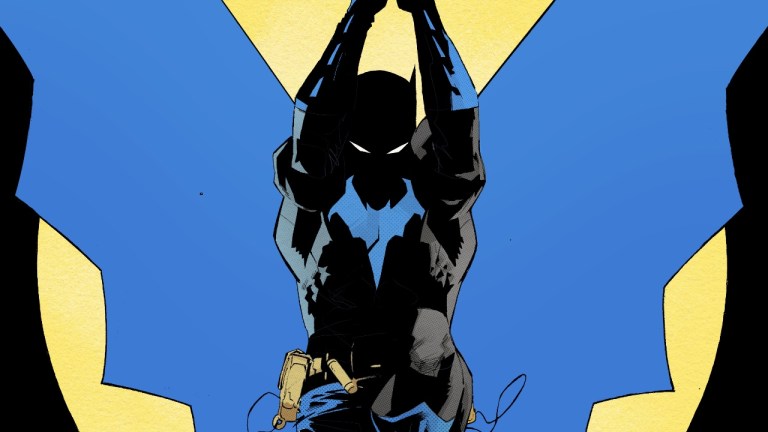
Who is Bruce Wayne? Obviously, he’s the Batman, the dark avenger who was born the night Thomas and Martha Wayne were gunned down by Joe Chill in Crime Ally. But who is he when he’s not sulking in Batcaves or glowering from rooftops?
One of the best answers to that question comes in Batman #5, written by Matt Fraction and illustrated by Jorge Jiménez. In the preview pages already released by DC Comics, we see Wayne picking up scientist Annika Zeller for what they insist is not a date, but what is clearly a date, if only because the issue is titled “Date Night.” The preview pages feature a few bon mots and a daring scene of evading ninjas, all of which answer the question above. Who is Bruce Wayne? Why, he’s James Bond… at least, he’s best when he’s James Bond.
Bruce Wayne is as old as Batman himself, as the Dark Knight’s secret identity also debuted in 1939’s Detective Comics #27. In that legendary story by Bill Finger and Bob Kane, Bruce Wayne acts like a bored socialite, who even Commissioner Gordon dismisses as “disinterested in everything” before the final panel reveals that he is in fact the Batman. Since that issue, most portrayals of Wayne have followed suit. To distract from his nighttime activities, Wayne pretends to be a millionaire playboy, a guy whose massive wealth leaves him shallow and reckless.
Occasionally, writers have used the millionaire playboy identity to advance a story. Batman Begins features an excellent example, when Wayne insults party guests in a drunken rant, chasing them out of his home so that Ra’s al Ghul can no longer use them as leverage. But too often, writers treat the Wayne identity as a corollary to Superman‘s mild-mannered Clark Kent persona. In the same way Clark stumbles through the Daily Planet offices and allows himself to be bullied by jerks like Steve Lombard, Bruce Wayne is a big doofus who attracts attention but achieves little. He’s a useful idiot, nothing more.
But sometimes, writers let Bruce Wayne be active, exciting, and competent, just in a manner very different from Batman. In those moments, Bruce Wayne doesn’t feel anything like the Caped Crusader or Clark Kent. He feels like James Bond.
An obvious example occurred in Justice League International #16 (1988), part of the legendary run by Keith Giffen and J.M. DeMatteis. The cover by penciler Kevin Maguire and inker Al Gordon features a tuxedoed and smirking Wayne holding a pistol in one hand and teammate Green Flame (later Fire) in the other, while the villain the Green Bee pulls a dagger from her garter. Inside the issue and the one that follows, Batman “disguises” himself as Wayne to lead the team into the hostile nation of Bialya to learn about a new secret weapon. Even though the other JLI members think Batman’s pretending to be Wayne, Giffen and DeMatteis get a lot of mileage out of contrasting the gruff Dark Knight to the sophisticated and charming Wayne, allowing each side of the personality to advance the mission.
Although the most obvious example of Bruce as Bond, the JLI issue is hardly alone. The first Ra’s al Ghul stories from the 1970s, by writer Dennis O’Neil and artist Neal Adams trade on Bond tropes, even though the bare-chested Batman who sword fights his immortal enemy in exotic locations overtakes the tuxedoed Wayne. When Grant Morrison revived those ideas for their run in the mid-2000s, they pushed Wayne as Bond to the foreground, allowing him to use his massive charm and endless arrogance to, say, battle bat-mutant ninjas who interrupt a celebrity fashion show. By giving Wayne competence, these stories not only allow Batman comics to play in different genres, but they also don’t leave the reader bored, waiting for Wayne to disappear and the Caped Crusader to return.
Batman #5 perfectly illustrates the appeal of the approach. The issue puts Batman in a terrific dilemma, forcing him to protect Dr. Zeller from the ninjas in the 000 gang and from the mystical warrior the Ōjō without revealing his superhero identity. As the preview pages show, Wayne pulls off the feat by showing off some of the skills he uses as Batman, but with an added level of wit and charm, making the character feel fresh. The rest of the issue continues that trope, leading to the best ending of an already excellent set of issues by Fraction and Jiménez.
Hopefully, other writers will take note of how Batman #5 uses Wayne, allowing Bruce Wayne to be just as exciting as his famous counterpart.
Batman #5 hits comic book stores on January 7, 2026.