Netflix CEO’s Theater Take Isn’t Democratic, It’s Out of Touch
Following its acquisition of Warner Bros., Netflix should understand that theater-goers exist everywhere.

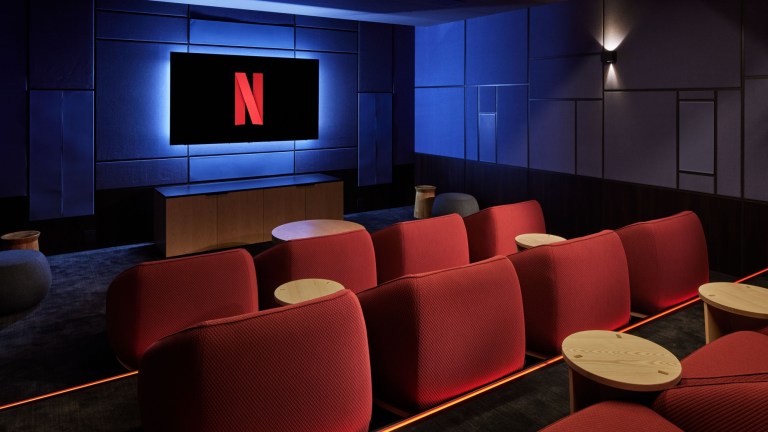
It took less than 24 hours for Netflix to start changing its tune. In the days leading up to the streamer’s acquisition of legendary studio Warner Bros., Netflix co-CEO Ted Sarandos insisted that the company would maintain WB’s theatrical strategy. But on a call with investors on December 5, 2025, Sarandos said (via Deadline), “My pushback [to theatrical releases] has been mostly in the fact of the long, exclusive windows, which we don’t really think are that consumer friendly.”
It’s not the first time that Sarandos has used that type of language, suggesting that there’s something elitist or unfair about theaters, something that Netflix can solve. When one hears Sarandos talk about theaters and the needs of the common people, one cannot help but think about Lucille Bluth pricing bananas. In the same way that Lucille was so out of touch that she thought one banana would cost 10 dollars (in 2003!), Sarandos’ comments about the theatrical experience suggests that he knows little about the average moviegoer, and thus has no idea about what they want or need.
Sarandos’ most pointed statements about theaters came earlier this year, when he framed his resistance to theaters in populist terms. As part of the TIME100 Summit, Sarandos (via Variety) said that “the communal experience” is “an outmoded idea… for most people.” There are some people who love theaters, Sarandos allowed, but only in certain areas. “If you’re fortunate enough to live in Manhattan, and you can walk to a multiplex and see a movie, that’s fantastic. Most of the country cannot.”
One has to wonder what part of the country Sarandos is talking about. This writer has never been to Manhattan, let alone New York City, nor has he ever been to Los Angeles. This writer has lived his entire life in Michigan and North Carolina, and not the major metropolises of those parts of what execs might call “fly-over country.” And yet, this writer loves to go to theaters, and always has.
This past summer in Kalamazoo, Michigan, a fan screening of Superman, limited only to Amazon Prime subscribers, was completely sold out. As of this writing, the Monday night subtitled screening of Jujutsu Kaisen: Execution—which is less a movie and more a compilation of the anime’s second season, combined with a sneak peak of season three—is currently half sold out in Greensboro, North Carolina, of all places, despite the fact that it can all be seen streaming on Crunchyroll.
Nationwide box office receipts for hits like Zootopia 2, Wicked: For Good, Sinners, and A Minecraft Movie suggest that these are not random examples. All across the country, people go to movie theaters, not just in Manhattan and other urban locales.
If Sarandos has any case, it’s in terms of economics and not distance. Even in these not-so-major metropolises, tickets run from $10 to $15 dollars a piece. Add in popcorn and sodas, and a family night out to Zootopia 2 can run nearly $100 dollars. But, then again, so does seeing the local hockey or baseball teams (not NHL or MLB level, I assure you), and a round of mini-golf or bowling isn’t going to be much cheaper, even if you run through McDonald’s first for dinner.
Of course, all of us not in the rarified walking distance to theaters that Sarandos talks about know that you just grab some snacks at Meijer before going to the theater instead of buying them at the theaters (just be nice to the staff and it isn’t a problem, especially if you clean up after yourself, which you should be doing anyway!). Subscription services such as Regal Unlimited and AMC A-List make the price even easier to deal with.
Which isn’t something one can say about Netflix. The ad-supported version of Netflix starts at $7.99, but the standard version of the service runs $17.99 a month, while the premium version, which allows streaming in 4K, costs $24.99 a month. If you want to add users to the account (no more password sharing!) that runs from $6.99 to $8.99 a month extra. And these are just the latest prices, which went up in January of 2025—less than six months after the previous price hike.
It’s those numbers that truly undercut Sarandos’ claim. Those prices aren’t “consumer friendly,” nor is the streamer’s tendency to raise its prices without actually improving the experience. It’s just a business trying to get as much money as it can. So when Sarandos talks about the needs of the audience, as he did in an announcement regarding the Warner Bros. acquisition (via Deadline), no one should be confused.
“I think over time the windows will evolve to be much more consumer friendly… to meet the audience where they are,” he said. But it’s clear that Sarandos has no idea where that audience is, and even less of an idea about how they watch movies.
For that reason, it’s somewhat heartening to hear Sarandos change his tune again, on another investor call on Monday, December 8 (via Deadline). Acknowledging that the purchase gets Netflix “a motion picture studio with a theatrical distribution machine,” Sarandos said: “When this deal closes, we are in [the theater business]. And we’re going to do it.” He even went so far as to state that, had the deal closed earlier, Weapons, Superman, and other WB hits would have released the same way they did, first to theaters and then to HBO Max.
It’s hard to know how much we should trust that rhetoric this time around, given the change in language from just before the weekend. But we hope that he’s serious about keeping WB’s model in place. Because then, Netflix would be meeting audiences where they are at: in movie theaters, all across the country.