Avengers: Doomsday Is the Perfect Place to Bring Thor to an End
Thor wants to live a little longer, but does that make sense for his story?

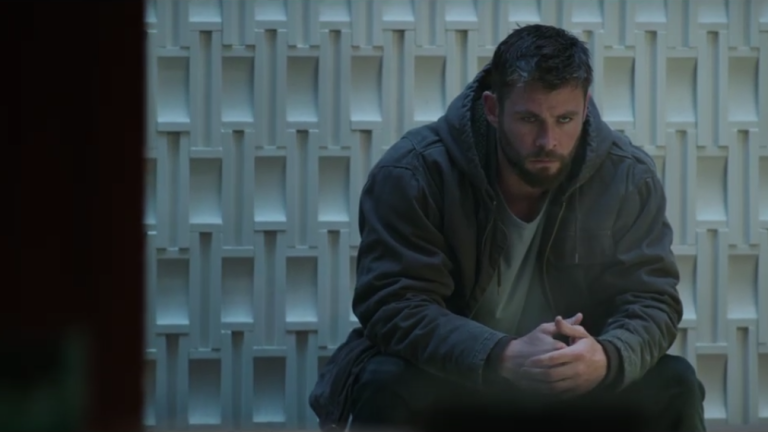
By the time the credits rolled on Avengers: Endgame, Thor was the only founding Avenger in a good place. Iron Man and Black Widow had died. Captain America was an old man. Hakweye had a terrible haircut. Sure, Thor had lost his brother Loki, his pal Heimdall, and many fellow Asgardians, but he at least got to go on and star in a fourth movie, the only MCU hero to do so.
Judging by the second teaser for Avengers: Doomsday, things may get much worse for the God of Thunder. In voiceover, we hear Thor praying to his father Odin to live just a little longer, long enough to see his Love. While his end will certainly be dramatic and heartbreaking, Thor’s MCU story needs to come to an end, and Doomsday will be the perfect place to do it.
Few characters have evolved as much as Chris Hemsworth’s Thor. In both 2011’s Thor and the 2013 sequel Thor: The Dark World, he’s a serious and arrogant powerhouse, who speaks in an elevated English accent, befitting his origins as a comic book take on Norse mythology for whom Stan Lee wrote pseudo-Shakespearean dialogue. While the quippy nature of Joss Whedon‘s writing gave him a few jokes in The Avengers and Avengers: Age of Ultron, Thor really transformed in Thor: Ragnarok. Driven by the comic timing that Hemsworth demonstrated in the Ghostbusters reboot and by director Taika Waititi’s sensibilities, Ragnarok transformed Thor into a big lovable goofball, far from the stoic man we first met.
But that’s less a character arc and more of a shift in how Marvel uses the character. Emotionally, Thor’s maturation has been much more subtle, especially compared to his comedic turn. As in the Jack Kirby story that introduced the character in 1962’s Journey into Mystery #83, Thor began as an arrogant, reckless youth, cast to Midgard (a.k.a. Earth) by Odin to learn some humility. To be sure, he learns aspects of that humility in each of the movies, as when he sacrifices himself to save Earth in the first film and comes to terms with the loss of Mjolnir in Ragnarok.
However, the most profound close to Thor’s story came in Avengers: Infinity War and Endgame. Infinity War begins with Thor, who had just learned in Ragnarok that his thunder powers were independent from the destroyed Mjolnir, failing to stop Thanos from destroying the Asgardians. He then goes on a mission to build Stormbreaker and channel his powers, only to fail to kill Thanos, aiming for the chest instead of the head. He gets his revenge in Endgame, finally lopping off the Mad Titan’s head, but it’s not enough. Throughout Endgame, Thor’s depressed and refuses to acknolwedge it.
Thor’s character arc comes to an end when he visits the events of The Dark World during the time heist portion of Endgame. When he reunites with his mother Freya, Thor learns a lesson he never could have accepted before, not even during The Dark World. He learns that even when he uses his power for good, his value does not come from power. When he reaches out and receives Mjolnir again, Thor realizes that he’s worthy, even after failing, even as an emotional and physical wreck.
To be sure, Love and Thunder builds off of that point, sending Thor to find something new instead of simply recreating the Avengers with the Guardians of the Galaxy or trying to replace Asgard. Furthermore, it is possible to give a character a second, satisfying arc; just look at Tony Stark, who had ceased being the selfish person he first was by the end of Iron Man 3, and yet found a new arc when he started worrying about a “suit of armor around the world” in Age of Ultron.
But it seems unlikely that Hemsworth will commit to two more Thor movies, especially given the lackluster response to Love and Thunder and the extreme change in tone that will come with Waititi’s departure. So rather than letting a founding Avenger twiddle his thumbs in the background, it’s time to let Thor go to Valhalla. His story is done.
Avengers: Doomsday arrives on December 18, 2026.