The Vampire Lestat Review: Sam Reid Rocks In Ambitious New “Interview” Chapter
Lestat's rock star era is a bold, thoughtful, and thorougly enjoyable evolution for the most underrated series on television.

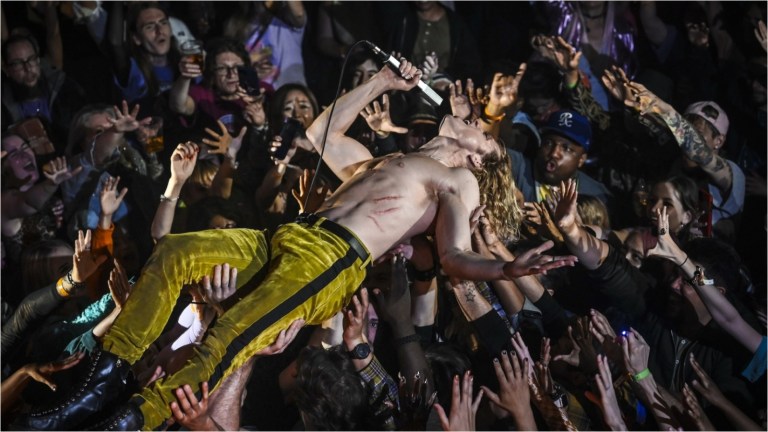
The following The Vampire Lestat review is spoiler free.
AMC’s Interview with the Vampire is, hands down, one of the best adaptations in television history, a series that manages to honor the luxurious, emotionally decadent spirit of its source material even as it makes major changes to the events depicted in Anne Rice’s original novel. Full of decadent, often gleeful violence, thorny moral questions about truth and memory, and a central relationship that’s as frequently toxic as it is desperately romantic, the series’s first two seasons are an utter delight, and a powerful reminder of the great things that genre television is capable of.
To what will likely be the shock of some viewers, the show’s third season, now renamed The Vampire Lestat, takes much of what we know about the first two outings and throws it in the proverbial trash. Blowing up the narrative in the absolute best way possible, the story shifts its focus to the second novel in Rice’s sprawling Vampire Chronicles series, pivoting sharply in tone, visual style, and content as it recenters its story around the titular Lestat de Lioncourt (Sam Reid), who responds to the publication of the tell-all memoir that gives Interview with the Vampire its name by forming a rock band and going on tour. A premise that sounds patently ridiculous on the surface, it’s one that nevertheless allows for a near-perfect blend of the franchise’s signature bombastic camp and quiet, unexpected emotional depth.
But we should be clear: This is a change that takes a little bit of getting used to. Tonally and narratively, this is Lestat’s story now, framed from his perspective and driven by his emotional journey. Gone is the lush, haunting setting of New Orleans, and in its place is a constantly-in-flux world of performance, spread across tour buses, hotel rooms, and rehearsal spaces, most often framed through the lens of journalist-turned-vampire Daniel Molloy’s (Eric Bogosian) documentary camera. The AMC adaptation has always leaned into the idea that, at its heart, this show is a story being told, and, as such, its narrative is shaped by unreliable narrators, hazy memories, hidden agendas, long-held griefs, and no small amount of self-delusion. The Vampire Lestat turns that idea up to 11, featuring flashbacks that expand, reframe, and even contradict some of what we’ve seen before.
The story picks up in the wake of the release of Molloy’s infamous book. Its publication enrages Lestat, now living in Montreal, who has some serious bones to pick with the accuracy of his ex/eternal life partner Louis de Pont du Lac’s (Jacob Anderson) recounting of their history together. After barging in to give some performance advice to a (loud, largely terrible) neighborhood garage band, Lestat decides to work his feelings out through the composition of music, ultimately taking over the group, renaming it after himself, and turning the question of his own vampirism into a sort of macabre promotional tool. Each episode moves through various cities on the road, as Lestat contends not only with his growing fame, but the ways in which his newfound career is forcing him to confront the darker aspects of his own immortality. (As well as the vampires who don’t like their dirty laundry being aired quite so publicly.)
Lestat’s rock band is the plot device that makes the wheels of the series turn, but it’s also our clearest view into the character’s emotional state. The many songs featured throughout the six episodes available to critics are less splashy musical numbers (though they do feature Reid in an extraordinary array of tight pants and body glitter) than inward explorations of Lestat’s psyche. The music — written by composer Daniel Hart and featuring lyrics that clearly reference Lestat’s turning at the hands of the vampire Magnus (Damien Atkins), his history and relationship with Louis, and his lingering grief over Claudia’s (Delainey Hayes) death — is better than it has any right to be, and frequently serves as jumping off point for more detailed dives into specific aspects of the vampire’s past.
It’s difficult to overstate the scope and scale of Reid’s performance here, from playing multiple versions of Lestat across various points in his human and undead life, singing all the songs himself, and running a gamut of frequently devastating emotions from overt cruelty to crippling despair. It’s a tremendous achievement, and although award bodies rarely give genre television the respect or attention it deserves when it comes time to hand out statuettes, if there were any justice, Reid would land an Emmy for this. It’s outstanding work on virtually every level, balancing rage, heartbreak, and grief alongside a fairly elaborate mental breakdown as Lestat finds himself haunted by ghosts both literal and figurative.
As Rice devotees already know, neither Louis nor Claudia plays a particularly large role in the novel The Vampire Lestat. Yet the series finds organic, thematically relevant ways to keep both characters at the center of Lestat’s narrative and present in viewers’ minds. But the beating heart of this franchise remains the love story between Lestat and Louis, and their relationship dynamic remains as thorny and fascinating here as it was in the show’s previous outings. Anderson and Reid don’t get to spend all that much screen time together until the back half of the season, where the duo makes a feast out of some exceptionally meaty emotional material as Lestat and Louis work through their shared grief about losing Claudia, and how the circumstances surrounding her death reshaped their relationship to one another.
The series also introduces Lestat’s mother, Gabriella (Jennifer Ehle) — known as Gabrielle in the books, but just go with it — one of the more influential and complex figures in Lestat’s life. Lestat’s relationship with his mother is….let’s just call it deeply complicated, a problematic tangle of need, manipulation, desire, and genuine affection that, yes, takes The Vampire Lestat firmly into overt incest territory. It’s a twist that’s as disturbing as it is tragic; Gabrielle is not only Lestat’s mother but also his fledgling, but the strange bond between the two predates either of them becoming immortal. One of the few negatives of the season is that, since the story is being told from Lestat’s perspective, Gabriella gets very little in the way of interiority or emotional depth, and many of her motivations are murky at the best of times. Still, although Ehle’s overbearing accent is an unfortunate and somewhat bizarre performance choice, she more than holds her own against Reid at his most desperate and unhinged, mixing sympathy and cruelty in equal measure.
The season incorporates elements from multiple installments of Rice’s Vampire Chronicles beyond The Vampire Lestat, including Queen of the Damned and Merrick, blending key elements of Lestat’s origin story with a more contemporary exploration of grief, trauma, and loss. It gleefully plays with ideas of perception, memory, manipulation, and the truths we long to believe about ourselves in the stories we tell. It is weird and over the top and, at times, isn’t actually a particularly faithful take on Rice’s novel. Yet, while The Vampire Lestat may not strictly adhere to the letter of the original text, showrunner Rolin Jones proves that he and his team understand the spirit of its story and the larger universe in which it exists down to the ground. The end result is an adaptation that feels darkly magical: ambitious, unapologetic, loud — musically and otherwise — and absolutely unforgettable. Lestat’s “Long Face” may be unlikely to end up as the song of the summer, but The Vampire Lestat is undoubtedly the season’s best show.