Marvel Rivals’ Biggest Roster Problem Isn’t Mutants, It’s Role Balance
Mutants keep taking the blame even though the hero shooter’s real problem lies elsewhere.

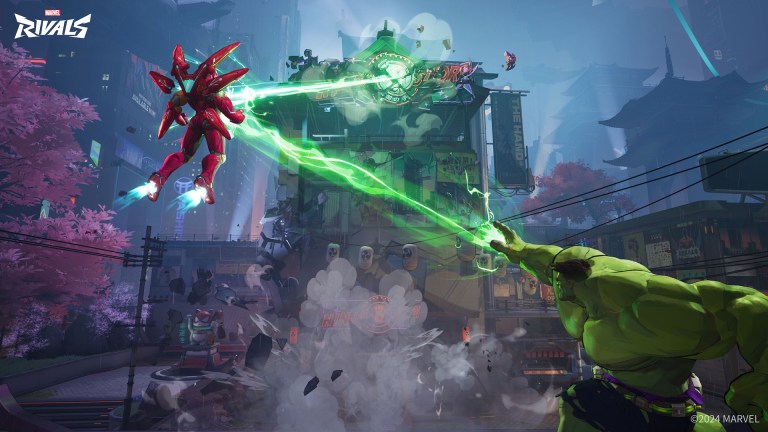
Any X-Men fan knows that the team just isn’t complete without a certain optic-blaster. Thankfully, the NetEase Games developers behind Marvel Rivals seem to feel the same way. On June 12, Cyclops made his debut in the team-based hero shooter as part of the game’s season 8.5 update, finally bringing the X-Men’s field leader to the game’s hero roster.
Other than excitement for such a fun character, Cyclops’ arrival ignited a steadily growing debate within the community: is Marvel Rivals adding too many mutants? It’s not an unreasonable concern at first glance…until one takes into account that there are 51 playable characters in the game and only 13 of them are mutants.
Simply put, Marvel Rivals doesn’t have a mutant problem, it has a role balance problem. In fact, focusing on the mutant count distracts from what has increasingly been the game’s even deeper roster issue: the growing divide between damage dealers, tanks, and supports.
That imbalance stems from the ever-expanding Duelist roster. As more DPS heroes are added, and Vanguard and Strategist additions remain relatively scarce, team compositions become harder to balance. In recent seasons, this has created problems that have a much greater impact on actual matches than whether a character comes from the X-Men or Avengers.
To understand why Marvel Rivals’ growing Duelist roster is becoming a problem, it’s important to first understand how team compositions work in hero shooters, and what Duelist, Vanguard, and Strategists even are for those unfamiliar with the game.
Often shortened to “team comp,” team composition refers to a combination of roles and skills a team chooses in order to create balance and achieve a shared goal, often protecting a moving convey or maintaining control of a designated area. While individual skill matters and can either make or break a match, games like Marvel Rivals are designed around teams filling different responsibilities in order to create synergy.
Marvel Rivals divides its playable characters, or “heroes,” into three primary roles: Vanguard, Duelist, and Strategist.
Vanguards serve as the game’s tanks, using their durability and defensive abilities to create space for teammates and to absorb incoming damage.
Duelists are the damage dealers, often referred to as DPS (damage per second), whose primary job is securing eliminations and applying offensive pressure.
Strategists act as supports, offering healing, buffs, crowd control, and other utilities that help keep a team alive.
Because each role serves a different and specific purpose, Marvel Rivals team comps function best on a 2-2-2 structure: two Vanguards, two Duelists, and two Strategists. This arrangement gives teams enough frontline presence to contest other players and protect convoys, enough damage output to win fights, and ensures equal healing to sustain pushes and survive enemy pressure.
The problem arises when too many players gravitate towards the same role because of the lack of options in other roles. A team with four Duelists might seem intimidating in theory, but without enough healing or frontline protection, those damage dealers often struggle to stay alive long enough to make any impact in a match.
That’s why many hero shooters encourage balanced role distribution through matchmaking systems or evenly spread role design. Marvel Rivals has neither.
For Marvel Rivals, team comps are entirely up to player choice. There can be a team of all healers for all anyone cares (and from experience while that is fun, it doesn’t yield the most winning results).
In theory, the freedom allows for creativity and experimentation, but in practice it often leads to teams overloaded with Duelists as they are typically the most favored role in team-based shooters.
Now compare this system to Blizzard Entertainment’s Overwatch, which utilizes a role queue system that requires teams to enter matches with one Tank, two Damage heroes, and two Supports. Players choose their preferred role before matchmaking begins, ensuring not only that every team starts with a functional composition but players maintain freedom of choice as well.
While some players dislike the restrictions that role queues can sometimes impose, it largely eliminates the chaos of entering a match only to discover four teammates instantly locked DPS heroes.
This issue becomes even more noticeable when comparing the makeup of each game’s roster. Marvel Rivals currently has 11 Stratigests, 13 Vanguards, and 27 DPS heroes.
Compared to Overwatch that, while having a nearly identical roster size at 52 heroes, distributes the roles much more evenly: 11 Tanks, 13 Supports, and 18 DPS heroes. While damage dealers remain the largest role in both games, one clearly dominates the roster compared to the other.
The result is a compounding problem for Marvel Rivals players that is much more frustrating than mutants. The game lacks both a system that guarantees balanced team compositions and, more frustratingly, continues to add DPS heroes to a role that players are already most likely to pick.
The last Marvel Rivals season that didn’t introduce a new Duelist was season 5 in November 2025. For those unfamiliar with the game’s update structure, each season is split into two major content drops: an X.0 update that kicks off the season with a new hero and an X.5 midseason update that introduces additional content and one more hero.
Season 5 expanded the roster with Rogue as a Vanguard and Gambit as a Strategist, giving tank and support players fresh options while keeping the game’s role distribution in check.
Since season 5, every new hero added to Marvel Rivals has been a Duelist. Three straight seasons of damage-focused additions might not sound significant at first, but when Duelists already make up the largest role in the game, every new DPS hero added pushes the roster further out of balance.
The issue isn’t that Duelists shouldn’t be added at all, either. Marvel has no shortage of iconic damage-dealing characters, and many fans have been waiting for heroes like Cyclops to arrive. What’s frustrating is that NetEase continues to prioritize DPS heroes despite having a massive pool of potential Vanguard and Strategist candidates to choose from.
Marvel’s universe is filled with characters who could easily fit the tank and support roles. For the former, characters like Doctor Doom, Luke Cage, Ghost Rider, She-Hulk, and Carnage are some fan suggestions that have been thrown around on r/marvelrivals Reddit, the first of which being nearly confirmed for the future thanks to leaks and in-game teaser appearances. For the latter, characters like Silver Surfer, Nightcrawler, Wiccan, Quicksilver, and Vision have also been wished for.
Which makes the current trend of DPS-heavy seasons so puzzling. Marvel Rivals isn’t running out of characters to add, nor is it limited by the source material when it comes to assigning roles. In fact, NetEase has already shown a willingness to get creative with role design, with characters like Ultron being reimagined as a Strategist despite being one of Marvel’s most notorious villains.
Whether the developers pull from The Avengers, Fantastic Four, X-Men, or Marvel’s extensive roster of villains, there are countless characters who could help strengthen the game’s Vanguard and Strategist lineups while generating just as much excitement as Duelist reveals.
Cyclops was a welcome addition to Marvel Rivals, and, again, there’s nothing inherently wrong with adding popular damage-dealing characters. However, if NetEase wants to improve match quality and keep players invested for the long haul, future roster expansions should place a greater emphasis on tanks and supports.
The game doesn’t need fewer mutants, it simply needs more reasons for players to choose something other than DPS.