Sundance Says Goodbye to Park City, Robert Redford, and a Legacy That Changed Cinema
Exclusive: Senior programmer John Nein looks back at the Sundance Film Festival’s legacy with Park City, Robert Redford, and a generation of new filmmaking voices that were discovered along the way.

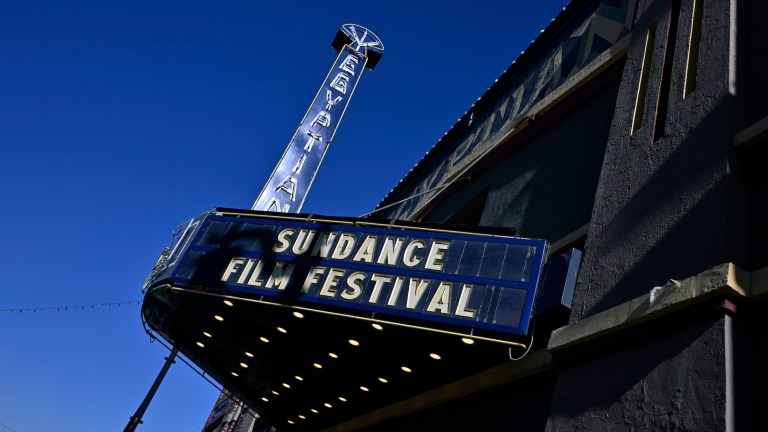
John Nein has a turn of phrase he likes to share with his fellow programmers, festival-enthusiasts, and acolytes at the Sundance Institute: Legacy is where they work. It’s their office. The veritable place to hang the hat, whether that’s on a hook near the epicenter of mainstream American filmmaking in Los Angeles, or among the further afield European partners and locales that Nein knew growing up. And it’s most certainly felt in Park City, the location where the Sundance Film Festival has lived these last 45 years, nurturing and celebrating the future of independent cinema one program at a time.
Still, when we catch up with Sundance’s senior programmer barely a week ahead of the 43rd in-person festival in the snowy ski resort town, Nein is allowing himself a brief moment to be nostalgic and backward-looking. This is, after all, Sundance’s final bow in Park City before a much publicized move to Boulder, Colorado next year, as well as the first to be held since the death of its co-founder Robert Redford. All of these things are on Nein’s mind, as are memories of the first time he came to Park City as a curious cinephile caught in a blizzard virtually 30 years ago to the day.
During a wide-ranging conversation that runs the gamut from that first snowy landing in Utah to Nein’s earliest win as a programmer when he helped discover Once, an Irish musical from a fresh-faced John Carney, we dive into a legacy that Nein has been at the vanguard of shaping for three decades, and how his institute is finding a way to say goodbye to Park City and the Sundance Kid.
*This interview has been edited for length and clarity.
You first attended Sundance in 1996 as a filmgoer, which means this marks 30 years for you. What are your first memories of arriving in Park City?
I had begun to hear about Sundance in the years earlier with films like Sex, Lies and Videotape and Cronos, and, House Party. And these films had one thing in common, they played at this place called Sundance, and I was really intrigued by what that was. I had been working in what you could call traditional Hollywood for a year or two and not really finding my place, but I went to Sundance in 1996 and said, ‘Oh, I’ve just been looking in the wrong place! These are my people.’
It was a really amazing entry into the notion of community and how important that’s been in the way that Sundance has run in parallel with the independent film movement. And in ‘96, I remember there was a big snowstorm, so I assumed that that’s what happened every year. That just all the time there was snow! So I was disappointed for years afterwards when there was only moderate snow at other festivals.
I assumed you participated in the snows of legend that cut the festival out from the outside world. Were they as apocalyptic as they’ve been described to me by wild-eyed film journalists?
[Laughs] I don’t know, I was coming from Southern California, and I just thought it was wonderful. I thought, ‘This is fantastic.’ But there is something to this. We talk about what is the secret sauce of Sundance, and this was very striking to me because [my] first year was in the analog days where the way you got a ticket was to line up in the cold outside of the box office for two hours before tickets went on sale, which meant like five in the morning. It was very early and it was very cold, but then standing there in line, you sort of think, ‘Wow, you have to really want to watch these movies in order to come here.’ And there’s something to that, right?
Thinking back to those early years for you, and beginning to work in 2001 for the festival, what was it like making that transition from being just an enthusiast to someone who actually helps put on this singular event?
It’s a great question because it probably draws a distinction between how the festival is perceived from the outside world and then how it’s put together and programmed, because I started in programming, and it really was a great perspective on the values and philosophy behind the program and what it is that the festival was trying to do. It also underscored the role that Sundance was playing in this burgeoning independent film movement, which by the time I actually started on staff had been very well established, and there was a mature industry around it. It was very different from the early ‘90s just 10 years earlier.
It was about understanding the mechanics of the festival, and that we draw from a certain pool of films and that there’s a real thought and care put into a program and its diversity, and how it tries to speak to the moment in the world. It was a very interesting way of transitioning from looking at a program from the outside—‘Oh, I liked this film, I liked this film’—to ‘why are we doing this and what is this program about, and how does it reflect the place that we’re in, in cinema?’
And you know, I’ve now bridged a generation or so of programmers, yet the philosophy and the values are the same, and they have come from something that’s passed down in this group of people who’ve curated the program.
What is a memory you most cherish when you think about Park City?
I have always felt, and I think that many of the programmers feel the same way, that the most rewarding moment is when you see a filmmaker watching the reception of their work. Whether it’s them at their first screening, and it’s a very emotional experience for many of them—it’s validating in a way, especially for those first-time filmmakers. A lot of us find it very rewarding to be with filmmakers in this transformational life-changing moment, and you see it. There’s also so many times when you see how a little film just comes into the world, nobody was looking for it, and it makes its way and it just becomes this thing.
So for me, my first year as a programmer, I went to the Galway Film [Fleadh] in 2006, a regional festival in Ireland, and there was a works-in-progress screening of a movie called Once, and I thought, ‘Wow, this is a scrappy, small, beautiful, intimate love story with great music.’ I knew the frames a little bit, but I just felt like this is a movie that could go someplace.
So watching their success at the festival and subsequently at the Academy Awards, [meant something] because I associate it with my first year too. John Carney, who now has made so many films and has such a fantastic career, it was really his breakthrough moment. And in a weird way, for me, it was my earliest moment in programming.
In fact, I remember going to Galway and realizing that nobody had told me what I was supposed to do if I liked a movie. So while watching this movie, I remember sitting next to the late Bingham Ray, and saying, ‘Yeah, I don’t know but this movie was really good. I guess I should do something about that?’ And he said, ‘Let me introduce you to the producer,’ who he and [filmmaker Eamonn Bowles] knew. But I didn’t even know what I was supposed to do, so there was a way in which that was a very early memory for me.
This is going to be the first Sundance without Robert Redford, as well as the last in Park City. Does it feel different this year?
I think we had been planning for a festival that celebrates the history of the festival in Park City, and then when Redford passed away it became also a way of honoring his legacy, and those two things went hand-in-hand in a kind of beautiful way. And one of the reasons for that is because Redford always put the artist forward, always wanted the story of the festival to be the story of the artists who were part of it, and that was obviously true of the labs as well, and everything that the Sundance Institute does through its artist programs.
So in a weird way, what we had been planning around repertory screenings and artist talks, and gathering our community for this festival, was the culmination of 43 years in Park City. All of those things were things that we had been thinking about. And when Bob passed away, they became very much a reflection of honoring his vision and his legacy. I’ve said a few times that legacy is where we work every day. It’s our office. So I think the notion of carrying it forward into the future is something that we all feel very strongly about.
And there’s a clear vision for that. We know what this place is about and we know what he built, so I think the ways that we’re celebrating that at the festival, we have an entire second half of programs that really reflect the legacy of the festival: screenings of Little Miss Sunshine, Mysterious Skin, and Saw, and Half Nelson, American Dream, Cronos, which we added to the program. We have artist talks with important alumni, people whose careers have really flourished or been launched at Sundance. So that all feels like the right way to honor Redford’s legacy and also the history of the festival.
Do you have a favorite memory of Bob yourself?
It is actually one of the reasons that we’re screening Downhill Racer. Downhill Racer was an early starring role for Redford in a film that he produced. It was released in 1967 with Paramount Pictures, and he would gather the filmmakers at the festival each year at a director’s brunch that we have. And he told this story often, both at the festival and at the labs, of how it was that he tried to protect the creative independence of that film while making it, and how he struggled to have that film reflect the stories and the values that he wanted to tell as a storyteller.
He would tell that story year after year, and there would always be different inflections and different little pieces of information. So if you add them all up, it was a really pretty robust and amazing story. He saw it as a way of connecting with this group of independent artists, and saying to them, ‘Hey, I had to fight to maintain the creative independence of this film.’
And I believe they filmed it roughly where the Sundance Film Festival became located.
It was filmed in a couple of different locations, a lot of it is some on-location shooting in Europe, which at the time was quite extraordinary for skiing. But yes, there were many different locations, and Utah was amongst them.
You mentioned doing some of the anniversary screenings. Obviously Little Miss Sunshine at 20 years is remarkable, but how did you select others for the last year in Park City?
I do oversee the repertory program in our film preservation initiative. So part of screening these films, in addition to simply wanting to screen important films from the history of the festival, and as you noted anniversaries are always useful because people pay attention to anniversaries, but it really is also just that we’re trying to keep these films in circulation. Especially for films that for some reason are less accessible.
Half Nelson is actually a great example of a film that, because it was part of THINKFilm, which then went bankrupt and became part of a library that had a lot of litigation around it, it kind of dropped off. You would not be able to watch it. So part of this program, and part of the way we think about how we program films in the repertory section, is really about looking specifically at different films and saying, ‘Hey, someone needs to work on Half Nelson. We gotta make sure that this doesn’t disappear.’
We’ve been reminded lately that physical media and preserving cinema is more crucial than ever.
Absolutely and I’m heartened by the fact that I think other people believe that, and when you talk to independent exhibitors across the country, one of the things they’ll say is that repertory films are doing very well with young audiences. And to me, that is actually a sign of hope at a time when there are so many challenges in our field. The fact that repertory cinema is performing with younger audiences is fantastic.
The Sundance Film Festival makes its last bow in Park City between Jan. 22 and Feb. 1.