Netflix’s Take That Docuseries Makes a Bold but Confusing Choice
Members of Take That have narrated an archival retrospective of the band for a new Netflix docuseries.

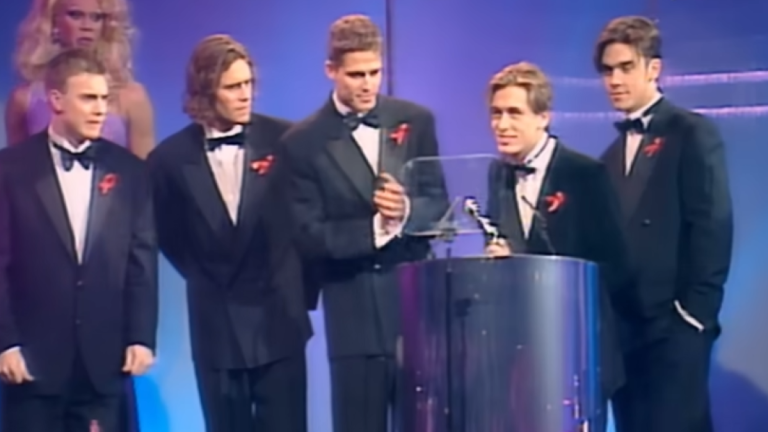
A highly anticipated new three-part docuseries from Bros: After the Screaming Stops co-director David Soutar has finally hit Netflix, and it’s turned out to be a decent watch. Cobbled together from 30-odd years of archival footage, Take That charts the rise and fall and rise again of the UK boy band, who first took some of their issues public back in the 1990s when cracks started to appear in their glossy image.
We have been here before. Take That members Gary Barlow, Howard Donald, Mark Owen, and Jason Orange had previously agreed to appear in a 2005 documentary called Take That: For the Record. It proved compelling viewing, with the lads even reacting on camera to an apology video from former bandmate Robbie Williams. After For the Record was released, Take That decided to get the band back together, and they were soon hitting the road (and the charts again) for a sellout tour.
But within a few minutes of watching Netflix’s Take That, something feels off. Admittedly, the archival footage is edited together extremely well. Rare and unseen “home video” clips provide a deeper look into the band’s past and their interactions. We can see what life was like for the boys back then, and it seems genuinely daunting. The endless screaming, the lack of privacy, the feelings of inadequacy, and apparent bullying from their manager – it’s all there.
It’s what’s not there that feels off. There are no new on-camera interviews with the band, and a text epilogue informs us that any new parts of the audio were contributed by only three of the band members. Neither Robbie Williams nor Jason Orange contributed to these new interviews; their audio appears to have been spliced in from older ones. With none of the band telling their sides of the story on-camera, there is a distinct lack of the raw and unguarded responses and recollections we saw in For the Record.
As a result, Take That fails to connect with its audience in the way you’d expect. Netflix documentaries come thick and fast these days, but from Mr. McMahon to The Greatest Night in Pop, their savvy on-camera interviews have largely allowed people to tell their side of the story while also letting viewers see their body language and facial expressions as they do so. Which is not to say that some of the revelations from Gary, Mark, and Howard aren’t deeply personal. Gary’s recollection of the fallout from his first post-Take That era is particularly distressing, but ultimately, many of the band’s recollections lack an edge because they don’t capture the context of nonverbal communication.
While entertaining, Take That chooses to limit its connection and trust with the audience for reasons unknown. Fans of the band are sure to enjoy the new docuseries, but it still feels like a missed opportunity to really, honestly see them open up about the past at this stage of their careers.