The Worst Movie Reboots and Why They Failed
We take a look at where some of the least effective movie franchise reboots went wrong.

Creating a hard reboot for a movie franchise is a minefield. When a studio loses its big stars, changes direction, or wants to forge a new path after years of watching a tempting IP gather dust on a shelf, it has to eventually decide where it will go and whether that path could lead to a profitable future. And if it avoids remakes, requels, or legacy sequels, its hard reboot idea better be worth the gamble.
A handful of hard franchise reboots have succeeded (we wrote about them here), but others simply haven’t, and those are the ones we’ll be digging into today. Some reboot failures stem from behind-the-scenes creative issues or fan pushback. Others are just plain bad! Ultimately, they didn’t land butter-side up.
We could spend a lot of time on horror reboots alone because those franchises have been relaunched ad nauseam over the decades, but since we’d be here all week doing that (and we still may do a separate article on them), we’ll focus on some more notable examples from the last 10 years or so across sci-fi, horror, and superhero fare today instead, which will give us a nice mix of failures that had their own unique problems in our modern cinematic landscape.
Fantastic Four (2015)
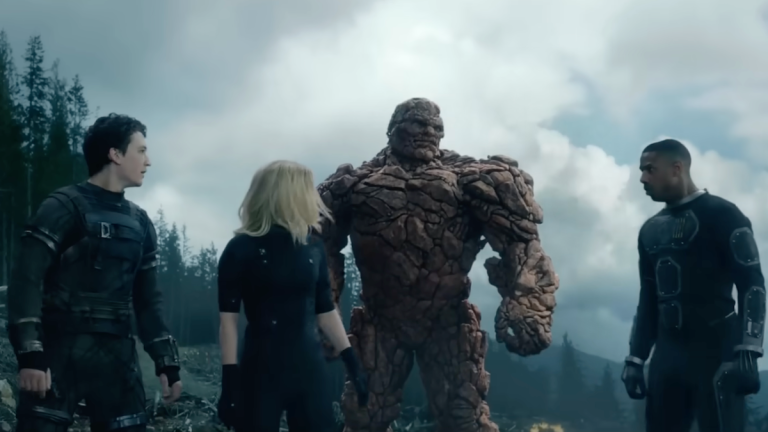
Although Tim Story’s 2005 and 2007 Fantastic Four movies were profitable, Fox decided the Marvel franchise needed a fresh start, and after a few years of tinkering, they landed on Chronicle director Josh Trank to helm its doomed reboot.
Fox wasn’t happy with the film Trank made, yet according to the director, the battle behind the scenes began long before that. Trank and screenwriter Jeremy Slater had disagreed over the tone, with Slater suggesting he wanted to keep things light, like Marvel’s super successful 2012 Avengers movie, while Trank may have been more in favor of Christopher Nolan’s darker comic book tone.
Fans also reacted badly to Trank casting Michael B. Jordan as Johnny Storm, which would seem ludicrous now if we hadn’t all just been subjected to the entirely tiresome Helen of Troy online discourse leading up to The Odyssey’s release. Trank said he also tried to cast a Black actress as Johnny’s sister, Sue, but Fox pushed back and they became “adopted” siblings. Hutch Parker and Simon Kinberg later joined to rewrite the film during production, and they tried to change the ending. It was still too downbeat for Fox, yet the altered version they released after ordering reshoots was also bloody terrible.
In the end, Fox lost around $80–$100 million on the gamble. Trank eventually disowned the film, but one of his Fantastic Four cast members stood up for his unreleased cut: Toby Kebbell, who played Victor Von Doom, described it as “great.”
The Mummy (2017)
After the Brendan Fraser Mummy movies ended with a whimper in 2008’s Tomb of the Dragon Emperor, Universal was very excited to reboot the franchise with Tom Cruise as the lead in The Mummy. The studio even planned to create a whole shared cinematic universe around it, dubbed “the Dark Universe.”
We don’t need to tell you it didn’t happen. The project’s problems may have worsened with such notions and behind-the-scenes hubris, but the first proper trailer for the Cruise-led monster movie also hit an unfortunate hiccup when it launched with the wrong audio track. After being memed into oblivion, The Mummy then headed to theaters, where it was eviscerated by critics and audiences alike, who found it derivative and occasionally incomprehensible.
As a hard reboot for Universal’s beloved franchise, it failed on basically every level. The story wasn’t compelling, Cruise felt miscast, it cost the studio a ton of money, and those who had trumpeted the start of its Dark Universe launch were left humiliated and licking their wounds for the foreseeable future.
Men in Black: International (2019)
Technically set in the same universe as the original Men in Black trilogy but retaining little of its charm, the 2019 franchise reboot may no longer have had the surefire chemistry of leads Will Smith and Tommy Lee Jones, but the studio saw some definite buddy cop potential in Thor: Ragnarok duo Chris Hemsworth and Tessa Thompson, hiring them to front a new spin on the franchise.
Unfortunately, it all went downhill from there. Men in Black: International producer Walter F. Parkes and director F. Gary Gray were at loggerheads throughout the production over what the film ought to be, and its “edgy” and modern immigration commentary got pushed further and further into the background. There was a slew of rewrites, with Parkes and Gray arguing long into post-production, despite the latter’s fruitless attempts to abandon ship.
With such conflicting ideas happening behind the scenes, you’d imagine that International would turn out to be a real mess, but the resulting movie was something even worse: completely forgettable. The original trilogy’s appealing, goofy sci-fi fun was gone, replaced by a string of extraterrestrial moments that just fell flat. Thompson and Hemsworth clearly tried their best, but the story lacked any depth, leaving fans asking why the movie existed in the first place.
Ghostbusters (2016)
As a concept, an all-female Ghostbusters reboot was bound to ruffle the worst kind of feathers when it was announced, but a subsection of “fans” of the original two Ghostbusters movies dedicated a staggering amount of hours to miring Paul Feig’s comedic effort in misogyny, racism, pine-ons, and review-bombing before it was even released, collectively creating one of the worst eras of fan entitlement we’ve ever had the misfortune to witness.
Despite the vitriol aimed at it, 2016’s Ghostbusters wasn’t even a bad movie. It was basically fine and genuinely funny in places, no different to any average multiplex comedy that comes and goes. It just wasn’t the Ghostbusters people remembered. Nothing is. Not Ghostbusters 2, nor legacy sequels Afterlife or Frozen Empire. None of them has lived up to the first one because it was a flash in the pan where no amount of injecting new characters or stories can wow audiences.
Ghostbusters cast some of the funniest female comedians going, and it was co-written by Katie Dippold, who is only now getting the recognition she deserves with the phenomenal Widow’s Bay, so there was a notable level of talent behind the film. It may be a culturally significant bad movie reboot, but the negative reaction toward it was largely for reasons that have little to do with the film itself. Sony’s 2016 effort simply remains part of an ongoing failure to relaunch the IP in any creatively significant way.
Hellboy (2019)
How do you follow Guillermo del Toro’s ambitious, visually stunning Hellboy movies with an appealing new actor playing Big Red and a reboot story that will have fans crying out for more? Apparently, you can’t, as proven by Neil Marshall’s 2019 attempt.
Stranger Things star David Harbour may have been a decent Hellboy, but the film reportedly suffered from conflicts between its producers and its director, and the production itself was described as “contentious,” with rewrites and arguments aplenty. Marshall apparently didn’t even have final cut.
Not only did the resulting film fail to reboot the Hellboy franchise, but it also wasn’t any good. No amount of Harbour’s moxie or impressive creature design could save it from its tonal issues and misguided attempts to push its story into R-rated territory. Audiences impressed by del Toro’s films expected more from the franchise, and fans expected more from Marshall, who had previously helmed incredible horror fare like Dog Soldiers and The Descent.
A second reboot, Hellboy: The Crooked Man, would follow in 2024. It was also pish.
The Crow (2024)
This fifth entry in The Crow film series was doing the rounds for a while. Hardly anyone wanted to remake the original. It had become a tragic yet beloved cult classic, and the idea felt almost sacrilegious after star Brandon Lee died during production. Yet the films that followed didn’t inspire confidence that anyone else could be acceptable in the role of The Crow, even if it were a different version than the one Lee embodied (Edward Furlong, anyone?).
Despite various objections from the original director and cast about continually revisiting the IP well, yet another effort pushed ahead, briefly touted as a potential remake then once again reimagined as a reboot. Directors and stars came and went. Legal issues and bankruptcy followed behind the scenes. Years passed, then a reboot finally began production in 2022 with the well-regarded Bill Skarsgård in the lead role. Rupert Sanders, who had already faced criticism for his live-action Ghost in the Shell, was on directing duties.
For anyone patiently waiting for a Crow reboot (and there’s an argument to say not many had been), disappointment followed. The movie had made enough changes to avoid technically being thought of as a remake, but it still flopped at the box office, and you’d be hard-pressed to find many people with anything good to say about it. Even Skarsgård, who had cut himself a nice little niche in Hollywood as a go-to creepy-handsome guy for hire by this point, wasn’t anywhere near top form.
Return to Silent Hill (2026)
How do you solve a problem like Silent Hill? The Konami video games are scary; there’s no doubt about it, but their stories can be fairly confusing and the dialogue isn’t great either, so making films out of them seems destined to be a fool’s errand. French director Christophe Gans, dedicated to slavishly recreating their visuals in live action, didn’t make much of a splash with his first effort, but he became a natural choice for a reboot because the 2012 sequel to his film, Revelation, was somehow even worse.
Fans became tentatively excited when they heard that he’d be adapting the second game. But although it was arguably the best of Konami’s Silent Hill series, expectations were kept in check. The game’s central character, James Sunderland, was complex but still mired in puzzle-solving, monster shooting, and reacting to weird crap. Would even a faithful take on his story make for a good movie?
No. No, it would not. Slow and uninvolving, it had no scares to offer, and its budget was stretched to breaking, with its star wearing a ludicrous false beard at one point that inspired a clutch of hilarious memes. No doubt there’ll be another Silent Hill reboot one day, but Return to Silent Hill is unfortunately heading for “so bad it’s good” cult classic territory in the meantime.