One Battle After Another’s Perfidia Beverly Hills Doesn’t Fit in Easy Moral Boxes
One Battle After Another is a story about humans, not a piece of political propaganda.

In the very first shot of Paul Thomas Anderson‘s Oscar-nominated One Battle After Another, Perfidia Beverly Hills pulls on a ball cap and strides toward the camera. Casually pulling the hat over her face as trucks pass by, but not so obviously that she attracts attention, Perfidia stakes out the detention center below. Back with her fellow revolutionaries in the French 75, Perfida acts with decision and precision, so much so that we viewers think we know what she’s all about.
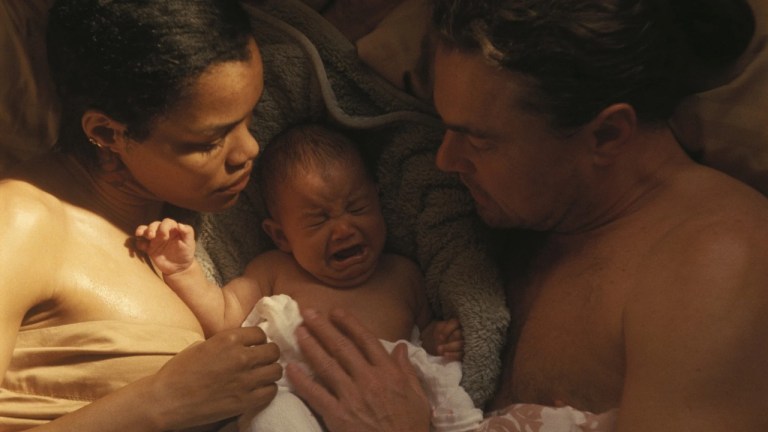
Of course, over the next two hours, we’ll find that Perfidia Beverly Hills is so much more than just a single-minded revolutionary. She gets angry, she has sexual desires, she gives birth to a child, and she makes some huge mistakes. In short, she’s a human being, but that has led some to criticize the film’s depiction of Perfidia, a criticism that her actor Teyana Taylor rejects.
“She is so misunderstood, but most importantly, human, and so raw. And she is unapologetically herself,” Taylor told EW. “I feel like sometimes people just write her off as like, she’s just horny,” she observes, before getting to the heart of the character. “Perfidia became a revolutionary because of the things that she believes in. You see her mom saying Perfidia comes from a long line of revolutionaries. That in itself, to any woman, any person, is also a pressure. So not only is she carrying it on, it is instilled in her, and now it’s become a part of her identity.”
On one hand, it’s easy to see why people would take issue with Perfidia and, in particular, Anderson’s depiction of her. Stereotypes about the sexuality of Black women have long persisted in American culture, especially in stories told by white men like Anderson and Thomas Pynchon, whose 1990 novel Vineland served as inspiration for the film.
Further, Perfidia initially has a moral clarity that one rarely finds in the real world, and which audiences long to see. When she and the French 75 liberate an immigrant detention center at the opening of the film, they show a decisiveness that we audience members wish we had. In light of all the misinformation about immigration in America in general and detention centers in particular, it’s refreshing to see characters on screen acknowledge them as wrong and do something about them.
But One Battle After Another isn’t propaganda. Its sympathies are certainly with the revolutionaries more than with right-wing characters such as Colonel Lockjaw (Sean Penn) or the Christmas Adventurers Club. But it’s primarily interested in the humanity of the characters, which means that it cannot reduce them to simple moral figures.
Nowhere is that more clear than in Perfidia’s decision to abandon her partner Bob (Leonardo DiCaprio) and her newborn daughter Willa (played as a teen by Chase Infiniti). “Getting pregnant and becoming a mother wasn’t exactly part of [Perfidia’s] plan,” Taylor allowed, but she also notes the reality of other factors. “If people understood the weight of postpartum depression, we wouldn’t even be seeing half of the discourse that we see in regards to Perfidia,” she contends. “Whether it’s right or wrong, there’s a compassion there. There’s an empathy there. Because we see this woman who was in survival mode.”
In other words, Perfidia is a human being trying to survive, a human being with all the same flaws, inconsistencies, and complexities as everyone else. But that humanity is exactly what the revolutionaries in One Battle After Another are fighting to preserve.
One Battle After Another is now streaming on HBO Max.