Peak TV Seasons from 2016 You Need to Rewatch
While you’re 2016-maxing, don’t forget to revisit the internet’s favorite year’s standout TV.

As the new year rolled in, social media became obsessed with traveling backward; 10 years back, to be exact, to 2016. At first, this fixation might seem strange as few who lived through 2016 are likely to remember it fondly or be eager to relive it. It’s become clear, however, that the nostalgia people are craving isn’t for the year itself, but for what we were observing in pop culture during it.
2016 was a golden era for television. Not only did it introduce new shows that would grow into cultural landmarks, but many series also delivered their strongest and most confident seasons right when audiences were most receptive to them. Looking back, it makes sense why we keep returning to these seasons as they captured something fleeting about that moment in time.
What follows isn’t a ranking of the “best” shows of 2016, but a case for why these particular seasons deserve a rewatch, and why returning to them now offers a glimpse of a cultural moment we didn’t realize we’d miss.
Fleabag Season 1
I’m personally nostalgic for the 2010s because it was when actress/writer/producer Phoebe Waller-Bridge was at her creative peak. While she’s now off to more mainstream pursuits (including Prime Video’s upcoming Tomb Raider series), I’ll always be grateful for her contribution to the “women behaving badly in metropolitan areas” genre in 2016 when she gave us the first season of Fleabag. Waller-Bridge’s writing alone is scripture; the script is literally called Fleabag: The Scriptures, and it reads like gospel for anyone who’s ever coped with their self-awareness with more bad decisions.
Fleabag almost starts as a comedy, but it quickly becomes clear that the central character and her story are much more than a funny show about a woman spiraling. Since it first aired in 2016, no other series has been able to present characters grappling with grief and self-sabotage with the same level of precision and emotional resonance than Fleabag.
While its second season is universally regarded as a TV masterpiece, what makes Fleabag’s first season worth returning to now is it marked Waller-Bridge’s leap from stage to television. The show carries the thrill of what someone testing that medium could hold. In 2016, that kind of creative risk felt electric, and rewatching it now is a reminder of how fun it is for a genuinely talented writer to break into a scene and bend it around their voice.
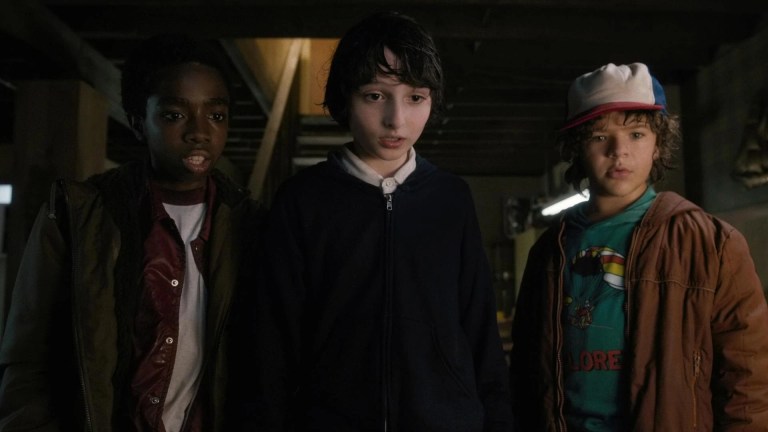
Stranger Things Season 1
No matter how you felt about the series finale, there’s no denying that the first season of Stranger Things was captivating television. I remember being sick and binging all eight episodes in one day, completely pulled into Hawkins, Indiana. This initial season captivates viewers in a similar way watching Twin Peaks for the first time does. While it’s admittedly not a perfect comparison, both shows use mystery and looming stakes to establish the sense that anything can happen.
If you cheated and skipped season 1 while trying to refamiliarize yourself with the series, you have to go back. Rewatching parts of the first season also serves as a reminder of just how deeply Stranger Things was embedded in culture in 2016. Like yes, I did own a ringer tee from Hot Topic featuring the fairy lights and letters Joyce Beyers used to communicate with Will. That was the climate at the time.
Season 1 also stands apart in a way the later seasons simply can’t, largely because of how fresh everything felt. The mystery isn’t too confusing, the world hasn’t been over-explained yet, and somehow the stakes feel higher than ever. It was a phenomenon before it knew it was one, and that initial spark is impossible to recreate.
The Good Place Season 1
2016 really was the year of ambitious sitcoms, but few laid the kind of foundation that the first season of NBC’s The Good Place did, presenting a batch of episodes strong enough to support a series whose episodes and themes still resonate nearly a decade later.
The Good Place also stuck out among the sea of cookie cutter network offerings because of its creative premise. The show follows Eleanor Shellstrop, who isn’t exactly an outstanding citizen but somehow ends up in a utopian afterlife and must frantically learn moral philosophy to hide her identity. The series took its time to develop, with major twists not revealed until the end of the first batch of episodes. Season 1 also showcased the acting chops of its phenomenal cast. The show propelled the careers of William Jackson Harper, Manny Jacinto, Jameela Jamil, and D’Arcy Carden, who’ve all gone on to do amazing work.
The show also feels like a product of its moment, too. It was perfect for 2016 when a thoughtful and hopeful sitcom could still find an audience without being immediately written off. Creator Michael Schur has worked on many iconic sitcoms, but there’s a reason people point to The Good Place as a moment in TV history for its high-concept. It’s hard to imagine a show this gentle and philosophically curious given the same room to grow today, making it a nostalgic rewatch.
Girls Season 5
In 2025, young writers Benito Skinner, Ben Kronengold, and Rebecca Shaw swung hard with their series Overcompensating and Adults, exploring the awkward, hilarious, and isolating parts of young adulthood. While these series were all successful in their own right, they lack the restless self-reflection that writer/actor Lena Dunham poured into Girls.
Girls at large is a mandatory rewatch in general, but if someone told me they only wanted to revisit one season, I’d point them straight to season 5. It carried a certain veil of optimism and denial that perfectly matched the stage of life the characters were stumbling through. The relationships, locations, and careers the characters explored didn’t last, but the consequences of their choices in this season carried through to the end. It was also experimental in its formatting, making episodes feel more cinematic than usual.
Dunham, much like her lead character Hannah, didn’t always respond well to criticism. So when co-star Christopher Abbott left the show because it no longer interested him as an actor, she responded to that challenge by writing, in my opinion, two of the best episodes of television ever: season 5’s “Panic in Central Park” and “Hello Kitty.” The 2016 season of Girls was perfect in every way and laid the groundwork for the series conclusion the following season.
RuPaul’s Drag Race Season 8
Many Drag Race fans view season 7 as the weakest installment of the U.S. franchise, so when the show returned, it needed to come back strong to shake off that lingering bad energy. Most people point to seasons 4 through 6 as the golden era, packed with iconic RuGirls who went on to become Drag Race superstars, regardless if they won or lost. But in that conversation, we often overlook what season 8 gave us.
The top four, Bob the Drag Queen, Kim Chi, Naomi Smalls, and Chi Chi DeVayne, remain one of the strongest lineups in the franchise’s history. Beyond the small-but-mighty cast, season 8 also featured some of the best challenge ideas Drag Race has ever showcased. Whatever AI-tools they use now to write and produce Rusicals could never hold a candle to “Bitch Perfect” from season 8.
Season 8 is often overlooked because it was short, but it also gave us one of the all-time best winners: Bob the Drag Queen. She wasn’t perfect, her runways weren’t always flawless, and her makeup has certainly evolved, but her star quality was undeniable, from her acting to the way she carried herself. Rewatching this season now, it’s clear how much talent and charisma it packed, which is why season 8 still feels special and worth revisiting.
Crashing Season 1
I guess Phoebe Waller-Bridge decided 2016 was the year to fully lock in, giving us two emotionally vulnerable and genuinely hilarious television gems. Although one may be far more widely celebrated than the other, that doesn’t mean her six-episode Netflix series Crashing doesn’t deserve its flowers.
Crashing follows a mismatched group of young people forced into adulthood, stripped of the buffer of being students. Faced with rising rent costs, the strangers decide to squat in an abandoned hospital where they form a chaotic, temporary family built on proximity and a lot of bad decisions.
I don’t think Crashing could work in 2026, but 10 years ago, being broke, emotionally reckless, and vaguely ambitious still felt romantic. In 2026, I’m sure our distaste of millennial cringe would completely change how Zoomers would absorb the show. Like Fleabag, however, Crashing grows funnier and smarter the longer it goes, capturing a very specific 2016 energy that still makes it worth revisiting today.
Netflix Presents: The Characters Season 1
Finding fans of Tim Robinson sketch series I Think You Should Leave who haven’t watched The Characters is a bittersweet discovery. It’s a shame they’ve missed it, but a thrill to introduce them to one of the funniest shows Netflix has ever made. Few comedy specials have topped the audacity of giving eight comedians 30 minutes each to star in their own sketch shows and just letting them cook.
Not every episode is a 10/10, and I definitely have my favorites (Tim Robinson and John Early, forever). But every single episode has at least one sketch so unhinged and memorable that it’s permanently burned into my brain. I will never forget Lauren Lapkus’ Todd Tyson Chicklet calling his mom a “binch” at Dick N’ Boners. It’s the kind of sketch that just rewires you.
The Characters also captured something from its era that feels rare now, which was a willingness to give up-and-coming comedians the space to fully showcase their voices. It trusted the weirdness of the actors’ comedy, and it trusted that audiences would appreciate that risk. All eight episodes deserve a rewatch.