Why Isn’t There More ’00s Nostalgia for Nip/Tuck?
Ryan Murphy's award-winning medical drama ran for six seasons on FX in the 2000s, so why don't audiences remember it with the same fondness as other TV hits of the decade?

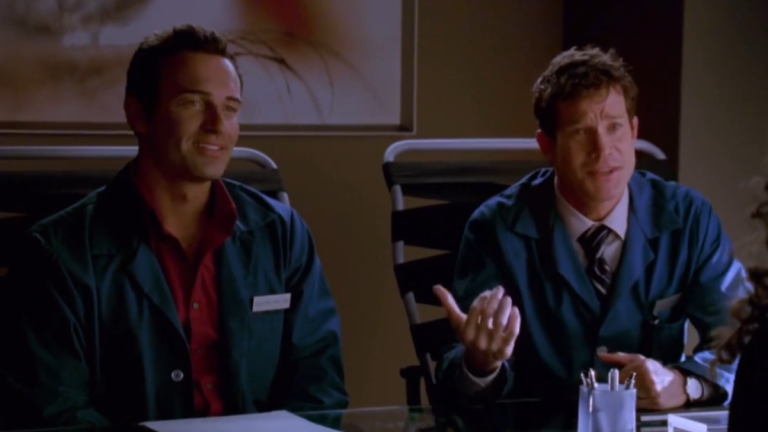
Back in the ’00s, the likes of Lost, The Sopranos, Arrested Development, Deadwood, and Six Feet Under were making waves, and prestige TV was becoming a real thing. But while those shows were all becoming respected in their own right and gaining forever fans, Ryan Murphy’s medical drama Nip/Tuck was doing something very different over on FX.
An instant cable hit when it debuted back in 2003, the show focused on the McNamara/Troy plastic surgery clinic and its doctors, Sean McNamara (Dylan Walsh) and Christian Troy (the late Julian McMahon), as they met patient after patient (and in some cases lover after lover) who wanted to change something about their physical appearance.
It’s hard to overstate how provocative the show felt back then. This was long before Murphy became the uber TV producer he is today, when his graphic, lurid shows are like buses. If you wait around long enough, there’ll be another American Horror Story, Monster, or The Beauty along any minute. In the ’00s, Nip/Tuck was very much pushing the boundaries of television with its chaotic storylines and queasy surgery scenes. It was also hugely influential, not just informing Murphy that there was a hunger for this kind of content – a hunger that has allowed him to feed audiences ever since – but also informing creators just how far they could go on the small screen. Glossy and morally ambiguous, Nip/Tuck paved the way for shows like Dexter and True Blood, while also inspiring a swathe of series that focused on the vanity and excess of the rich and connected. You could probably think of five or more of those that are currently streaming somewhere right now.
So why is Nip/Tuck rarely in the conversation when we’re getting nostalgic about the ’00s? Some would say the show made that bed back when it was airing. It largely blurred the line between satire and sincerity, often making it difficult for the audience to tell whether it was critiquing vanity culture or revelling in it. That ambiguity became part of its appeal, but also one of its most enduringly controversial aspects. Still, it was anchored by strong performances from Walsh and McMahon and was sharply written. It was transgressive and often refused to moralize where other shows might have tried to take sides or even shied away entirely from taboo topics.
The taboo of plastic surgery has arguably faded since the show hit our screens, though. There are more open conversations around body image on social media and in pop culture. Murphy admitted as much in a recent panel at New York Comic Con, where he mused that “people sort of flaunt [surgery] more and are talking about it” since the Nip/Tuck days, adding, “It’s an evolution in some strange way.”
We can also accept that many of Nip/Tuck’s storylines simply have not aged well. Sure, there were nonsensical serial-killer plots and tiresome celebrity cameos. Many of the episodes had obligatory shocks that no one would bat an eye at these days. We’ve come a long way in that respect – a couple of Murphy’s more recent series have featured Ed Gein having sex with a corpse and Bella Hadid snapping necks in a Parisian café. But some of Nip/Tuck’s stories and characterizations have absolutely aged like milk. The indefensible transgender tropes, the sensationalized incest, and the use of sexual assault as a plot device. Awful and gross.
This mixed bag of positives and negatives led to Nip/Tuck being remembered by audiences as a fascinating but deeply flawed artifact of early prestige television. It was definitely entertaining and must-see TV in the moment, but it ended up becoming more of a case study in how TV tested boundaries before it fully understood the responsibility that came with that freedom.