DC’s Dismantling Could Be the End of Shared Universes
Will audiences keep following the DCU as it reboots again? Probably not.

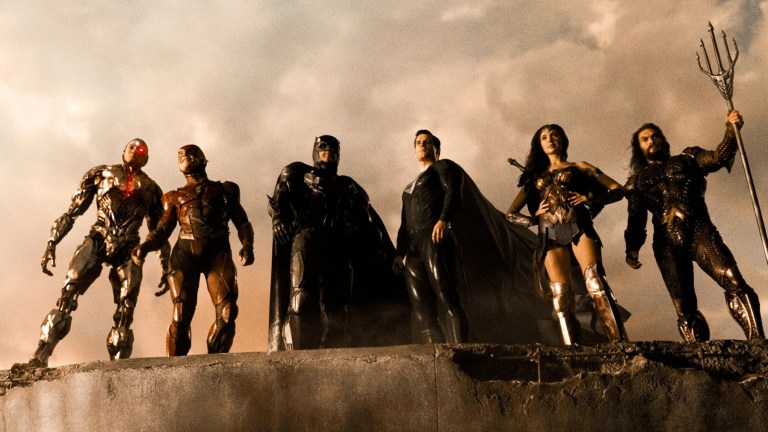
It’s been an interesting 24 hours in the world of superhero movies, with not just the news that James Gunn and Peter Safran have been removed as co-heads of DC Studios, but also with information about their dismissal coming clear. Initially, Gunn’s post to social media made it sound like he and Safran willingly stepped down from their position, certainly (but not explicitly) in response to Warner Bros.‘ new ownership under Paramount boss David Ellison, who will combine the two studios into a new company called Skydance. However, a more in-depth article from The Hollywood Reporter reveals that Gunn and Safran were pushed out, in part because they had autonomy over DC Studios projects.
Further complicating things is a report from Hollywood insider Matthew Belloni, who stated in his “What I’m Hearing” newsletter that he has been told “plans are already afoot to dismantle much of what Gunn and Safran had plotted out.” In other words, the DCU is rebooting… again. This at the same time the MCU is offering ‘memberberries in Avengers: Doomsday before what also might be a reboot in Avengers: Secret Wars. This could very well spell the end of shared universes.
Hard as it might be to believe now, The Avengers seemed like a risky gamble back in 2012. Sure, Universal Monsters and characters from Godzilla had crossed over before, but the idea of several characters introduced in different moves coming together in a single film seemed like a huge risk. Observers couldn’t believe that moviegoers would go to The Avengers if they hadn’t already seen Thor or Captain America: The First Avenger, both hits but hardly cultural phenomena. They couldn’t understand how a traditional story could be told with three different characters who had previously been leads in their own films. And how could a movie generate enough box office revenue to pay for such a thing?
Turns out, they were wrong. For a while, anyway. The Avengers was a smash hit, and the Marvel Cinematic Universe reigned supreme for the next decade. Not only did moviegoers turn out for big, tent pole Avengers films. But they also signed up to watch B-listers like Ant-Man and Doctor Strange, all with the hopes of catching up for the next big movie.
Yet, observers were right at the same time. For as much as the MCU succeeded, every other shared universe that studios tried to create fell flat. There was Universal‘s pitiful Dark Universe, which consisted officially only of the Tom Cruise picture The Mummy. There were Sony’s multiple attempts to create a universe around Spider-Man, often without Spider-Man’s involvement. There were Paramount‘s attempts to create a Transformers and G.I. Joe universe. And there was, of course, the DCEU.
Yes, the DCEU made money, partially because of devotees of architect Zack Snyder‘s style, partially because of the big names of characters involved, and partially because superheroes were in. But by the time Snyder’s tenure ended and Gunn and Safran took over, enthusiasm had waned, as demonstrated by the lackluster response to the return of Henry Cavill‘s Superman in Black Adam.
Gunn and Safran’s regime didn’t entirely restore that enthusiasm. Yes, Superman did well at the box office and Lanterns had great streaming numbers, but Supergirl was a flop and Creature Commandos and Peacemaker had limited appeal.
Of course, all of this comes at the same time that no one seems terribly interested in superheroes. Even quite good MCU outings like Thunderbolts* failed to break the box office, and Disney+ series such as Daredevil: Born Again are met largely with shrugs. But that only proves the larger point that the dominance of the MCU in the 2010s and the public thirst for all things weird and wacky in superhero movies has passed.
At this point, we still don’t know what the DCU under new head Jeremy Latcham will look like. However, it seems likely that he’ll focus on A-listers instead of the C- and D-listers that Gunn and Safran prioritized, movies about Batman and Superman instead of Clayface and Supergirl. Those big names will certainly pull in more viewers than the niche offerings.
But will moviegoers be interested in a third iteration of Superman and the Justice League, right after they got used to David Corenswet instead of Cavill? Will MCU fans return after the reunion tour that is Doomsday has ended, and Secret Wars introduces a new Black Panther, if not also new Tony Stark and Steve Rogers, as some have posited?
Probably not. Even in the age of superhero hype, reboots are a hard sell for the general public. In this period of superhero fatigue, it’s unthinkable. And so, shared universes will fade away from the public consciousness and go back to the world of comic books, which is probably where they’ve always belonged.