James Gunn Is Underselling the Appeal of the Superhero Shared Universe
Clayface doesn't need to be homework, but it should affect the rest of the DCU.

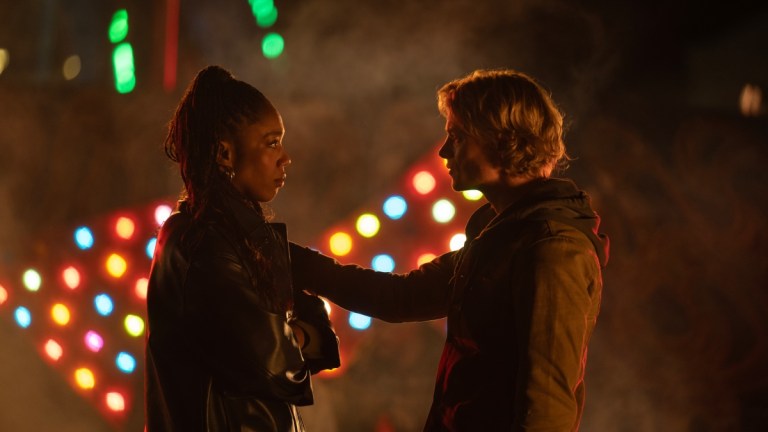
There are many reasons that superhero movies have dropped off from their position atop the cultural landscape in the 2010s. Lackluster projects, market saturation, and simple shifting audience interests have all led to what we call “superhero fatigue.” Undoubtedly, one of the biggest reasons is the feeling that each new superhero entry feels like homework, a phenomenon apparently at work with the upcoming Avengers: Doomsday. To properly enjoy the movie, you can’t just watch the film that hits theaters on December 18; you also have to watch all the Fox X-Men movies, Fantastic Four: First Steps, both seasons of Loki, the re-released Avengers: Endgame, and more.
So when James Gunn took to social media this weekend to push back against people talking about future movies set-up by Clayface, he was right to ask them to focus on the film itself. “I dislike the idea that individual stories aren’t meaningful unless they lead to something else. People not understanding this is strange to me, because Star Wars has essentially been doing this for 50 years across movies, shows, games and books, admittedly without the tonal variety,” he wrote on Threads. Gunn’s approach is correct, and probably healthy in this age of superhero fatigue. But we can’t forget that shared universes are one of the chief appeals of superhero movies.
2013’s Thor: The Dark World was a hit, but even then, it was recognized as a lesser entry. But there was one point when audiences seeing that film in the theater lost their minds: when Loki transforms into Captain America to taunt his brother, giving Chris Evans an opportunity to appear on screen and joke around with his pal from The Avengers.
The scene wasn’t just a cameo by someone audiences recognized and had feelings about, like when Chris Evans showed up as Johnny Storm in Deadpool & Wolverine. Rather, it showed the audience that the world of Marvel had evolved, that events from a previous chapter—The Avengers, in this case—paid off with an event in the current chapter.
Comic book fans have long known the pleasures of an ongoing narrative and a shared universe. All the way back in the Golden Age of comics, fans realized the fun of seeing characters from different stories band together, most obviously with the advent of the first superhero team, the Justice Society of America, in 1940’s All-Star Comics #3.
In the Silver Age, things got even more complicated. The Golden Age stories may have shown us that Flash, Green Lantern, and Hawkman know one another, and that Superman could hang out with Batman and Robin, but the Marvel Age of heroes, with its tighter editing by Stan Lee, showed that events from past stories affected future issues. The Fantastic Four remembered meeting Spider-Man in Amazing Spider-Man #1. Iron Man’s adventures in the pages of Avengers affected his stories in his solo book, Iron Man.
As the fandom grew more devoted and the universe expanded, the connections became more byzantine, resulting in both mistakes by creators and confusion among fans. Publishers tried to corral this in various ways, ranging from Marvel offering a “No-Prize” to anyone who could explain a canonical reason for a mistake on the page to DC rebooting the universe and starting from scratch, most famously with 1984’s Crisis on Infinite Earths.
But every time, fans and creators alike come back to wanting continuity and consistency. If the Flash breaks his leg in his own series, they don’t want to see him racing around with the Justice League of America that same month. If Gambit tried to blow up Captain America’s costume in a crossover event, fans don’t want them to be chummy in the next event, not without a hard conversation.
Of course, comic book fans are an increasingly shrinking and devoted core. And while Disney and Skydance would like the same level of devotion, they don’t want movie audiences to shrink in the same way. So Gunn is showing business savvy when he assures people that they can just go to Clayface and not worry about how it fits in with the character’s previous appearance in Creature Commandos, let alone where he and Batman will show up again in the future. Moreover, he’s right to urge people to just enjoy the movie for itself, instead of doing the all-too familiar superhero movie strategy of apologizing for a lackluster entry by promising it sets up a better one in the future.
But that doesn’t mean we don’t want one chapter of the DCU story to lead into another. And Gunn is aware of this. When discussing the difficulties of Peacemaker season 2 coming after the DC universe rebooted with he and Peter Safran taking over DC Studios, Gunn told Den of Geek, “I’m a balanced canon guy… On the one hand, people take it a little too far. Obviously, these are fictional stories, so we don’t have to pretend that they’re reality. But at the same time, these stories are supposed to be in the same world, and you need to pay attention to the connection between things.”
Hopefully, Gunn still wants us to pay attention to those things, even if he doesn’t want us to have to pay too much attention.
Clayface is now playing in theaters.