Ranking Every Season of The Bear
We take a look back at The Bear and decide when the show was at its best and worst.

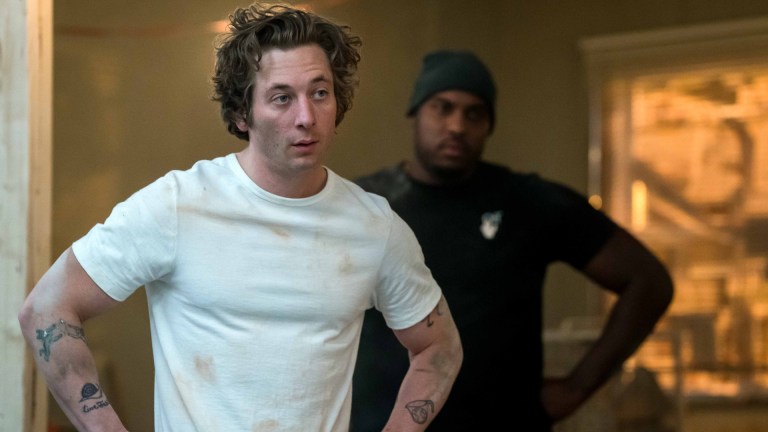
Some have suggested that The Bear’s five seasons represent the five stages of grief.
The show begins with Carmen “Carmy” Berzatto (Jeremy Allen White) returning to his hometown of Chicago following the suicide of his brother Mikey (Jon Bernthal) and finding Mikey’s restaurant in disarray. Season 1 would be denial, as Carmy avoids the true reality of his loss by throwing himself into modernizing the restaurant. Season 2 would be anger, as Carmy argues with everyone and takes his pent-up rage out on the people trying to help him. Season 3? Bargaining, as Carmy tries to regain control of his life by setting impossible standards for the restaurant, while season 4 is where the depression, hopelessness and withdrawal set in as Carmy begins to realize that change must start from within. Season 5, then, would be acceptance, in which Carmy comes to terms with his situation and moves on.
Whether you believe any of that or not, The Bear touched a nerve when it first arrived, and many people became invested in Carmy, his journey, his family, and all the other complex characters that revolved around them. The show certainly had its ups and downs, but the actors’ performances were consistently wonderful, and it was a genuinely immersive TV experience that went way beyond its much-memed shouts of “corner!” or “hands!”
Now that it’s finished its run, we’re taking a look back at The Bear and ranking its five tumultuous seasons…
5. Season 3
The creatives behind The Bear began experimenting in season 3, as the series slowed down to explore its characters more deeply rather than relying on the kinetic energy of the first two seasons. The momentum that had built toward the restaurant’s chaotic opening at the end of season 2 suddenly juddered to a halt, even though the story picked up immediately after that diabolical night, with Carmy setting a list of “non-negotiables” for The Bear and deciding that the menu should change every night, setting up both a financially grim future for the eatery and himself for failure.
Still, season 3 had some great character-focused episodes. The Tina-centric “Napkins” revealed more of her shaky employment background and her first teary encounter with Mikey. Meanwhile, “Ice Chips” finally saw Sugar (Abby Elliott) work through her traumatic history with Donna (Jamie Lee Curtis) as she went into labor. But the slow storytelling of season 3 was definitely an issue for many returning viewers. The plot seemed stretched out and offered very little in the way of resolution. Carmy’s futile quest for perfection was compelling, yet threads were left dangling all season long, like Sydney (Ayo Edibiri) trying to decide her future, the restaurant review, and Carmy’s guilt over the end of his relationship with Claire (Molly Gordon).
It was all set up and no payoff, and it felt like half a season of TV dragged out over a whole one. The glacial pace was definitely less infuriating if you watched seasons 3 and 4 back-to-back, but if you were watching in real time, it was more than a little bit maddening. Some fans even started to question if The Bear had lost its edge.
4. Season 4
Pacing and storytelling issues lingered in season 4, but the show regained some of its lost momentum in the first episode when Uncle Jimmy (Oliver Platt) and Computer (Brian Koppelman) gave Carmy and the gang two months to turn the restaurant’s fate around, placing a countdown clock in the kitchen and demanding they get it together or they’d be forced to shut up shop. Though it suddenly had a clear, time-sensitive goal, season 4 was still caught somewhere between the fast-moving energy of season 2 and the introspection of season 3, drawing out conversations among the characters and creating plenty of long scenes where nothing really happened.
In terms of standout episodes, season 4 was also lacking. “Bears” was a fun jaunt to Tiff’s wedding, but it still felt fluffy and unnecessary. Elsewhere, there was healing between Carmy and Donna in “Tonnato” and between Carmy and Claire in “Scallop,” yet as the focus realigned with Carmy’s emotional journey, supporting characters were sidelined and their propulsive screen time sacrificed to guest stars like Brie Larson and Josh Hartnett, who didn’t really add anything to the show. As Carmy grew, characters like Richie (Ebon Moss-Bachrach), Sugar and Sydney were simply stuck in a holding pattern while the show dealt with the head chef’s issues.
3. Season 5
The Bear had a strong return to form in season 5, making for a satisfying conclusion to the series as everyone processed Carmy’s decision to leave the culinary industry. His realization that his gift didn’t actually have to be his fate felt like a good place to leave the character, with the ex- head chef still helping out at the restaurant and having more fun than he’s ever had, but still making room for Sydney to step up as The Bear’s new leader.
Focusing on a single high-pressure service as the restaurant ran low on staff, ingredients, and certainty, season 5 allowed the characters of The Bear to evolve rather than sink back into their old patterns within that pressurized environment, which made for frenetic and compelling viewing and recaptured some of the show’s early essence.
Sydney understood that she could be just as good as Carmy without making everyone else’s life hell, Richie found respect outside the restaurant and became an “international businessman,” finally ready for a relationship with Jessica (Sarah Ramos), and there was simply no interest in pursuing a romantic entanglement between Carmy and Sydney, something that fans of the show had mixed feelings about but was arguably the right choice, though the chemistry between chefs Marcus (Lionel Boyce) and Luca (Will Poulter) was off the charts and some felt it could have been an interesting development for the show to explore.
2. Season 1
The Bear was a breath of fresh air when it first landed in 2022, boasting an ensemble cast to die for and a unique energy that captured the pressure of the food service industry from the perspective of the workers behind the scenes, capitalizing on the critical acclaim and interest generated by Philip Barantini’s 2021 film, Boiling Point (which also went on to spawn a TV show).
While the amount of yelling took some getting used to, The Bear genuinely sought to offer viewers a host of complex characters who weren’t just “good” or “bad” but had experienced traumatic and life-changing events that needed to be processed and dealt with but weren’t, boiling over into their lives and relationships even as they tried to work together in chaotic circumstances.
Jeremy Allen White, Ayo Edibiri and Ebon Moss-Bachrach were quickly vaulted into stardom after playing their characters perfectly and would go on to scoop plenty of awards for their troubles. Carmy, Sydney, and Richie felt authentic and realistically flawed as the ghost of Jon Bernthal’s Mikey haunted them every step of the way. Every episode was a banger, and everyone, both in front and behind the camera, was firing on all cylinders as the show’s story of a renowned chef returning to manage his dead brother’s sandwich shop blossomed into a series where every character mattered and every second counted.
1. Season 2
We don’t think it’s too controversial to give season 2 of The Bear the top spot in this ranking. It gave us not only two exceptional episodes of the series but of television in general in “Forks” and “Fishes,” where the former gave Richie confidence and purpose at upscale restaurant Ever, while the latter showed us what Christmas used to be like in the Berzatto household and featured truly unforgettable performances from Jamie Lee Curtis as the family’s matriarch and a returning Jon Bernthal as Carmy and Sugar’s emotionally deteriorating big brother, Mikey. Marcus’ trip to Copenhagen amid his mother’s illness in “Honeydew” is also touching and inspired, as is Tina’s (Liza Colón-Zayas) journey through culinary school.
Though Carmy’s burgeoning romance with childhood friend Claire during this season proved divisive, it only added to the pressure he was putting on himself to make the restaurant soar and move past his trauma from Mikey’s death without properly dealing with it, all while trying to be a decent boyfriend when he didn’t really even have the capacity to function in a relationship.
Ultimately, season 2 built on the solid foundations of the first season to find greater depth in the show’s characters and careered into an agonizingly upsetting finale that saw Carmy’s self-destructive tendencies reach a crescendo while his pals in the restaurant continued to flourish. The acting, writing, and direction across the board here were simply peak TV.