Batwoman: Showrunner Caroline Dries on Kate Taking a Stand
We spoke with the showrunner/episode writer about Batwoman's decision to come out, Parker's role, and the history of queer superheroes

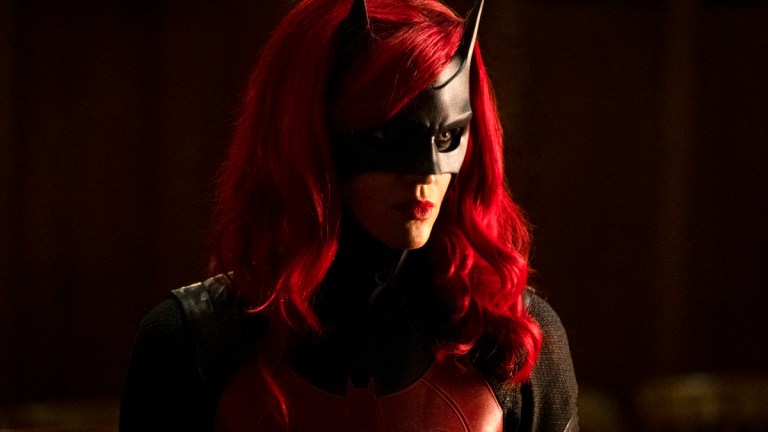
This article contains major spoilers for Batwoman episode 10.
For as long as there has been a Kate Kane, she has been an out lesbian and there have been people mad about it. But on Batwoman, the CW’s version of the character has brought something new to the table as she has wrestled all season long with what it means to put on a mask, keep secrets, and allow others to make assumptions about her after a life of, as showrunner Caroline Dries puts it, “standing in her truth, and being 100% who she is, which is Kate Kane, out and proud.”
In episode 10, How Queer Everything is Today! things finally came to a head and Kate Kane decided it was time for Batwoman to come out, with a little help from her friend Kara Danvers at Catco. Den of Geek spoke to Caroline Dries, who also wrote the episode, to talk about why it was so important for Batwoman to come out, the state of queer superheroes, and whether we might see new character Parker in the future.
Kate Kane didn’t have a coming out story on the show; she felt like people just sort of new. That makes this storyline, after the military academy episodes, one of the most important for the show to get right.
For Dries, this was always something the show was going to have to tackle. “From the beginning, I felt like the narrative that we were telling was a little hard to swallow.” That is to say, someone as out as Kate to live a life of secrets.
“She then goes and puts on a suit, hides who she is and becomes the city’s hero. It just didn’t quite sit right with me.”
Dries knew early on that coming out with her superhero identity was going to be part of Kate’s journey as a hero once the city accepted and admired her. Realizing she has a podium and that she might be using it to say the wrong thing, something that’s not entirely truthful, or allowing others to let their default assumptions remain unchecked is a problem for her.
“We didn’t want to just have her put on the suit in episode three and say, oh, by the way, I’m also a lesbian. we wanted it to be built into her overall journey.”
For Dries, it’s a mark of progress to be able to explore textually and with nuance what was once only an analogy or metaphor in superhero properties like X-Men. “The metaphor was sort of always there…but it wasn’t ever articulated or made so overt as it can be today… when I was growing up, it was just that was the metaphor, you know, you put on your costume and then you can be who you were really meant to be.”
While that may have served storytelling when that was as far as things could go, Dries feels like on a show with a lesbian lead where her identity is simply a fact of her life, to have her live with secrets and masks would be a disservice to the character.
During the episode, Kate meets Parker, the high school student behind the hacker known as Terrier. It turns out Parker was in the closet until her ex-girlfriend outted her. Parker goes from completely unimpressed by Batwoman whom she assumes is straight to fangirling over Kate Kane when Alice forces Kate to reveal herself.
The big showdown between Batwoman and the Terrier, which turns into Batwoman and Parker versus Alice, takes place at a high school dance at Gotham Prep, where Kate went to high school. That setting, a time of self-discovery, stress, and often exclusion, for LGBTQ kids, was no accident.
Dries says, “That environment is where all the memories really stick with you and change your outlook on life. Parker is in this really ripe situation right now.”
Parker’s speech about LGBTQ exclusion and being relegated to an “ancillary character” at best, really rang true. For Dries, it comes from personal experience. She grew up watching Dawson’s Creek and relating to Jack, a football player who comes out and then most of his stories revolve around him being gay.
“That’s always just how it’s been. And it pretty much still is, you know, with the exception of a couple of TV shows. I really think what Parker’s saying feels like how the rest of the queer audience is feeling, even today.”
One advantage the show has over the comics is that it’s taking the time to explore stories of people who aren’t ready to come out yet, and why that might be. Whereas in the comics, Kate simply drove Renee Montoya away (who wasn’t out at work or with her conservative family) with her insulting assumptions, we’re already seeing Dries’ version of Kate grow and mature from who she was at the military academy to now, when she’s giving Sophie space.
Dries is intentional about including the stories of people who struggle with coming out, saying, “we’re really using Sophie to tell that story.”
Similarly, Parker’s ex-girlfriend, who we never saw on camera, called Parker “prehistoric” for not coming out to her parents and then revenge-outted Parker to them after the couple broke up. This episode sends a clear message that there’s more to it than that. “Everyone has their own journey that they’re going through, whatever life circumstances that they’re dealing with,” Dries said.
“I always feel like, somehow we’re accidentally judging people who have to be in the closet for whatever reason, and I’m trying to say, no, everyone just has to go on their own journey.”
When it came to figuring out how, exactly, Batwoman would come out, was there any temptation to return to typical superhero iconography and just have her kiss the girl? Especially considering that when Batwoman shut down all-American cop Slam Bradley outside the high school, Sophie was standing right there?
Dries says that was the original conceit, for Batwoman to go over and kiss Sophie, but it was changed fairly early on. “It’s not quite fair to use Sophie as almost like a prop in that moment for Batwoman to make a statement, whereas Sophie clearly is not ready to be out as a lesbian.”
Consent is more important than iconography.
The dynamic between Kate and Parker starts downright antagonistic but eventually gets to such a lovely place that it’s easy to see Kate mentoring Parker. Is there any chance we might see more of her in the future?
“What’s great about Parker is she’s funny and has a definite attitude. And of course she knows Kate’s secret, and she has this incredible hacking skill where she’s doing all that hacking with you know, two fingers all tied up and a saw in her face. So yes, obviously, she is instrumental to that storyline and I think Kate will see how useful she could be in the future.”
Color me optimistic! Kate’s new real estate company could use some staff, right?
There are a number of queer easter eggs throughout the episode, like Kate being profiled in “The Advocate.” Could we someday see Batwoman in Gotham’s Pride Parade?
Dries says that would be awesome, and she would love that. “I dont know how we would pull that off production wise, and I’m thinking I think The L Word pulled it off somehow, one year, so maybe we can do it.” In the meantime, how about Ruby Rose and lots of Kate Kane cosplay at Pride?
After Batwoman comes out, Vesper Fairchild (Rachel Maddow, in another of the show’s queer easter eggs) makes a point of saying “whatever happened to politics staying out of superheroes?” It’s a refrain we’ve all heard too many times, but anyone who works for Batwoman has probably heard it even more.
About the nod to that type of backlash, Dries said, “I think the people who say that, don’t realize that politics has been in superheroes for forever and I just think they’re using the word politics wrong.”
Keep up with all our Batwoman TV news and reviews here.
Read and download the Den of Geek Lost in Space Special Edition Magazine right here!