Black Zombie Director on Decolonizing the Horror Icon
Exclusive: Director Maya Annik Bedward tells Den of Geek about replacing the myth with actual history in the documentary Black Zombie.
 | |
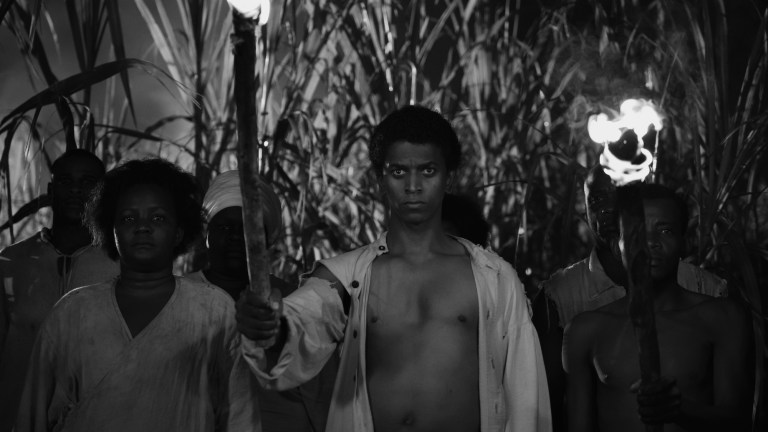
| | 
Everybody knows about zombies, right? They’re flesh-eating monsters, reanimated corpses that rise from the grave to devour the living, feasting especially on their brains. But every horror fan can tell you that version of the monster came from George A. Romero, whose 1969 Night of the Living Dead defined the zombie genre—even if he intended his monsters to be ghouls.
Director Maya Annik Bedward wants to set the record straight with the documentary Black Zombie by exploring the phenomenon’s roots in Haitian culture. “In Haiti everyone knows about the zombie, and what it represents for them. Stories of zombies and zombification are regularly talked about,” Bedward tells Den of Geek, after Black Zombie‘s SXSW premiere.
“As I say in the film, zombification is adjacent to Vodou. Vodou is an everyday practice; zombification is related to stories about seeing zombies in the fields, very connected to ideas of enslavement,” Bedward clarifies. “So Haitians are very aware of what zombies mean to them, and the zombies that the rest of us know have nothing to do with it. Some of them do know how the idea got transformed, and others don’t understand how Americans got this idea of a flesh-eating zombie.”
Bedward counts herself as one of those who initially had that uninformed image of the monster. “When I was growing up, the zombie was just this flesh-eating monster, with no real purpose. It just kind of becomes a zombie and then starts biting other people, and they become zombies as part of this plague-like thing that happened,” she admits.
“I became aware of the difference in my late 20s. I’m Afro-Caribbean, and I’ve always been interested in history, traditions, and cultures that predate colonialism. I always wanted to better understand more where my people came from and our connection to West Africa, but not through a colonial lens.
“People often say that this history doesn’t exist anymore, that it’s been erased and everything on record is told from a Western lens, but that’s just not true.”
She continues, “There are traces of our traditions in music, in food, and in our spiritual traditions, which exist throughout the Americas. I was interested in Vodou, Santería, and Candomblé, but when I found out later in life that the zombie is actually connected to Haitian Vodou, I was shocked, I didn’t know that.
“I’m always so interested in learning about these stories and traditions, and it just blew my mind, and I had to make a film about it.”
Making that movie requires Bedward to contend not with just Romero, but also William Seabrook, the American travel author whose 1929 book The Magic Island first proposed to document Haitian Vodou and zombies. “William Seabrook is a really interesting character,” Bedward says. “He claimed to have a lot of respect for the faith, but at the same time he was about making money, selling books and his whole ‘adventurer’ image.
“What he actually saw in Haiti, I don’t know. He also claimed in books that he was a cannibal. He ate human flesh with cannibals and Africa, and actually that all turned out to be a lie. I think he tried some human flesh later and some type of lab in the States to at least say he did it. So, Seabrook’s just a bit of a character, and you can never really know what’s true and what’s not true with him.”
Perversely, while Seabrook’s false history is readily available, the truth is harder to find especially in the West.
“A lot of this history isn’t recorded in history books. There is no written record and definitely no photographic record,” says Bedward. “When I was telling the history in this film, I had to create a lot of things from scratch, because we never see the transatlantic slave trade from the African perspective, from the people who were kidnapped and taken. It’s always a document of property from the French or whoever colonized the land.
“Showing this imagery was always a challenge. So I think it would be really hard to find a date for the first zombie. But these stories live through oral traditions and cultural practices. You find this history in those.”
However, because most in the West don’t look to those traditions to find the history, they rely on inaccurate representations in pop culture, which perpetuates harmful stereotypes.
“A lot of Haitian people understand these stereotypes as another mistreatment. In addition to the current embargo, Haiti’s had to pay reparations to France for centuries in response to the freedom they won through the revolution. So in addition to all that, their culture and spiritual traditions are also disparaged.
“Those representations have also had negative effects on practitioners on Vodou. As I show in the film, people are ashamed to practice, especially if they’ve moved to the United States, Canada, or France. Even in parts of Haiti, people are ashamed to practice Vodou traditions out in the open. There’s this association of it with evil and dark magic. It’s something that Haitians are taught themselves, and young people are starting to realize that this stuff has been misrepresented, and they’re looking to learn more about their traditions. That’s a big movement that’s been happening in Haiti.”
For Bedward, learning more about the traditions reveals the beautiful aspects of Vodou. “One of the things that moved me most is this central tenant in Vodou that things don’t end when you die, they begin,” she points out. “You have this opportunity to return to a mythical Africa—Jalada or Ginen, they call it—where you can your ancestors and the spirits.
“I thought that was a beautiful way to look at the world and to think about death. There’s an opportunity to reconnect with the past and know where you came from. And for me, as someone who’s part of the diaspora, who’s Afro-Caribbean and whose father is born in Jamaica, I always felt disconnection from where we came from. I always want to know more about our original traditions, and I thought his story promised that one day we will reconnect.”
As much as that story matters for Bedward, she also hopes that Black Zombie means something for the Haitians whose traditions she explores.
“I hope they feel like I did their story justice,” shares Bedward. “Things are very difficult in Haiti right now. So many places where we shot no longer exist anymore, they’ve been burned down and destroyed. I hope that the movie could a narrative of healing and restoration for this incredible country.”
As Badward’s movie shows, even the most die-hard horror fan actually knows very little about zombies. Hopefully, Black Zombie can show everyone the zombies come from a richer, far more important and beautiful tradition than they ever realized.
Black Zombie premiered March 13 at the SXSW Film & TV Festival.