Stranger Than Heaven Dials Up the Intensity for Sega’s Brawler Franchise
After playing an early build of Stranger Than Heaven, the Yakuza/Like a Dragon prequel provides a welcome revamp of its hard-hitting combat.

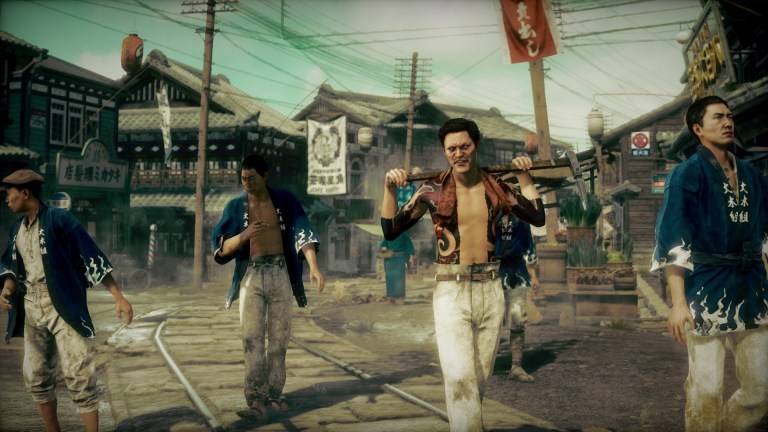
The Sega game to generate the most buzz online coming out of Summer Game Fest 2026 was the upcoming period piece action brawler Stranger Than Heaven, arriving this coming January. A standalone prequel to the Yakuza/Like a Dragon franchise, the game follows Japanese American protagonist Makoto Daito at five different points of his life spanning 1915 to 1965 as he makes his way through the Japanese criminal underworld. In addition to featuring Snoop Dogg playing one of its characters, the game’s SGF trailer raised eyebrows by revealing the inclusion of Tupac Shakur, with the late rapper and actor’s likeness being used for another character.
At Summer Game Fest, we were invited to play an early build of Stranger Than Heaven by Sega, with the demo showcasing different fighting styles employed by Daito given the context of the combat, which was set within three different time periods throughout the game and Daito’s life. This demo gave us a strong idea how varied and original the gameplay mechanics in Stranger Than Heaven are shaping up to be, making it very clear that this isn’t like any number of Yakuza/Like a Dragon games before it. Though, to be clear, we did not play any sequences that featured Snoop Dogg or Tupac’s characters in it, so we have no new details to share on that front.
Played from a third-person perspective, Stranger Than Heaven has its attack and guard inputs linked to the shoulder buttons in a relatively unique way for a game of its genre. Left-handed blows and blocks are handled by shoulder buttons on the left side of the controller while right-handed blows and blocks are handled by shoulder buttons on the right side of the controller; we didn’t check out a PC mouse and keyboard setup for the demo to see how that was handled. Daito can also arm himself with melee weapons and, in two out of three of the sequences we played, he does, each with their own gameplay nuances.
The first sequence is the easiest and most straightforward, with Daito taking on a gang of crooks with his bare hands. After a couple of seconds of fisticuffs, we got the hang of throwing punches by alternating between both shoulder buttons to rack up combos and switch to blocking as other enemies came charging into the fight. This is the sequence that feels the most like a Yakuza game, both with its environmental presentation and its chaotic melee combat, with us breezing through the fight briskly once we got the fighting mechanics down.
The second sequence had Daito using a weighted staff-like weapon, better suited at sweeping blows to handle crowd control but making us move noticeably slower. The enemies in this scene were more aggressive and led by a large bruiser character who would regularly charge at us like a bull and knock us around like a ragdoll. This heightened difficulty along with the new handling with a heavier melee weapon made us relearn how to approach a fight, adapting to the pressure and how to take down a much more formidable lead adversary.
But this demo build of Stranger Than Heaven saved the best for last with its third and final sequence, with Daito taking on a grizzled swordsman in the middle of a city street at dusk. Armed with only a knife, this is a particularly precise duel, with the enemy able to dodge and parry just as well, if not better, than Daito, making us take timing and strategy into greater account when attacking and defending. This was an especially grueling fight and one that left us utterly defeated on multiple attempts, but never to the point where we felt overly frustrated or that the challenge wasn’t a fair one.
With that level of intensity, we could really see what Stranger Than Heaven is all about and how it more saliently distinguishes itself from a mainline Yakuza game experience. If anything, this is a Like a Dragon title for the soulslike fanbase, rewarding timing and precision and punishing mindlessly button-mashing for hack-and-slash combat. No matter how soundly we were cut down, we kept going back in for more, doing a little better each time and refining our approach until we finally emerged victorious.
Just when players have grown accustomed to what a Yakuza or Yakuza-adjacent title can be, Stranger Than Heaven rethinks what’s possible for the Sega franchise. Much of this is tied to its innovative combat system but the glimpses of Saito at different stages of his life and the correlating modernization of Japan also underscores those differences. Now understanding how the fighting works, we’re ready for a more immersive deep dive into the world of the game and its other mechanics to get a better idea of its breadth.
And, at the very least, we want to figure out what the heck Tupac is doing in this thing.
Developed by RGG Studio and published by Sega, Stranger Than Heaven launches January 15 for PlayStation 5, Xbox Series X|S, and PC.