Clayface Remembers Comics Are About Monsters and Horror as Much as Superheroes
Clayface brings the monsters back to DC.

This article contains the mildest of spoilers about the general character arc for the titular character in Clayface.
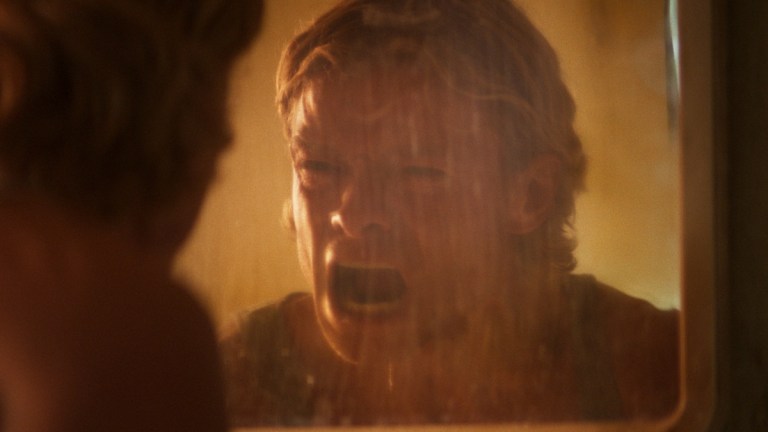
Right before Clayface rolls its final credits, we see the titular character in full: a gloopy mass of molten flesh who belts out a thunderous roar. We all know that Matt Hagen would end up this way, and not just because we already saw Clayface in season one of Creature Commandos, which takes place after the events of this movie. It’s also because Clayface is a long-established member of the Batman rogues gallery, and iterations of him have appeared in countless video games, toys, and animated series.
But Clayface doesn’t really feel like a superhero movie, even though it takes place in Gotham City. Instead when Hagan lets out a roar, full of sorrow and rejection, it becomes clear that Clayface is a monster movie. And that’s perfect, because comic book superheroes have always been a bit monstrous.
In the original comics, Matt Hagen became Clayface when he was treasure hunter, an adventurer who got caught swimming in water contaminated by some strange magic. But before Hagen, Batman faced another Clayface, one with more terrifying roots. In 1940’s Detective Comics #40 by Bill Finger and Bob Kane, Clayface was the name given to Basil Karlo, a genre movie actor in the vein of Boris Karloff (obviously) and Basil Rathbone (ditto). There’s also a bit of Lon Chaney Sr., aka the Man of a Thousand Faces!, in the characterization of the shapeshifting actor as well. Alas, when Karlo’s career started to flag, his mind broke and he began acting like the killers he played on the screen, disguising himself as those characters to attack his rivals.
As that origin story shows, superheroes have their roots in horror. Around the same time that Batman first fought Clayface, the Golden Age Green Lantern did battle against Solomon Grundy, a giant zombie with super-strength, while Doctor Fate tangled with the wizard Wotan and Captain Marvel (known today as Shazam!) matched wits with the Monster Society of Evil. Heroes such as the Spectre or Stardust the Super Wizard, the latter a bizarre creation of artist Fletcher Hanks, enacted ironic punishments on their enemies, befitting the tortures of the Jigsaw Killer from Saw.
The connection between superheroes and horror grew more pronounced with the Marvel Age of Comics in the early 1960s. Marvel’s predecessors, Atlas and Timely, spent the period following the superhero boom of World War II publishing sci-fi and horror comics (as well as Westerns, romances, and dramas). When the launch of the Silver Age seemed to make superheroes profitable again for DC, Marvel decided to follow suit, but only timidly.
The Fantastic Four didn’t get costumes or other superhero trappings until several issues into their first series, but the monster tropes were evident every time a woman screamed at the sight of Ben Grimm aka the Thing. The Hulk was a direct rip from Dr. Jekyll and Mr. Hyde, mixed with Boris Karloff’s version of the Frankenstein Monster. Meanwhile Ant-Man and the Wasp were derived from The Incredible Shrinking Man. Even Spider-Man, with his gangly poses and general antisocial attitude, could have been called I Was a Teenaged Bug-Man. This was likely in reaction to how during the preceding 1950s decades, comics were as synonymous with horror full-stop, courtesy of publishers like EC Comics, as it was superheroes. Alas, self-censorship in the face of congressional hearing put an end to that, carving a path for Marvel’s new wave of heroes.
Nevertheless, horror roots of superheroes persist today, in concepts like Blade, Ghost Rider, and the Creature Commandos. In fact, James Gunn has dubbed the first era of he and Peter Safran’s DC Studios “Gods and Monsters,” a phrase taken The Bride of Frankenstein.
Clayface follows in that proud tradition. It knows that, fundamentally, superhero stories about someone who gets othered by society, pushed out into the margins. Something strange happens to them, which gives them incredible abilities but makes them unfit to live like a regular person. In the case of Superman, Spider-Man, and Batman, that otherness provides an opportunity for heroism, a chance to change the world for the better. Clayface, however, returns to the roots for the counterpoint, as well as the Gothic horror-obssessed Batman: The Animated Series, which redefined the Clayface origin story with a sense of body horror tragedy befalling show business, a la the this past weekend’s new chiller.
Clayface shows us that the opposite of heroism is also possible. Matt Hagen (Tom Rhys Harries) could have used his shape-shifting abilities for good, but he’s too overcome by bitterness and anger. Once he starts seeking revenge against those who hurt him, he fully gives himself over to rage. Clayface fills us with dread. But because it’s set in a superhero world, it also provides a glimmer of hope. For everyone like Matt Hagen, who becomes monstrous, there’s a hero like Batman and Superman, someone who saves the day. By bringing superheroes back to horror, Clayface reminds us that the good guys have always worked best when contrasted by the dark and terrifying.
Clayface is now playing in theaters.