The Social Reckoning Review: Aaron Sorkin’s Transformation of Mark Zuckerberg Is Complete
The Social Reckoning really does feel like a different animal than the David Fincher original. It’s more conventional, Hollywood, and silly. But it is also plenty entertaining in its own right.

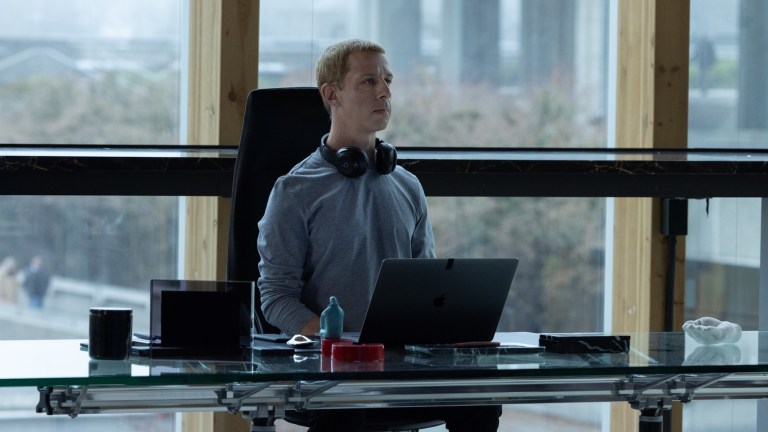
There are few movies coming out this fall where the role of expectation will as dramatically influence perception as The Social Reckoning. Aaron Sorkin’s surprise sequel to one of the greatest films in the 21st century always seemed like a tall order. Here is a new movie with the gumption to expound on what many consider to be both Sorkin’s finest screenplay and a vision that managed to define the shadow of big tech on modern life at a time when many were only dimly aware of its influence.
In 2010, Facebook was either a time-waster or a utopian promise of connectivity and shared knowledge, depending on who you asked. But few were seriously debating the danger of allowing antisocial narcissists with god complexes to shape our understanding of reality, or “the public square” as some still insist. Yet The Social Network saw that phantom menace coming and dramatized it by way of a paranoia that seeped into your bones thanks to David Fincher’s moody blacks and muted browns, and all underscored by an electronic melancholy, courtesy of Trent Reznor and Atticus Ross. Silicon Valley dismissed it in its moment as alarmist (maybe) and as a hit piece (definitely), but it proved as provocative a snapshot of a new world shaped by Millennial maladjustment as we had ever seen up to that minute.
The better part of two decades later, however, and we’re steeped in this nightmare now, chapter and verse. We see it in our algorithms, on our newsfeeds, and in the pages and screens of antiquated “legacy media” that so many Meta executives smirk at like a cat who’s come upon a frail canary with a busted wing. The Social Reckoning is even based on exactly such an investigation, in this case by The Wall Street Journal and its printed reports that Facebook deliberately incentivized content that would reward engagement via anger, outrage, and in many instances radicalization. WSJ’s reporting arrived with dramatic accoutrements, too, including whistleblowers, congressional hearings, public humiliation rituals for executives, and… relatively little changing in the aftermath.
Which might be why The Social Reckoning arrives at both the best and worst time for a sequel, or “companion piece” as Sorkin describes it in the press. Most viewers are well aware of the negative impact Instagram has on teenage girls’ mental health, or Facebook on people’s ability to understand what is going on in their government. And yet, the film approaches it all like a startling exposé.
For better and worse, Sorkin is correct in asserting this movie, which he directed in addition to writing, is a different animal from the Fincher-helmed original. It’s more preachy and didactic than Fincher’s work, but also less cynical and mean-spirited. It is, in other words, more purely Sorkin. The film truly doesn’t position itself as a sequel, but more of a critical reassessment. Whereas the 2010 movie ended with Sorkin’s screenplay leaving it open-ended as to whether Facebook co-founder Mark Zuckerberg is “an asshole” or simply pretending to be one, The Social Reckoning moves past damning judgment and straight to righteous sentencing.
If that previous film is a modern day Citizen Kane, angling a current media mogul’s ethical deficiencies as a mirror for his age, then The Social Reckoning wants to be All the President’s Men; an exciting media procedural about crusading journalists holding a corrupt institution to account.
That journalist’s name in this film is Jeff Horwitz, the real-life WSJ investigative reporter who set his sights on Facebook in 2019 and who is framed here as a dauntless, infallible white knight played with stoic serenity by Jeremy Allen White. It might be this constant calm that makes him so ingratiating to the film’s version of Frances Haugen (Mikey Madison), a member of Facebook’s civic integrity team, which is tasked with finding ways to make Facebook more ethically aligned with its supposed mission statement. That is also just one reason to explain why she is so unpopular at the company, leading her to be disgruntled enough to take a clandestine rendezvous with Jeff.
Theirs is the classic reporter/source courtship, a budding professional dance that begins with a slightly charged meeting on a park bench in the Bay Area hiking trails (all the better for Frances to make sure no one else in the company is walking up on them). Frances insists she doesn’t want to go on the record and will only point Jeff in the right direction. Yet time and again, she finds herself drawn closer to the journo. The two’s cover becomes date night, of a sort, at his hotel, only they’re actually sharing information that will bring Facebook’s misdeeds to light. Meanwhile, hovering high above it all is a new, absolutely diabolic vision of Mark Zuckerberg (Jeremy Strong). The tech CEO is reimagined as an overlord so menacing, so dictatorial that he moves through scenes in the same way Ian McDiarmid’s Emperor Palpatine ruled star systems in Return of the Jedi.
The recasting of Zuckerberg from Jesse Eisenberg in The Social Network to Strong has dominated the oxygen around the new movie. The film mostly gets away with it since the interpretations are so different. While I’m not certain either is based too literally on the real man, Eisenberg’s Zuckerberg at least made some attempt to humanize and rationalize why this guy would screw over his best friend, or look at someone like Napster creator Sean Parker and think they’re seeing Justin Timberlake at his suavest. One might call it sympathy for the devil.
Strong’s Zuckerberg is simply the Devil, full-stop with a capital D. When the insinuations are so severe, and the global impact so demonstrably sinister, Sorkin seems to have lost little interest in comprehending the man. So he instead emphasizes this black hole’s effect to an almost cartoonish degree, which Strong meets by wielding the Zuck’s famed headphones like a crown and scepter. I can empathize with the instinct, but in a strange way it most encapsulates the differences in directors. Whereas The Social Network script held out hope for the kid with “I’m CEO, Bitch” business cards, Fincher’s direction was rife with sardonic disdain for the world he inhabited; a hopeful ending note on Sorkin’s carried the luster of fool’s gold in Fincher’s framing. Conversely, director Sorkin is so much more optimistic about humanity than Fincher that Zuckerberg can be nothing less than Saturday morning supervillain in need of vanquishing.
Those who are taking on that heroic quest are where the lion’s share of The Social Reckoning’s interests lie, and they’re the better aspects of the movie. I don’t know enough about the real Horwitz or Haugen to comment on the accuracy of White or Madison’s portrayals, although both feel like standard issue Sorkin protagonists: witty, good-hearted, and classics-educated eggheads who like sparring about the plots of Broadway musicals and Arthur Miller plays while doing the right thing.
In many ways, they’re closer to the leads of ‘90s Sorkin plays-turned-films like A Few Good Men than The Social Network, a fact composer Alexandre Desplat intentionally echoes in his old-fashioned, Aaron Copland-flavored score. This is a film about the soul of America, the music all but announces as a lonely horn plays over a title card. Given the subject matter, it can be on-the-nose. But it is also undeniably entertaining in the scenes where White and Madison just trade barbs on a gray park bench, with her not-so-patiently explaining tech jargon to the political reporter, or whenever our male hero looks forlornly off into the distance.
White keys into Sorkin’s hagiographic tone better than Madison, never playing less than an archetype, but with always the right balance of wariness and certitude. Madison has the more complex character, and in scenes where she must navigate the leering condescension of Silicon Valley work culture is quite compelling. She seems to struggle worse with Sorkin’s most heavy-handed instincts, which often whittle down to Madison in a low-cut dress being lectured to by Allen about why she must continue pushing the limits of her NDA to save the world. A sequence where White/Sorkin dismiss Madison for claiming he is “mansplaining” journalism to her doesn’t quite equal the Get Out of Jail Free Card the script seems to think it does.
Those obvious Sorkin flourishes are both The Social Reckoning’s greatest assets and weakest liabilities. On the one hand, there’s a reason so many Sorkin scripts have been nominated for or won awards; the rapid-fire patter of his dialogue is like music. To hell with realism! He piles on facts and figures, statistics and classic cinema asides, like a composer winding up a symphony. At the same time, he cannot help but always reach for the most conventional and even cloying of crescendos.
So it is in The Social Reckoning’s final movements where, without giving away spoilers, he arrives at his final, scornful pillory of Facebook by drawing direct lines between the social media site and the horrors of the last six years. Nonetheless, Sorkin paints it in such a moralizing, broad, and self-pleased shading that one could be forgiven for drawing the conclusion that Horwitz’s bombshell reporting and Haugen’s fearless testimony was the stake through the heart of the Zuck-pire; a courageous act that brought an end to Facebook and the chaos of social media misinformation.
Yet even though it’s been barely half a decade since where The Social Reckoning closes its book, more than enough time has passed to know the world is still getting worse; one courageous journalist and undaunted whistleblower are not enough to bring down a trillion-dollar conglomerate that chillingly refers to itself as “post-government” in one of Sorkin’s best lines; and at the end of the day everyone knows Facebook is getting away with it. A real reckoning remains elusive.
It makes for a film that is easily digestible and entertaining, as well as slighter and sillier than its predecessor. It also makes that film a fairy tale.
The Social Reckoning is in theaters on Friday, Oct. 9.