Supergirl Deserves Better Than the Current Media Feeding Frenzy
The Kryptonite knives are out for Supergirl, a movie that while flawed is better than most of the caped stuff that's gotten a pass this decade.

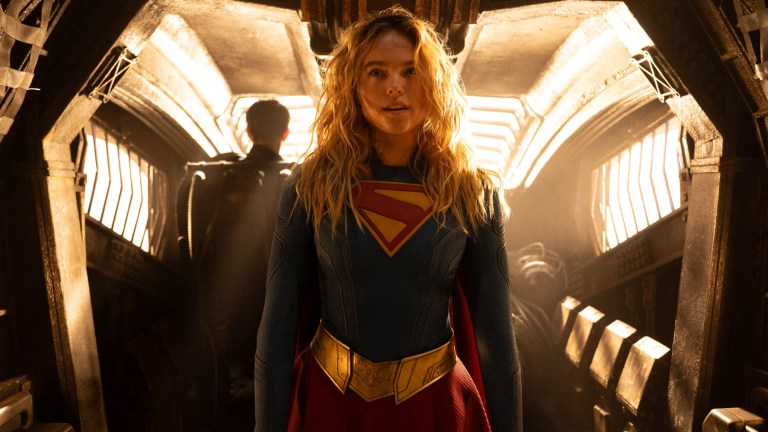
I did not review Supergirl, because it is Den of Geek policy that if you travel for a project at the studio’s request—say, for example, a set visit—you might not be impartial. I think it’s a smart rule, even though I’ve been on more than one set for films I did not find remotely good in the end.
But I do think Supergirl is pretty good, and a superhero movie that does a few things I’ve found sorely lacking in the genre as of late. They’re worth standing up for, particularly with the dog pile it’s getting in the press via hyperbolic assertions like Variety’s claim that it features “the worst script” Owen Gleiberman can remember in a comic book movie. Supergirl definitely has issues—much of it involving a nonentity of a villain played by Matthias Schoenaerts—yet the film, including its screenplay by Ana Nogueira, also has a quality I find missing in most caped movies in the 2020s: sincere heart and a clarity of purpose.
Setting aside the fact that in the last five years, critics for both trades and genre sites have endured hideous screenplays for movies like Morbius, Kraven the Hunter, Aquaman 2, Black Adam, The Marvels, and Ant-Man and the Wasp: Quantumania (to name a few), it’s still fair to say superhero movies on the whole have gotten into something of a rut. They tend to fixate on interconnectivity with other mini-franchises and IP tributaries in their respective universes, emphasizing worldbuilding easter eggs and fan service nostalgia over story structure or character, and reduce everything into a flippant, self-smirking romp where the whole world/universe is threatened at the end by some CG monstrosity.
For whatever its faults, the Supergirl movie directed by Craig Gillespie and penned by Nogueira brushes that detritus to the side (at least when Lobo isn’t around). Returning to one of the superhero genre’s roots on the page and screen, the film is a not-so-subtle sci-fi riff on Westerns in general and True Grit in particular. It is the story of a young girl who is taken under the wing of a self-loathing roustabout whom she idolizes, and in turn brings out the hero in the drunkard she discovers at the bottom of a bottle.
It’s not original, and much of its grace comes from the far superior Supergirl: Woman of Tomorrow graphic novel by Tom King and Bilquis Evely, but the emotional core is genuine and I’d argue refreshing, in large part because of how fantastic Milly Alcock is in the role of the reluctant battle-hardened hero. At the age of 23, you can feel she’s lived lifetimes of grief. Despite the film often echoing the Mos Eisley Star Wars cantina scene, now writ neon, or the frankly unwise choice by Gillespie to couch the film in too much George Miller-lite grime, Alcock’s Supergirl and her script give the material a haunted, forlorn quality that’s alien to modern caped stuff.
Her survivor’s guilt of being one of the few refugees to make it out of Krypton is credible, which makes the familiar but earnest redemption arc genuine and earned. The greatest effect of Supergirl’s many fight scenes and set pieces isn’t the VFX of Kryptonians flying, or laser beams melting. We saw much the same in Gunn’s Superman last year. What we seldom witness, though, is the effect it’s intended to have on people.
Nearly every time Kara flies or uses her powers, Gillespie frames it from the vantage of little Ruthye Marye Knoll (Eve Ridley), the child who demands Supergirl avenge her family. It is a trick that goes back to at least George Stevens and Shane, and which Spielberg is a master at, but is so rarely observed in modern superhero movies with their corpulent amounts of CG excess. The awe such sights can and should inspire in a human reaction, particularly from that of a child who might be as wounded and grieving as Alcock’s messy hero, is the real stuff of mythmaking.
The plot follows the familiar patterns of many stories, including True Grit, but the ending being about the core dynamic of Kara impressing goodness onto a child who has every reason to choose despair, and for it to be executed without a hint of irony, self-deprecation, or winking asides as a beam of light shoots into the sky, is a credit to the screenplay. To call it the worst of a genre that not two years ago gave us Venom: The Last Dance rings deafeningly false.
To be clear, there’s plenty to criticize in this movie, from the dreary aesthetic being at odds with the cheeky prosthetic alien effects, to the fact the aforementioned villain is so unpleasant to be around that the movie clearly cut his scenes to the bone, leading the thing feeling strangely fleet. It’s not a great superhero film, but I would argue it’s a decent one and better than a surplus of mediocrity that was given passes and top marks in the 2010s and even 2020s with their gridlike, patched-together scripts and visuals.
What’s changed, I suspect, is a few things, not least of which is the patience among fans and critics who no longer have time for flawed or serviceable movies. So those who might have given a pass to Ant-Man and the Wasp flicks once upon a time feel emboldened, liberated even, to cut deep into a movie that’s tracking like a disappointment at the box office. The ugliest side, however, is the seedy impulse, even among professional male critics, to join in on the cruel (and glaringly false) bandwagon of shaming or mocking a young woman’s appearance. One, who I might add, looks literally like Supergirl.
Superhero fatigue is real, and an industry or audience that once indulged three out of the last four Thor movies is ready to see more capes fall to earth. The green sun of schadenfreude is shining bright. Maybe for the future of blockbusters that’s a good thing, but Supergirl has more heart than most of its contemporaries, not to mention what the Kryptonite slings and arrows would suggest.
Supergirl is in theaters now.