VisionQuest Proved That Wanda Maximoff Is an Anchor of the MCU
Marvel fans want more of the Scarlet Witch. As they should.

This post contains spoilers for VisionQuest season 1 episode 8
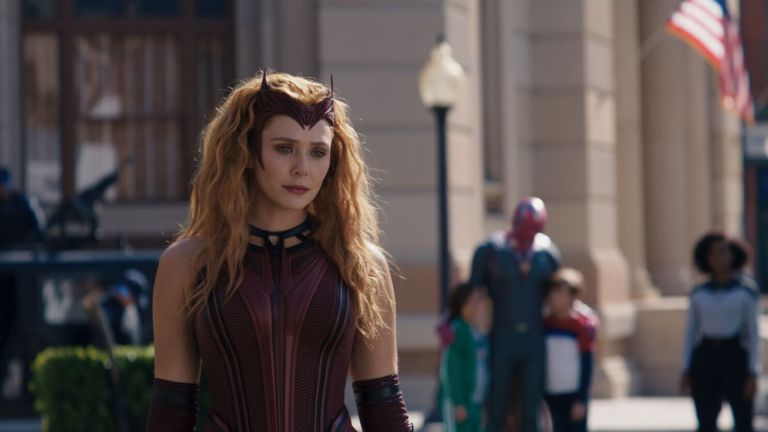
A strange thing happened when VisionQuest finished. The Disney+ series created by Star Trek: Picard showrunner Terry Matalas told a largely enjoyable story about the synthezoid Vision (Paul Bettany) and his maniacal robot creator Ultron (James Spader) as they found themselves and debated the nature of life. It had incredible chemistry between the leads, some fun setpieces, and even ended on a stronger note than its predecessor, WandaVision. Yet, as soon as a surprise post-credits sequence played, revealing Doctor Doom (Robert Downey Jr.) resurrecting Wanda Maximoff (Elizabeth Olsen) in preparation for Avengers: Doomsday, all anyone could talk about was Wanda.
In an exit interview with The Playlist, Paul Bettany sure sounds like he expected that to happen. When asked about the possibility of having Olsen reprise her role for the series, Bettany reveals that he dissuaded Kevin Feige from including her. “I really don’t think you should distract from [Vision] by giving the audience that at the end of the [show],” he said. “It will just fundamentally all become about WandaVision again, and this should and can stand on its own.” And he was right, not that VisionQuest became WandaVision, but that everything became about Wanda—because Wanda Maximoff is an anchor of the MCU.
Looking back on the history of Wanda Maximoff, her current status does come as a surprise. The Scarlet Witch first appeared in 1964’s X-Men #4, by Jack Kirby and Stan Lee, alongside her twin brother Quicksilver as a member of the Brotherhood of Evil Mutants. Like most female characters in the Silver Age, she had inherently defensive powers, the ability to cast hexes which gave people bad luck. A year later, she and Quicksilver graduated to the Avengers, where Captain American recruited them to join fellow former criminal Hawkeye in a lineup dubbed “Cap’s Kooky Quartet.”
In the pages of Avengers and West Coast Avengers, Wanda became defined more by her drama and relationships than by her powers. She was courted by Hawkeye, and dated both Vision and Wonder Man, leading to lots of soap opera moments. While she did receive training from the crone Agatha Harkness, even her power boost was mostly served to advance her relationships, as when she created the twins Tommy and Billy as children for her and Vision. Worse yet, Marvel time and again associated Wanda’s power boosts with evil, having her go crazy several times, wiping out the Avengers and the X-Men.
The MCU has treated Wanda better, but not by much. After a post-credits tease in Captain America: The Winter Soldier, she and her twin Pietro (Aaron Taylor-Johnson) debut in Avengers: Age of Ultron, where Wanda mostly uses her powers to give people cameo-laden nightmares. She’s mostly sidelined in Captain America: Civil War, first making the mistake that sets off the movie’s mistrust of superheroes, and then constantly being told to stay out of the fight. Even Avengers: Infinity War, which gives Olsen some more dramatic moments to play, still makes her largely ineffective and defined by her connection to Vision.
And then came WandaVision, and everything changed. It’s not just the formal playfulness of WandaVision, nor just Olsen’s excellent dramatic chops that made Wanda Maximoff such a powerful character. Rather, it was the tragic turn she put on the standard superhero story. Yes, Wanda has amazing powers, the ability to change a town into characters for her sitcom, to create children out of nothing. And yet, none of that could keep her safe and happy. When it came time to face the reality of everything that’s happened to her—losing her family, her brother, and her husband—she was powerless.
Even though Doctor Strange in the Multiverse of Madness turned Wanda into a villain, that central sympathetic core remained. Wanda was a hero in the Marvel mode, someone who isn’t just superhuman, but also fully human, and therefore more relatable.
The same could be said of flawed figures like the arrogant Tony Stark or the Man Out of Time Steve Rogers. But as they fell way for one reason or another, then Wanda became the purest embodiment of that perspective in the MCU. She resonated with viewers in WandaVision, she resonated with viewers at her death, and Marvel better hope that she’ll resonate with viewers in her resurrection for Doomsday. Because if the MCU wants to retain its status as a cultural dominate franchise, it will need to do right by anchors such as Wanda Maximoff.