Sword Art Online’s Creator Just Dropped A New Anime Worth Watching
Devil’s Crest feels poised to rejuvenate a tired isekai genre.

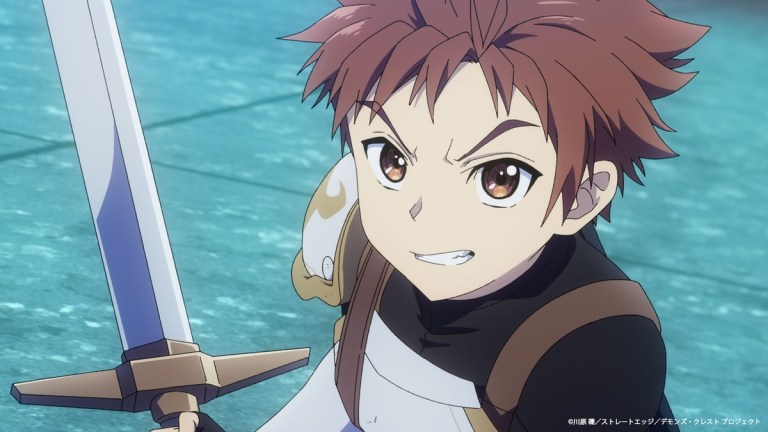
In the early 2000s, Reki Kawahara unknowingly changed the anime landscape by creating the manga Sword Art Online. Its premise, which saw a teenager trapped in a video game and having to fight for his life, captured audiences’ attention; that audience only increased when the anime adaptation made its debut in 2012. As a result, Sword Art Online became one of the biggest anime franchises of the modern era…and it looks like Kawahara is about to catch lightning in a bottle again with Devil’s Crest.
Devil’s Crest recently dropped its first two episodes on Prime Video, and from the start, it bears a striking resemblance to Sword Art Online. Protagonist Yuuma Ashihara is play-testing a virtual reality game called Actual Magic, and when he can’t log out, it seems like he is about to face the same trials Sword Art Online’s hero, Kirito, did. However, Devil’s Crest takes a major turn when Yuuma escapes the world of Actual Magic…and learns that the game’s monsters are roaming free in the real world, and that he can use the magic abilities from the game.
This effectively makes Devil’s Crest a reverse isekai. For those who aren’t familiar with their anime terms, isekai is short for “another world,” and usually features a character being pulled into a fantasy realm to help save it from a certain threat. Isekai is arguably one of the most popular genres of anime, and Sword Art Online helped pave the way for a wave of these stories, including Re:Zero and That Time I Got Reincarnated as a Slime.
But the rise of isekai anime also led to a formula that quickly grew well-worn. An event sends a high school student – usually male, usually from Japan – into another world. Said student, who often retreated into video games, learns that he has a special skill or that his time playing video games gives him an advantage. The student fights a horde of monsters, usually under the command of a demon king. Most of the female characters he meets are impossibly beautiful, attracted to him, or both. Rinse and repeat.
Devil’s Crest seems determined to break this formula, as Kawahara introduces a few plot points that set it apart from the usual isekai tropes. First, Yuuma is in middle school instead of high school, meaning he’s dealing with the twin terrors of adolescence and a world being invaded by monsters. Second, most of his classmates are transforming into monsters, so Yuuma has a personal stake in rescuing them rather than assembling a harem of interchangeable female characters. Thirdly, Devil’s Crest grows immensely dark in its premiere: characters die, lose their humanity, and struggle to survive – and the darkness only increases when you remember that these are pre-teens.
In a way, Devil’s Crest seems to be Kawahara’s attempts to fix some of the problems that popped up in Sword Art Online. Most of that series’ critics pointed out that Kirito becoming immensely overpowered, and his love interest Asuna being reduced from a capable fighter to a damsel in distress in later story arcs dampened the series’ promise and led to some of the issues that still plague isekai stories. Kawahara’s work on Devil’s Crest shows that he’s taken those concerns into consideration – and that he’s still capable of delivering stories that reshape the way fans interact with anime.