The X-Men Are Marvel’s Only Hope of Rebuilding After Doomsday
Tony Stark blazed the path, but it's time for Marvel's Merry Mutants to take the lead.

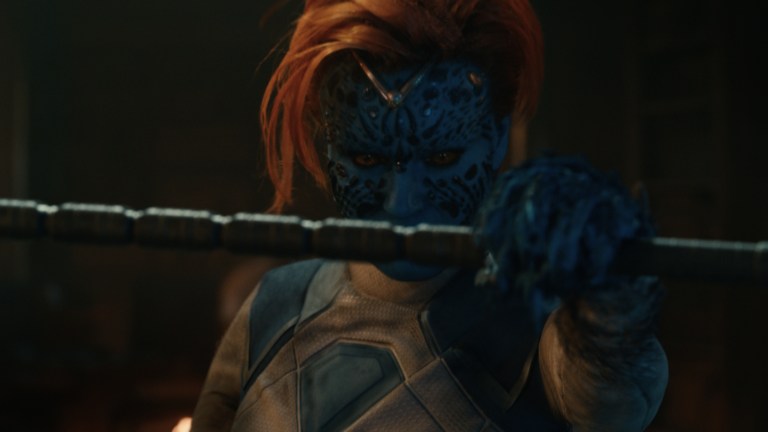
We’ve known for some time that Doom is coming to the MCU, in the form of Avengers: Doomsday villain Doctor Doom. And we now know that the follow-up, Avengers: Secret Wars, will match the storyline from the comics, in which Doom recreates the universe in his image, establishing himself as God Emperor. If Secret Wars matches the comic book storyline, then the MCU will be semi-rebooted at the end of the movie, giving the long-running franchise a much-needed fresh start.
What will usher in that fresh start? X-Men, the 2028 movie directed by Jake Schreier, in which a new band of mutants—including Sadie Sink’s Jean Grey and Christopher Abbott’s Professor Charles Xavier—do battle with Mister Sinister, played by Adam Driver. X-Men will be to the new MCU what Iron Man was to the first, and that’s a good thing. The soap opera melodrama of the mutants embodies the Marvel ethos far better than quipping Tony Stark ever could.
The Unlikely Forging of the MCU
As most Marvel fans know, Iron Man launched the MCU almost out of necessity. Tony Stark may have been a mainstay in the comics, being introduced by Stan Lee and Don Heck during the first wave of heroes in the early ‘60s and serving as a founding and consistent member of the Avengers. But he was hardly an A-lister hero on the level of Spider-Man or the Hulk.
In fact, that’s exactly why Marvel still had the rights to Iron Man when they went into the movie business in the 2000s. The company had sold off adaptation rights to more popular characters in the previous decade, in the hopes of staving off bankruptcy. Thus, Sony had the rights to Spider-Man, 20th Century Fox made movies about Fantastic Four and the X-Men, and Universal got the Hulk. Marvel had to make do with the leftovers and went with Iron Man on the advice of boys in a focus testing group.
Today, it’s hard to say they made the wrong decision. Not only did Robert Downey Jr. provide the charm and the star power to make Iron Man a hit that appealed to more than comic nerds, but the improv-heavy approach that he and director Jon Favreau took established the quipping humor that defined the franchise.
Yet, the blessing of Iron Man soon became a curse, as every other character had to live in his shadow. No matter how much he deferred to Captain America, Iron Man was the central Avenger. Tony Stark replaced Uncle Ben as Spider-Man’s inspiration. Doctor Strange shared Stark’s personality, not just his facial hair. And now, even Doctor Doom is a copy of Tony Stark.
Annoying as that might be for the fans of the individual characters, the real problem with centering Stark is that he doesn’t fully embody the Marvel ethos. Marvel became a sensation in the 1960s because they offered stories that took place in the world outside your window, telling tales of emotionally-troubled heroes whose powers create as many problems as they do solutions. Certainly, Iron Man has those qualities—at first. But in 2026, a reckless rich guy who hangs out with Elon Musk (see: Iron Man 2) no longer feels like a relatable hero, certainly not compared to the X-Men.
All-New, All-Different
Iron Man may have been a B-lister when his movie went into production, but that’s still higher than the X-Men ever rated for the first decade of their existence. Up until the 1974 relaunch Giant-Size X-Men #1, and especially the 17-year run by writer Chris Claremont that immediately followed that issue, the X-Men were the least interesting and least popular of Stan Lee and Jack Kirby’s creations. All the key elements were there in those first issues: Professor Charles Xavier and his school, Magneto and his mission of mutant supremacy, and the five students turned superheroes who made up the team. But Lee and Kirby did very little with the mutant concept, other than give the characters more basic origin stories.
Once Claremont came aboard, everything changed. Claremont took advantage of the lack of editorial oversight to tell everything from space opera to boarding school drama in the pages of the X-books. But the mutant metaphor kept everything grounded, allowing the central concept to serve as a stand in for all sorts of oppression. Those who were othered because of their race, sexuality, or gender expression saw themselves in the X-Men, and saw those who hate them in bigots like Reverend Stryker or Bolivar Trask.
Thanks to the mutant metaphor, the X-Men seemed forever rooted in the real world. Which only gave them more license for over-the-top dramatic storytelling. X-Men comics are rife with clones, parallel worlds, and tangled timelines. The characters are in an ever-revolving series of couples and thruples and polycules, constantly breaking up and falling out and getting back together again. Teenage angst and exclamations of ecstasy mark every issue.
In short, the X-Men are the culmination of everything that Marvel has to offer to the world: relevant stories, told through the spectacular lens of superheroes. And that’s exactly why they need to be the center of the new MCU.
To Screens, My X-Men
As the DC Universe enters its second reboot, further adding to the pile of failed shared universes, the MCU only looks more and more like the miracle that it is. Several factors went into the MCU’s ability to succeed where everything else failed, including a bland blockbuster landscape in the 2000s and the rise of geek culture. But things have changed now, and the next generation goes for indie horror and A24 movies over the latest superhero offering.
With their soap opera stories and complex characters, the X-Men can meet the expectations of this next generation of viewers. The mutants can give viewers all the complicated plot lines and fun superhero action that have made Marvel the defining comic book company for decades. Professor X, Cyclops, Storm, and Wolverine can carry the torch once held by Tony Stark, ensuring that Doomsday isn’t the doom of the MCU.