Revisiting The Specials, James Gunn’s First Superhero Movie
The Specials is James Gunn's worst superhero project, but its roughness led the way to things sweeter and more special.

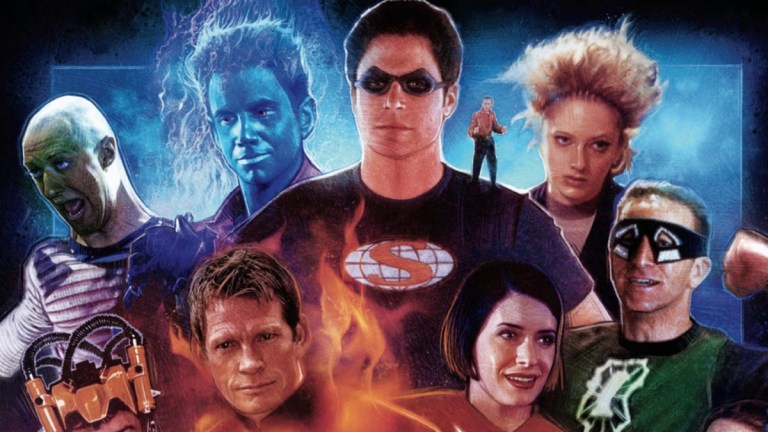
Nobody makes superhero movies like James Gunn. Even if greats such as Sam Raimi and Christopher Nolan have produced incredible films about people in capes and cowls, Gunn’s combination of off-beat humor, utter sincerity, and love for the weirdest parts of comic book worlds make him the ideal superhero auteur, a fact he proves with films like Guardians of the Galaxy and Superman. But no artist starts out perfect, and Gunn is no exception. In fact, 2000’s The Specials, Gunn’s first-ever superhero movie as a screenwriter, is pretty awful. Yet in spite of its clear signs of immaturity and rough edges, The Specials does feature some indicators of the artist that Gunn would become, namely a respect for the disrespected parts of the superhero world and surprising moments of pathos.
Directed by Craig Mazin, who worked on Scary Movie 3 and Superhero Movie before making Chernobyl and The Last of Us, The Specials establishes itself as a Gunn project right away. The movie focuses on the titular team, the seventh-most popular group of superheroes in the world. Moreover, instead of following the team at the moment of their greatest battle or most significant victory, The Specials shows us how they spend their time off: mostly bickering with one another about who’s to blame for their sorry reputations.
Led by the Strobe (Thomas Haden Church), the Specials consist of the team secretary Ms. Indestructible (Paget Brewster), breakout hero the Weevil (Rob Lowe), the spacey Alien Orphan (Sean Gunn), her caretaker Power Chick (Kelly Coffield), the creepy Deadly Girl (Judy Greer), the Atom analogue Minute Man (James Gunn), genius Mr. Smart (Jim Zulevic), and newcomer Nightbird (Jordan Ladd). The team also finds themselves regularly joined by Amok (Jamie Kennedy), a blue-skinned former villain who like to just hang around.
At the start of the movie, the team thinks they’re on the verge of their big break, as they’ve signed a merchandising deal with Kosgrov Toys, but when the toys prove to be cheaply-made and inaccurate—and worse, that no one at the company cares to make better figures out the lowly heroes—the Specials disband. For the Weevil, the dissolution of the group offers a chance for him to make the big time and join the Champions, this world’s version of the Avengers and the Justice League. But Weevil’s decision disappoints not only Ms. Indestructible, who is married to the Strobe while low-key sleeping with Weevil, it repels the still-idealistic Nightbird.
In that summary, one can see the sort of emotional tension that makes Gunn’s other superhero work so great. Once again, he’s working with a bunch of losers who have no reason to believe in themselves. Yet they have to stick together because no one else will accept them, and that bond becomes the catalyst for great things. Whether it’s the Guardians being forced to save the Galaxy from the threat of Ronan the Accuser or the 11th Street Kids thwarting an alien invasion in Peacemaker, Gunn knows how to make that storyline work.
However, The Specials leans too hard into 2000s cynicism for the sweetness to stand out. Not only does Gunn really lean into the crass jokes, most of which are delivered by Jamie Kennedy at his most irritating, but the entire structure of the movie undercuts the possibility of pathos. The film regularly breaks into a mockumentary style that includes other media images of the superheroes, setting up a distinction between the heroes as they’re presented (inspirational and good), and the heroes as they are (cynical and crass).
Furthermore, the costuming and limited budget means that Mazin and Gunn don’t have the ability to show the Specials redeeming themselves, something that Gunn can do in his better-known superhero work. None of the characters really wear costumes. The Weevil dons a mask, but he also wears a t-shirt adorned with a logo tucked into his pants. Strobe and Ms. Indestructible have lightening bolts on their red shirts, which only makes the military-looking outfits feel even more fascist. Deadly Girl and Power Chick’s sole notable visuals are in their hairstyles while Minute Man has a jumpsuit that makes him look like he’s hosting Mystery Science Theater 3000. At least Alien Orphan is green, but even then he’s clad in a nondescript black shirt and jeans.
While these visual elements shouldn’t be a problem in a film about heroes on their day off, they do make the characters feel pathetic; they’re broke cosplayers with unwarranted arrogance. Add in the fact that they use their powers off-screen, and the whole movie seems to be laughing at the heroes for their pretensions, not sympathizing with their failures.
This isn’t to say that The Specials completely lacks merit. Brewster, Lowe, and, to a lesser extent, Church find pathos in their characters. The scene in which Strobe realizes that his wife is having an affair with Weevil is played silently and perfectly, even if the hasty editing undercuts the emotional punch. Likewise, Weevil’s speech to the members of the Champions in which he reminds them why they became superheroes in the first place has strains of the sweetness that Gunn would later develop.
Unfortunately, they are strains that don’t get developed in the still quite raw experimentation in The Specials. Instead the movie appears still indebted to Troma, the straight-to-video provocateurs who gave Gunn his foot in the door. Even so, the title matters if only because it gave Gunn space to work the nastiness and cynicism out of his system, paving the way for a filmmaker who can handle every superhero, from the perfect Superman to the pathetic Polka-Dot Man.