X-Men ’97 Revisited One of the Worst Story Ideas in Marvel History
X-Men '97 forces us to remember that time X-Factor were the X-Terminators and also the Ghostbusters.

This article contains spoilers for X-Men ’97 season 2, episode 6.
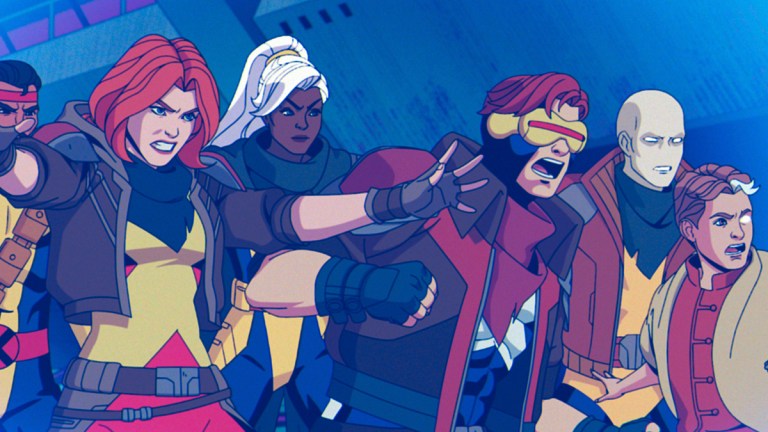
The latest episode of X-Men ’97, “Danger.exe” opens with a satisfying action scene, in which the government-sponsored X-Factor takes on the Purifiers, an anti-mutant religious cult led by Reverend William Stryker. Satisfying as it is to see Polaris unleash on the hate-mongers, the real fight occurs shortly afterward, when team leader Havok accosts her for going too far. Havok defends himself by insisting that the team does good, finding mutants before other, more hostile forces can and getting them to safety—even if that safety is a prison cell.
Havok’s logic fails to convince Polaris, however, who storms off and eventually joins the X-Men. Viewers won’t find it convincing either. Nonetheless, the idea of X-Factor posing as mutant hunters to secretly find and help wayward mutants comes straight from the comics. In fact, that ethos drove the first incarnation of X-Factor, a concept lifted in part from the movie Ghostbusters.
When X-Factor #1 hit comic stands in 1985, it lacked Havok, Polaris, or any of the members seen in “Danger.exe.” Instead it featured the original five X-Men introduced in 1964’s X-Men #1—Cyclops, Marvel Girl (Jean Grey), Beast, Angel, and Iceman—forming a team called X-Factor. Well, sort of.
Through most of the first issues of X-Factor, the five members advertise throughout the U.S. as the world’s premier set of mutant hunters. They present themselves as humans, wear blue jumpsuits, and even carry high-tech equipment, including a backpack that Angel wore to disguise his wings. When a human hears about a mutant causing a problem, as when the flame-producing Rusty sets fire to a bar, they call X-Factor to come and neutralize the threat.
After capturing the mutant and taking them back to their headquarters, the members of X-Factor would reveal their true plan, providing shelter and training for the wayward mutant. Also they would sometimes put on their standard superhero costumes and call themselves the X-Terminators, mutant terrorists who would wage war against X-Factor and protect the hunted mutants.
If that wasn’t convoluted enough, X-Factor hid their identities from the rest of the X-Men, which meant that the team’s former allies would express anger toward X-Factor and even come to blows with them, not realizing they’re all on the same side. Even more galling, X-Factor came to be after Jean Grey suddenly came back to life after sacrificing herself at the end of The Dark Phoenix Saga, prompting Cyclops to ditch his wife, Madelyne Pryor and son Nathan (the future Cable), and run back to his old girlfriend.
In short, it was a mess, one almost entirely the fault of Marvel editorial. Marvel’s Editor-in-Chief Jim Shooter oversaw the rise of the X-Men when writer Chris Claremont took over the book in 1975 and transformed it from a C-tier property to the most popular comic on shelves. But he also took a famously heavy-handed approach to editing and demanded that Jean Grey die at the end of The Dark Phoenix Saga against the intentions of Claremont and co-writer/artist John Byrne.
Yet when Marvel wanted a second X-Men spin-off to go with New Mutants, Shooter entertained a pitch/brainstorm from artist Jackson Guice and writer Bob Layton about reuniting the surviving original X-Men to explore the adult lives of Xavier’s graduates. Despite originally demanding her death, Shooter insisted upon resurrecting Jean as a publicity stunt. Then because Jean’s return and the reunion of the original five X-Men apparently weren’t enough, the creative team added one more hook and decided to copy Ghostbusters, still a blockbuster playing in theaters around the world.
Thus we got one of the most convoluted and tiresome storylines in comics history. The X-Factor disguises looked stupid and stretched credulity (no one notices that X-Factor has the exact same composition as the X-Terminators, complete with a guy wearing red glasses?). The schism between X-Factor and their friends undermined the whole purpose of a shared universe. Worst of all, it took years to rehabilitate Cyclops after his nonsensical decision to abandon his family.
Fortunately, new writer Louise Simonson dropped the mutant hunter concept shortly after she took over the book with X-Factor #6 (1986) and eventually pinned the whole idea on Cameron Hodge, who became one of the most memorable X-Men villains. By the time the original team rejoined the X-Men and a whole new team arrived in X-Factor #71 (1991), both the X-Terminators and the mutant hunters were a distant memory… that is, until X-Men ’97 resurrected it for “Danger.exe.”
X-Men ’97 streams new episodes every Wednesday on Disney+.