X-Men ’97 Season 2 Episode 6 Review: The Dangers of Evolution
The X-Men continue to grow, bringing the problems of the past along with them.

This article contains spoilers for X-Men ’97 season 2 episode 6.
The X-Men should make us uncomfortable. Where the Avengers or Justice League exist only to protect us and inspire us, the X-Men represent the next stage of human evolution. Yes, they’re willing to protect a world that hates and fears them and, yes, they’ll pursue a dream of humans and mutants living in harmony. But people can only be pushed so far, and the X-Men are no different. The best X-Men stories should also have a sense of menace, the realization that they’ll shift tactics to protect themselves if humanity continues to oppress them.
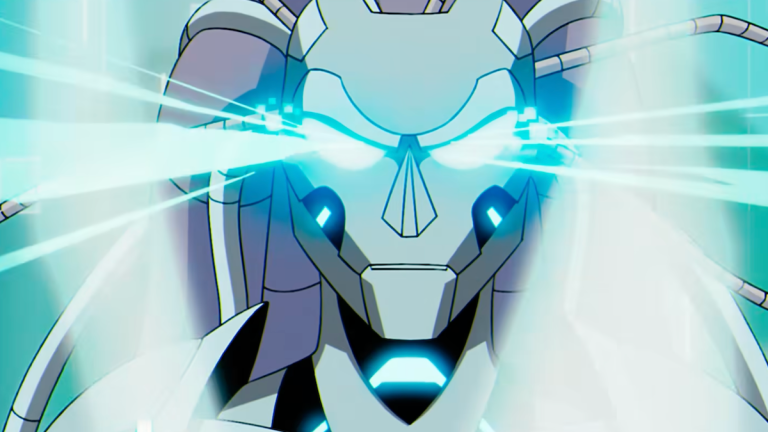
In its best moments, “Danger.exe” invokes that sense of danger, especially at the end, when it invokes both Grant Morrison‘s reinvention from 2001 and the Krakoa era that Jonathan Hickman launched in 2019, two of the most daring approaches to Marvel‘s mutants. But the episode invokes a different sort of discomfort by integrating concepts and scenes from Joss Whedon‘s Astonishing X-Men run, including the villain Danger.
“Danger.exe” sees the team trying to get back to business as usual after the events of the first half of the season. Class is back in session at Xavier’s School for Gifted Children, with Storm taking over as headmistress and a student body that includes some favorites from the comics (Doop! Shark Girl! Eye Boy! Glob Herman! ugh, Quentin Quire). We even have new members in the form of Bishop, finally here full time, and Polaris, who gets booted from X-Factor after her patience with Reverend Stryker’s Purifiers.
Yet, the X-Men have no normal, and must always evolve. So, in addition to adopting the biker-style costumes that Frank Quitely designed for Morrison’s run, Xavier rethinks his dream. By the end of the episode, he has transitioned his focus away the school and launches X-Corp. The episode doesn’t entirely explain what X-Corp is, and knowledge of the comics doesn’t help much. But Val Cooper’s irritation at the end indicates that Xavier’s making a play for international sovereignty, not unlike Krakoa.
In short, a lot happens in “Danger.exe,” as has been the case for every episode of X-Men ’97. For as much as last week’s “Weapon X, Lies, and DVDs” too quickly glossed over important character details, “Danger.exe” hits just the right combination of spectacular action and character attention. The episode deftly blends character progression with plot beats, making room for the big set-pieces.
We see that precision in the first scene, in which Xavier uses the Danger Room to relive the final moments of Magneto’s life. The repetition suggests self-harm, but when Xavier scolds the room for failing to adhere to safety protocols, we realize two things: first, of course, that the Danger Room has a mind of its own, setting up the episode’s villain; but also, second, that Xavier retains control over himself, and uses the sequence to ask hard questions about his methods, setting up the X-Corps reveal.
Xavier’s mental state mirrors that of Lorna Dane a.k.a. Polaris, who finally gets the spotlight here. Lorna has been trying to play “good mutant” in X-Force, serving alongside her boyfriend Havok, who’s portrayed accurate to the comics here as a naive himbo given to fits of self-righteousness (to be clear, I love him). When she can no longer tolerate the oppressors who want her eradicated, Polaris gets kicked off the team and returns to the X-Men.
Carolina Ravassa gives Polaris a raspy pluck that perfectly suits a woman who wants to adhere to Xavier’s dream, but has lost patience. Her internal struggle, wanting to honor the high ideals of her mentor but increasingly sympathetic to her father’s worldview, not only pairs nicely with the no-nonsense Bishop, but also dovetails with Xavier’s turn to the radical with the establishment of X-Corp. Fitting, then, that the revelation comes while fighting an opponent called Danger.
Danger and other elements from the episode, such as the fake Sentinel attack during a school assembly, come directly from Joss Whedon’s run with artist John Cassidy. Astonishing is pure Whedon, often quite brilliant and extremely uncomfortable in hindsight, which makes it kind of surprising that X-Men ’97 would pay homage so openly.
Yet, the inclusion of Whedon’s contributions gets at the central idea of the episode and the concept of the X-Men in general. Mutants are not safe. They must make us uncomfortable, both in terms of subject matter and history. The inclusion of work from guys like Whedon (who is far from the only problematic figure invoked or credited in this episode, let alone in the history of X-Men comics) reminds us that we will make mistakes and bad actors will be involved. But we must continue to grow, even through the danger. That’s what evolution is all about.
X-Men ’97 season 2 streams new episodes every Wednesday on Disney+.
X-Tra Thoughts
- While in Val Cooper’s office, Polaris uses her powers to make Einstein balls start clacking. While a similar thing happened in the first X-Men movie, I’m betting that it’s more a reference to X-Factor #87 (1993), perhaps the single best superhero comic of all time (despite the Joe Quesada art). Written by the legend Peter David, the entire issue consists of the team in therapy with Leonard Samson, sessions that turn jokey C-list heroes into three-dimensional people. It hits just as hard today as it did thirty years ago, when young me brought it home from my comic book shop.
- As someone who read all those Peter David issues as they came out in the ’90s, I have to take issue with the shot of Wolfsbane just hanging out in a towel with Havok and Polaris in the X-Factor locker room. There’s no way that Rahne would have been fine being in a state of undress with those two! She’d make an awkward pass, start yelling about Reverend Craig, attack one of them—anything but just stand around!
- One more old nerd observation: I can’t help but chuckle at the juxtaposition of the Quitely costumes with elements from the Whedon and Cassidy run. An early Morrison issue had Cyclops praise the new suits, wondering aloud why Xavier had them ever dress up like superheroes, while Whedon’s first issue has Cyclops declare that they need to wear costumes because they are superheroes.
- Oh yeah, Gambit’s back! We all knew he would return as Apocalypse’s Horseman Death, and he doesn’t do much here but transform. But the evil version of the Ragin’ Cajun will be a going concern from here, and we’ll have a deeper dive into his transformation as a separate article.